Haida Nation |
Haida Nation Flag |
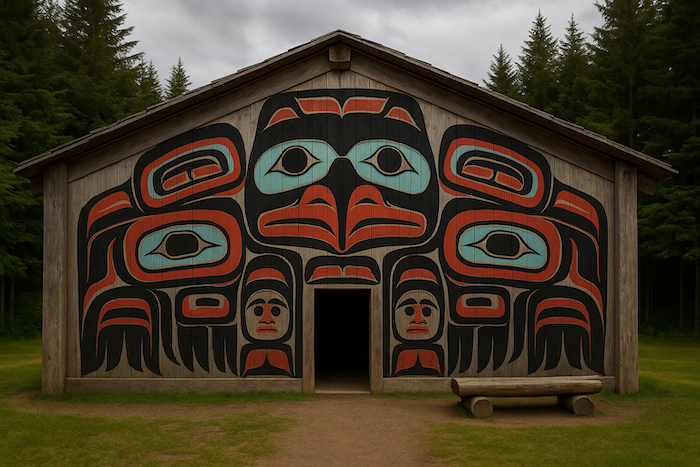
Origin of the NameThe name “Haida” comes from their own language, X̱aayda or X̱aadas, meaning “people.” The Haida are an Indigenous nation whose ancestral territory includes Haida Gwaii (formerly the Queen Charlotte Islands) off the northwest coast of British Columbia, Canada, and parts of Prince of Wales Island in southeast Alaska. The word reflects both their sense of identity and their deep connection to the land and sea. RangeThe Haida traditionally lived on the islands of Haida Gwaii, a remote archipelago rich in forests, rivers, and coastal waters. They also occupied parts of southern Alaska. Their environment provided an abundance of resources—towering cedar trees, salmon-filled rivers, and rich marine life—which allowed them to develop a complex and prosperous culture. DietThe Haida diet centered on the bounty of the ocean. Salmon, halibut, herring, sea otters, seals, and shellfish were staples, while seaweed and berries were also gathered. They preserved food by smoking and drying it, ensuring supplies through the winter. Deer and birds were occasionally hunted, but fishing remained the mainstay of their diet. Home TypeThe Haida built large cedar plank houses called longhouses, often elaborately carved and painted with family crests. Each house could shelter multiple families and was oriented toward the water. The great cedar trees of Haida Gwaii provided durable materials for both houses and totem poles—tall, carved monuments that told stories of lineage and legend.
Depiction of Haida Longhouse CultureHaida culture is renowned for its artistry, oral traditions, and intricate social structure. They are among the greatest carvers of the Pacific Northwest, famous for their canoes, masks, and totem poles. Society was organized into two main moieties: Raven and Eagle. Marriage was required between members of opposite moieties to maintain balance. Their mythology features supernatural beings like Raven, a trickster and creator figure who brought light to the world. Potlatches—large ceremonial feasts—were central to Haida social life, serving as occasions to mark births, deaths, marriages, and the transfer of rights or titles. The Haida also developed complex songs, dances, and oral histories passed down through generations. Haida Totem Poles
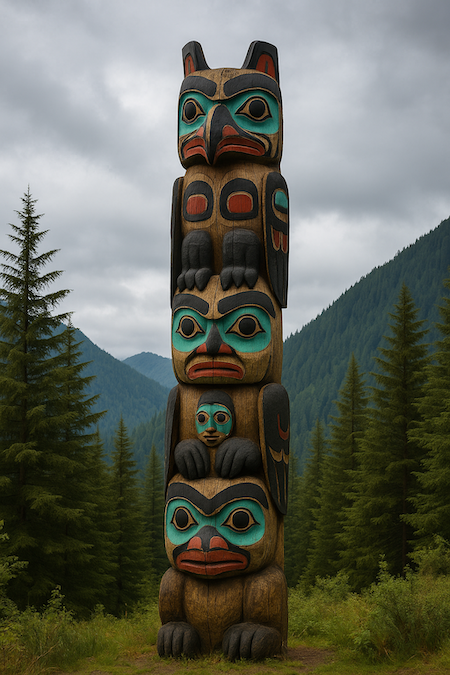
Haida totem poles are towering wooden sculptures that serve as visual stories of family lineage, historical events, and spiritual beliefs. Each figure carved into the pole—such as Raven, Bear, or Eagle—represents an ancestor, a mythical being, or an important event. Totem poles were traditionally placed in front of homes, in villages, or at gravesites. Carved from massive red cedar logs, they could reach over 60 feet high and were often brightly painted. Far from being idols of worship, these poles were a way for the Haida to record and honor their heritage, display clan crests, and preserve their oral traditions in visual form. Today, the creation and raising of totem poles remain a living art that symbolizes cultural pride and resilience. A Totem Pole TaleThis is a traditional Haida story often told through the figures on a totem pole. The tale explains how Raven brought the sun, moon, and stars to the world. A totem pole might stack the characters as crests, allowing the story to be “read” from bottom to top. Characters on the PoleBottom—The World in Darkness: A human village figure with downturned eyes shows a time when people lived in twilight, without sun or stars. Bear (or Eagle) Clan: A clan crest figure holds the village, reminding viewers that the story belongs to a particular family’s heritage. Grandfather (The Keeper of Light): A human elder clutching three round objects (sun, moon, stars) kept in bentwood boxes. Raven: Trickster and transformer, with a long beak and curious eyes—sometimes shown holding a box or with a small child in his beak. The Story: Raven Brings the LightLong ago, the world was dim. An old man kept the light locked away in boxes inside his house to protect his beloved granddaughter. Raven, who hungers for new things, wanted that light for everyone. Raven transformed himself into a spruce needle and drifted into the granddaughter’s drinking water. She swallowed the needle and soon gave birth to a small, dark-haired child—Raven in human form. The old man adored his grandson and could not refuse him. First he opened the box of stars, and the child tossed them into the sky. Then the box of the moon, which floated up to light the night. At last, the boy cried for the final box. When Grandfather opened it, the child seized the blazing sun and instantly turned back into Raven, flying through the smoke hole. Raven carried the sun in his beak. The heat singed his feathers black, which is why ravens are dark today. He set the sun in the sky so all people, animals, and forests could see and live in balance. Meanings & TeachingsSharing and Responsibility: Light belongs to all; knowledge and resources should circulate for the wellbeing of the community. Transformation: Raven’s shape-shifting shows that change, wit, and persistence can break stagnation. Clan Identity: The Bear or Eagle figure situates the story within the lineage that has the right to tell it. How to “Read” a Haida Totem PoleTotem poles are not universal “books,” but family-owned histories. Figures can be read bottom-to-top or top-to-bottom depending on carver and context. Colors often include black, red, and blue-green. Hands, beaks, and eyes point to relationships—who holds what, who carries whom—revealing plot and kinship. WarfareBefore European contact, the Haida were known as fierce warriors and expert seafarers. Their large war canoes, carved from single cedar logs, could hold up to 60 men and were used in raids along the Pacific Coast, from Alaska to California. Warfare was often carried out to avenge insults, capture slaves, or gain prestige. Their reputation for strength and skill earned them respect and fear among neighboring tribes. History Timeline
Discussion Questions
Origin and HomelandThe Haida Nation comes from Haida Gwaii, a group of islands off the northwest coast of British Columbia, Canada. The word “Haida” means “people” in their own language. They also lived on parts of southern Alaska. Surrounded by forests and the sea, the Haida built a rich culture based on the resources around them. Food and HomesThe Haida lived mainly on seafood such as salmon, halibut, herring, shellfish, and seaweed. They also hunted deer and gathered berries. To preserve food for winter, they smoked and dried it. Their homes were large cedar plank longhouses built from the tall trees that grew on Haida Gwaii. These houses often had carvings and painted designs showing family symbols. Totem Poles and ArtThe Haida are famous for their totem poles—tall cedar carvings that tell stories about families, ancestors, and legendary creatures like Raven and Eagle. Each figure on a pole represents a part of Haida history or myth. Totem poles stood in front of homes or villages and were brightly painted. Carving and raising a pole was a major community event that celebrated heritage and identity. Culture and BeliefsHaida society was divided into two main groups, or moieties: Raven and Eagle. People had to marry someone from the opposite moiety. The Haida held potlatches—large gatherings where they shared food, gave gifts, and celebrated special occasions like weddings or naming ceremonies. Their stories and songs, passed down by elders, kept their history and beliefs alive. The Raven, a trickster and creator, played a big role in their mythology. Warfare and CanoesThe Haida were skilled sailors and warriors. They made large cedar canoes that could carry up to 60 men. These canoes were used for travel, trade, and sometimes raids along the Pacific Coast. Their bravery and skill on the sea made them well known among neighboring nations. History and Modern TimesEuropean traders first visited the Haida in the late 1700s, bringing both new goods and diseases like smallpox, which greatly reduced their population. Despite these challenges, Haida culture survived. In the 1900s, their art and traditions began to flourish again. Today, the Haida Nation continues to protect its land, language, and heritage through the Council of the Haida Nation and joint management of Haida Gwaii. Discussion Questions
|