Alaska History |
|
|
|
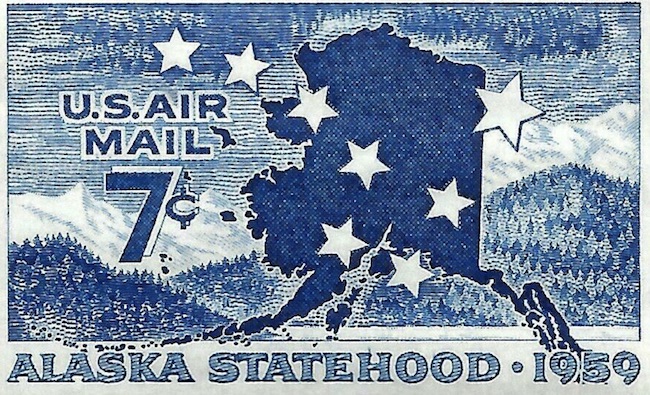
Alaska: From Indigenous Roots to Modern StatehoodAlaska is the largest state in the United States, and its history is as vast and varied as its landscape. The region was originally inhabited by Indigenous groups for thousands of years before the arrival of European explorers and settlers. Today, Alaska is a thriving state with a deep cultural heritage and a dynamic economy. Indigenous PeoplesThe history of Alaska begins with its Indigenous peoples, who have lived in the region for over 10,000 years. These groups include the Inupiat, Yup'ik, Aleut, Haida, and Tlingit, among others. The Indigenous peoples developed unique cultures, languages, and traditions shaped by the harsh Arctic climate and the region’s abundant natural resources. They hunted, fished, and gathered food from the land and sea, using sophisticated techniques and tools to survive in the challenging environment. Russian AmericaIn the 18th century, Russian explorers began to explore and colonize Alaska. In 1784, the first permanent settlement, Three Saints Bay, was established on Kodiak Island. The Russian-American Company, a joint-stock company, was granted a monopoly on trade and founded several settlements, including Sitka and Fort Ross. The Russian fur trade had a major impact on the Indigenous populations, disrupting their traditional ways of life. American AcquisitionIn 1867, the United States purchased Alaska from Russia for $7.2 million in a transaction known as the Alaska Purchase. Many Americans initially viewed Alaska as a frozen wasteland, but the discovery of gold in the late 19th century changed that perception. Thousands of settlers and miners poured into the region, and Alaska’s importance to the U.S. began to grow.
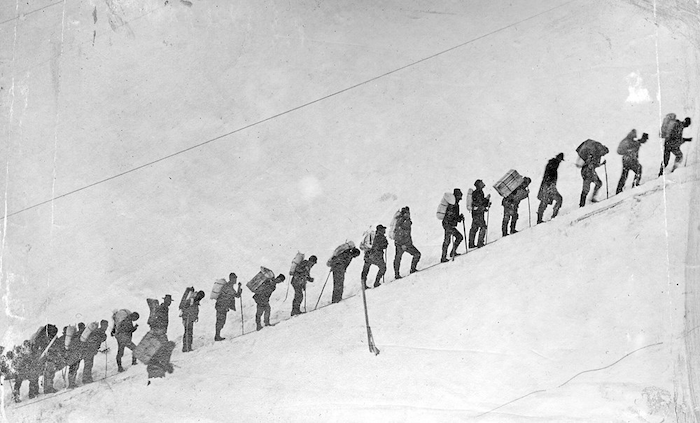
Stampeders looking to make their fortunes during the Klondike Gold Rush Statehood and Modern AlaskaAlaska became a U.S. territory in 1912 and achieved statehood in 1959. The discovery of oil in Prudhoe Bay in 1968 sparked an economic boom, transforming Alaska into a leading oil-producing state. Today, Alaska’s economy includes industries such as oil, fishing, tourism, and natural resource extraction. The state is also celebrated for its breathtaking natural beauty—glaciers, mountains, and wildlife like bears, eagles, and moose. Discussion Questions
Glossary
Timeline of Alaska’s History
Alaska: From Indigenous Roots to Modern StatehoodAlaska is the largest state in the United States, and its history is as vast and varied as its landscape. For thousands of years, Indigenous groups lived throughout the region before European explorers and settlers arrived. Today, Alaska is a thriving state with a deep cultural heritage and a strong economy shaped by its land and people. Indigenous PeoplesAlaska’s history begins with its Indigenous peoples, who have lived there for over 10,000 years. The Inupiat, Yup'ik, Aleut, and Tlingit developed cultures, languages, and traditions that reflected the Arctic environment. They hunted, fished, and gathered food from the land and sea, using advanced tools and knowledge to survive in the cold climate. Russian ExplorationIn the 1700s, Russian explorers began to colonize the region. The first settlement, Three Saints Bay, was built in 1784 on Kodiak Island. The Russian-American Company controlled trade and focused on the fur industry. This activity affected Indigenous communities, changing their ways of life and exposing them to new goods and diseases. The Alaska PurchaseIn 1867, the United States bought Alaska from Russia for $7.2 million in a deal called the Alaska Purchase. Many Americans mocked the decision, calling it “Seward’s Folly,” but the discovery of gold in the late 1800s drew thousands of settlers. The rush for resources turned Alaska into a land of opportunity. Statehood and Modern AlaskaAlaska became a U.S. territory in 1912 and became the 49th state in 1959. The discovery of oil at Prudhoe Bay in 1968 led to huge economic growth. The Trans-Alaska Pipeline, built in 1977, carried oil across the state and supported its economy. Today, Alaska’s industries include oil, fishing, tourism, and natural resource production. Its breathtaking landscapes, from glaciers to mountains, continue to define its identity. Discussion Questions
Glossary
Timeline of Alaska’s History
|