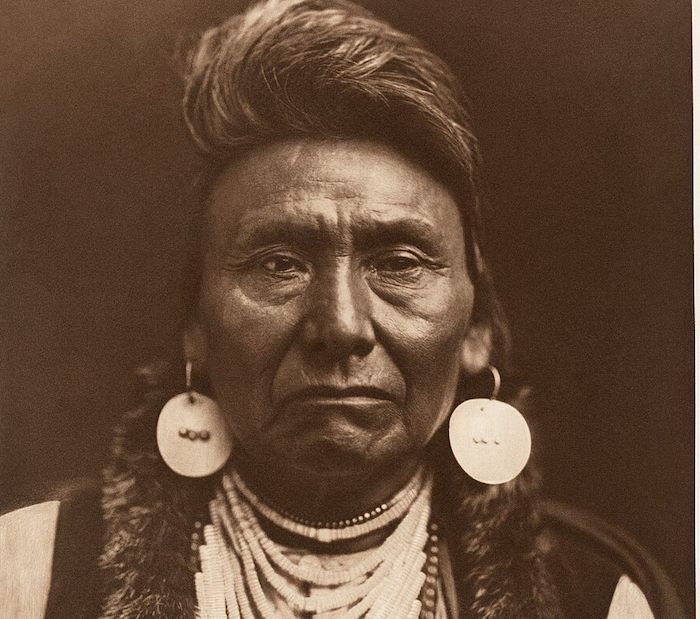
Early Life
Chief Joseph was born in 1840 in the Wallowa Valley of what is now northeastern Oregon. His Native name was Hin-mah-too-yah-lat-kekt, meaning “Thunder Rolling Down the Mountain.” He was the son of a Nez Perce leader, also named Joseph, who signed treaties with the U.S. government to protect their lands. Young Joseph learned Nez Perce traditions, horsemanship, diplomacy, and the responsibilities of leadership. As settlers arrived and pressure on tribal lands grew, he watched his father argue that promises must be honored and that the Wallowa was sacred.
Struggles with the U.S. Government
For years the Nez Perce lived mostly in peace with newcomers. But in the 1870s, officials demanded the non-treaty bands, including Joseph’s people, move to a much smaller reservation in Idaho. Joseph’s father resisted giving up the Wallowa, and when he died, Joseph inherited both leadership and the fight to defend his people’s rights. Joseph tried to avoid bloodshed, meeting with Army officers and negotiators, yet violence between some settlers and young warriors made conflict harder to prevent.
The Nez Perce War
In 1877, the U.S. Army ordered the Nez Perce to relocate. Rather than surrender immediately, Chief Joseph and other leaders guided about 800 people—warriors, elders, women, and children—on a remarkable 1,300-mile journey toward Canada, hoping to join Sitting Bull. Along the way the Nez Perce fought several desperate battles while protecting the noncombatants. Joseph became known for calm, humane leadership under extreme pressure, making tactical retreats and ensuring the wounded and families were cared for.
Surrender and Later Life
Only about 40 miles from the Canadian border, the Nez Perce were surrounded in the Bear Paw Mountains of Montana. On October 5, 1877, after days of cold and hunger, Joseph surrendered. His speech ended with the words, “I will fight no more forever.” Joseph and his people were exiled to reservations far from their homeland, first in the Great Plains and later in the Northwest. He spent the rest of his life urging U.S. leaders to honor treaty rights and let his band return to the Wallowa. He never saw that dream fulfilled and died in 1904.
Legacy
Chief Joseph is remembered as a brave, compassionate leader who defended his people’s freedom and dignity. His words and actions remain a powerful reminder of Native American struggles during westward expansion and the importance of justice and peace.
Discussion Questions
- Why was the Wallowa Valley so important to Chief Joseph and the Nez Perce?
- How did Chief Joseph show leadership during the Nez Perce War?
- Why do you think his surrender speech is still remembered today?
- What lessons can we learn from Chief Joseph’s life about justice and peace?
Glossary
- Nez Perce: A Native American tribe from the Pacific Northwest.
- Reservation: Land set aside by the government for Native Americans.
- Westward Expansion: The movement of settlers across North America during the 1800s.
- Surrender: To give up or stop fighting an enemy.
Five Interesting Facts
- Chief Joseph’s Native name, Hin-mah-too-yah-lat-kekt, means “Thunder Rolling Down the Mountain.”
- His 1,300-mile retreat is considered one of the greatest military marches in U.S. history.
- Even in war, Chief Joseph tried to protect women, children, and the elderly.
- He often met with U.S. leaders in Washington, D.C., to argue for his people’s rights.
- Chief Joseph’s famous speech is still quoted in classrooms and history books.
Timeline
- 1840: Chief Joseph is born in the Wallowa Valley, Oregon.
- 1871: Becomes leader of the Nez Perce after his father’s death.
- 1877: Leads his people during the Nez Perce War and surrenders in Montana.
- 1877–1904: Lives on reservations far from the Wallowa; speaks for Native rights.
- 1904: Dies on a reservation in Washington state.