Blackfoot Nation |
Blackfoot Nation Flag |
Origin of the NameThe name "Blackfoot" (or Blackfeet) likely comes from the blackened soles of the people’s moccasins, which were often stained by ash or painted with dark dye. The tribe refers to themselves as the "Niitsitapi," meaning "the real people." The term "Blackfoot" was first applied by European traders and settlers in the 18th century. RangeThe Blackfoot traditionally lived on the northern Great Plains, spanning parts of present-day Montana in the United States and Alberta and Saskatchewan in Canada. Their homeland was primarily grassland, ideal for buffalo hunting. DietThe Blackfoot people relied heavily on the buffalo, which provided meat, hides, and bones for food, clothing, shelter, and tools. They also gathered roots, berries, and wild plants to supplement their diet. After European contact, they obtained horses, which made buffalo hunting more efficient.
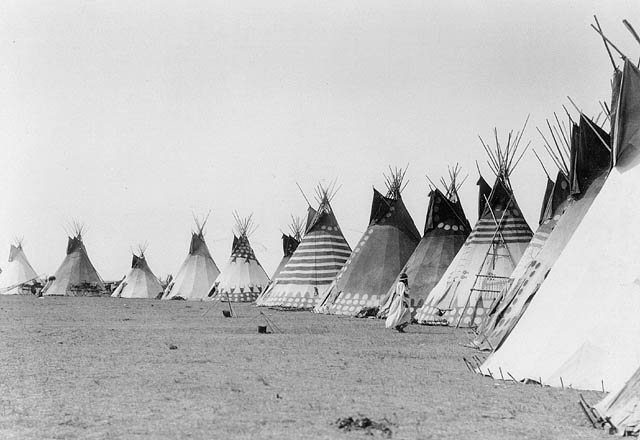
Depiction of a Blackfoot Buffal Hunt Home TypeThe Blackfoot lived in tipis made of buffalo hides stretched over wooden poles. Tipis were portable, suiting their nomadic lifestyle as they followed buffalo herds across the plains. The inside of a tipi often featured painted decorations and family belongings.
Blackfoot tipis in Montana. The TravoisThe Blackfoot used the travois, a simple but effective transport device, to carry their belongings as they followed buffalo herds across the plains. Made from two long poles fastened together at one end and attached to a dog or later a horse, the travois formed a triangular frame that dragged along the ground. A platform of rawhide or wooden crosspieces stretched between the poles held loads such as food, hides, and even small children. Before the arrival of horses, dogs pulled smaller travois, but once horses were introduced in the 1700s, much larger loads could be transported, making travel more efficient. The travois was a vital tool that supported the Blackfoot’s nomadic way of life and their dependence on seasonal migration.
Travois CultureBlackfoot culture was rich in spirituality and tradition. They believed in a powerful spiritual world guided by the Sun and other spirits. Sacred bundles, containing ritual items, were central to religious life. They told stories of Napi, the Old Man, a trickster-creator figure who shaped the world and taught lessons through his adventures. The Sun Dance was one of their most important ceremonies, symbolizing renewal and connection to the divine. Sacred (Medicine) BundlesAmong the Blackfoot, sacred or medicine bundles were among the most powerful spiritual possessions. Each bundle contained a collection of sacred objects, such as animal skins, pipes, feathers, or stones, believed to hold spiritual power and a direct connection to the Creator and other spirits. These bundles were carefully wrapped and passed down through generations, often accompanied by songs, prayers, and rituals that had to be learned and preserved. Opening a bundle and performing its ceremonies brought blessings of health, good fortune, protection, and success in hunting or war for the entire community. The care and respect given to medicine bundles reflected the Blackfoot belief in maintaining balance with the spiritual world and honoring the responsibilities entrusted to them by their ancestors. Sun DanceThe Sun Dance was the most sacred ceremony of the Blackfoot people, held each summer when the buffalo were plentiful. It was a time of renewal for the tribe, honoring the Sun as the giver of life and strength. The ceremony lasted several days and involved prayer, dancing, drumming, fasting, and personal sacrifice. Central to the ritual was the raising of a cottonwood tree, symbolizing the connection between earth and sky. Participants sought visions, healing, and blessings for the community, and some demonstrated devotion through acts of endurance. For the Blackfoot, the Sun Dance was not just a religious practice but a way to renew balance, unity, and spiritual power within the people and the natural world. WarfareThe Blackfoot were fierce warriors who defended their territory against rival tribes such as the Crow, Sioux, and Shoshone. They also conducted raids to capture horses, which became a key measure of wealth and power after the 1700s. War honors and bravery were central to a man’s reputation within the tribe. History Timeline
Discussion Questions
Origin of the NameThe Blackfoot, or Blackfeet, got their name because their moccasins were often darkened with ash or dye. They call themselves the "Niitsitapi," which means "the real people." RangeThe Blackfoot lived on the northern Great Plains, in present-day Montana, Alberta, and Saskatchewan. They moved across the grasslands to follow buffalo herds. DietThe Blackfoot depended on the buffalo for food, clothing, and tools. They also gathered berries and plants. Horses later made buffalo hunting easier. Home TypeThey lived in tipis made of buffalo hides and wooden poles. These could be moved quickly as they followed the herds. CultureThe Blackfoot believed in powerful spirits and honored the Sun. Their most important ceremony was the Sun Dance. They also kept medicine bundles filled with sacred objects. Stories of Napi, the trickster-creator, taught lessons about life. WarfareThe Blackfoot were strong warriors who fought to protect their land and raided for horses. Bravery and success in battle brought great respect. History Timeline
Discussion Questions
|