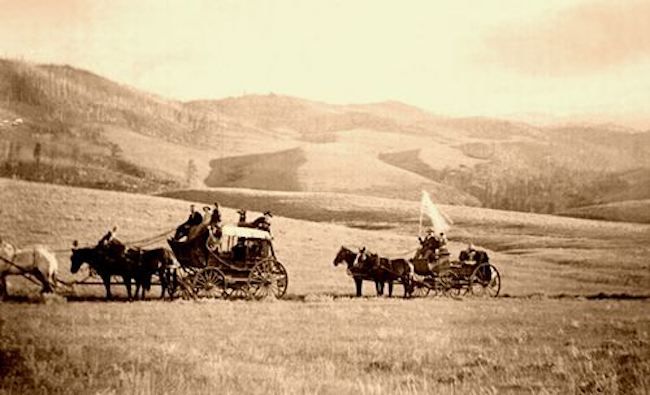
The Bozeman Trail |
|
The Bozeman TrailThe Bozeman Trail was a historic route that connected the Oregon Trail in Wyoming to the gold fields of Montana. It was first established in 1863 by John Bozeman, a pioneer who wanted to help miners reach the gold mines more quickly. The trail cut through the hunting grounds of the Lakota Sioux, Northern Cheyenne, and Arapaho peoples, which caused serious conflict between Native Americans and settlers. Conflicts Along the TrailThe U.S. Army built forts along the trail to protect travelers, but Native tribes resisted strongly. This led to what is known as Red Cloud’s War (1866–1868). During this war, the Lakota leader Red Cloud and his warriors attacked soldiers and settlers to defend their land. One of the most famous battles was the Fetterman Fight in 1866, where 81 U.S. soldiers were killed. It was one of the worst military defeats for the U.S. Army on the Great Plains up to that time. The End of the TrailIn 1868, the Treaty of Fort Laramie ended Red Cloud’s War. The U.S. agreed to abandon the forts and close the Bozeman Trail. This was considered a major victory for Native American tribes, though the peace did not last long. Within a few years, settlers and the Army again pushed into Native lands. Legacy of the TrailThe Bozeman Trail lasted only a few years, but it showed the intense struggle between Native Americans and settlers over land and resources. Today, markers along highways in Wyoming and Montana remind travelers of its history. The story of the trail is remembered as both a pathway to opportunity and a cause of violent conflict. Discussion Questions
Glossary
Five Interesting Facts
The Bozeman TrailThe Bozeman Trail was built in 1863 to connect the Oregon Trail in Wyoming to the Montana gold mines. It was named after John Bozeman. The trail went through Native American hunting grounds, which led to conflict. Red Cloud’s WarThe U.S. Army built forts to protect settlers, but Native tribes resisted. This started Red Cloud’s War (1866–1868). One of the worst battles was the Fetterman Fight, where 81 U.S. soldiers were killed. In 1868, the Treaty of Fort Laramie ended the war and closed the trail. LegacyThe Bozeman Trail was used only a few years but caused major battles. Today, roads and signs in Wyoming and Montana mark where the trail once ran and remind people of the conflicts it caused. |