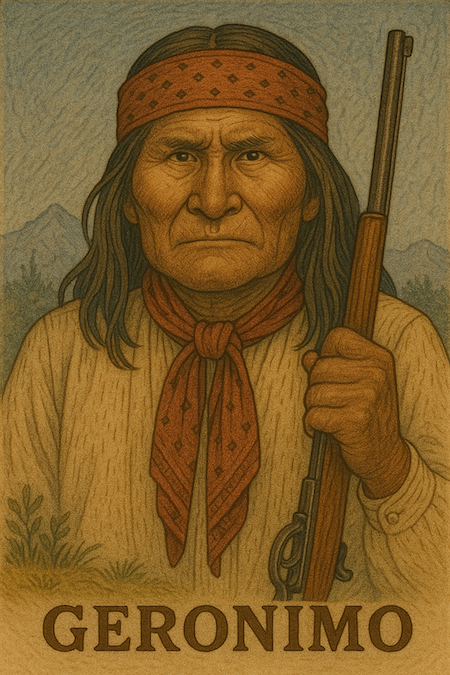
Geronimo |
|
Geronimo: Apache Leader and WarriorGeronimo was born in 1829 in what is now Arizona. His birth name was Goyahkla, meaning "One Who Yawns." He grew up as part of the Chiricahua Apache, a group known for their skills in survival, hunting, and warfare. From a young age, Geronimo learned how to live off the land and defend his people against enemies. Struggles Against Mexico and the United StatesAs a young man, Geronimo’s family was attacked and killed by Mexican soldiers. This loss fueled his desire to fight against both Mexico and later the United States, who were taking Apache lands. For decades, Geronimo led raids and resistance, becoming a symbol of Apache determination. He was skilled at avoiding capture and moving quickly through the desert and mountains. Resistance and SurrenderGeronimo resisted U.S. government efforts to force the Apache onto reservations. He and his followers escaped several times, carrying out raids to protect their freedom. In 1886, after years of pursuit by thousands of U.S. and Mexican soldiers, Geronimo finally surrendered. His capture marked the end of major Native American armed resistance in the Southwest. Later Life and LegacyAfter his surrender, Geronimo was held as a prisoner of war for many years in Florida, Alabama, and finally Oklahoma. Despite being a prisoner, he became famous across the United States. He even appeared at fairs, rode in President Theodore Roosevelt’s inauguration parade, and dictated his autobiography. Geronimo died in 1909, but he remains remembered as a symbol of Native American courage and resistance. Discussion Questions
Glossary
Five Interesting Facts
Timeline
Geronimo: Apache LeaderGeronimo was born in 1829 in Arizona. His Apache name was Goyahkla, meaning "One Who Yawns." He grew up in the Chiricahua Apache tribe, learning to hunt and survive in the desert. When Mexican soldiers killed his family, Geronimo became a determined warrior. Fighting for FreedomGeronimo fought against both Mexico and the United States to protect Apache land. He led raids and resisted being forced onto reservations. His knowledge of the land helped him avoid capture many times. In 1886, he finally surrendered after years of pursuit by soldiers. Later YearsAfter his surrender, Geronimo lived as a prisoner of war in several states. He became famous, appearing in public events and telling his life story. He died in 1909 in Oklahoma. Today, Geronimo is remembered as a brave leader who fought for his people’s freedom. |