Apache Nation |
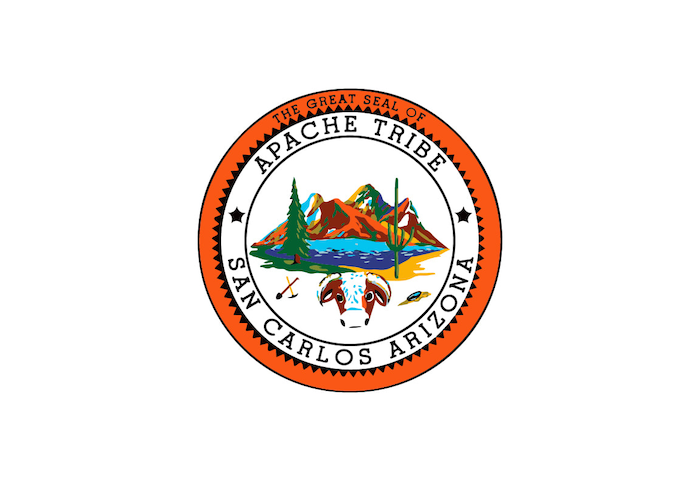
Apache Nation Flag |
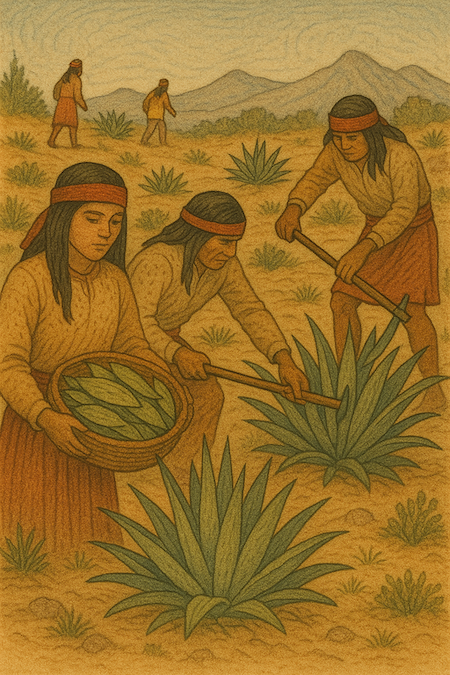
Origin of the NameThe name "Apache" is believed to come from the Zuni word apachu, meaning "enemy." The Apache themselves used various names for their bands, often meaning "the people." They are part of the larger Athabaskan language family, related to tribes in Alaska and Canada, suggesting that the Apache migrated south centuries ago. RangeThe Apache traditionally lived across the Southwestern United States, including present-day Arizona, New Mexico, Texas, and parts of Oklahoma. Their range also extended into northern Mexico. Within this territory, different Apache groups—such as the Mescalero, Chiricahua, Jicarilla, and Lipan—occupied distinct areas. DietThe Apache diet was a mix of hunting, gathering, and limited farming. They hunted deer, bison, rabbits, and other game. They gathered nuts, berries, roots, and especially mescal, a desert plant they roasted in pits. Some groups also farmed corn, beans, and squash when conditions allowed.
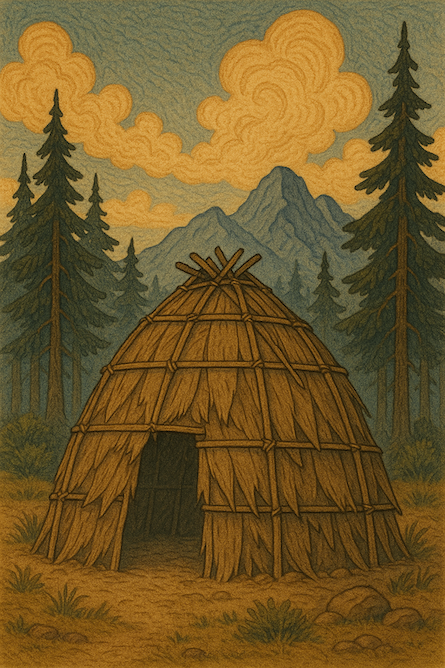
Depiction of the Apache gathering mescal Home TypeApache homes varied depending on the group and the environment. Many built simple brush shelters called wickiups, dome-shaped frames covered with grass, brush, or hides. In some cases, tipis were used, especially by bands that followed the buffalo on the plains.
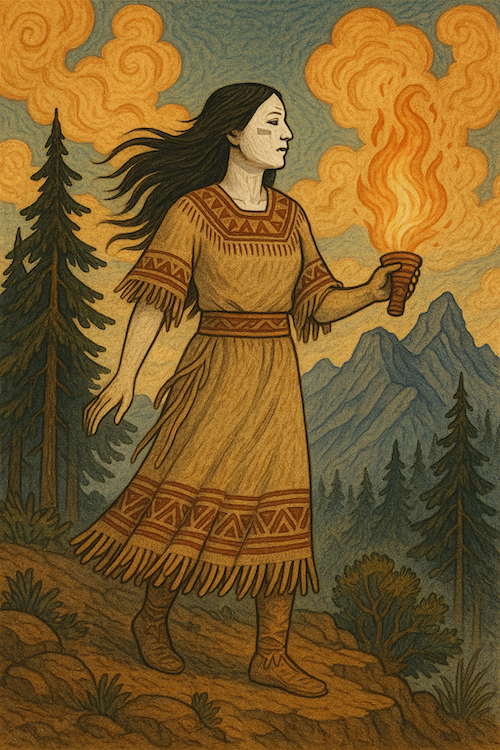
CultureApache culture emphasized kinship, independence, and respect for the natural world. Families were organized into extended kin groups, and elders held an honored role as keepers of wisdom. Music and dance were important, often tied to ceremonies, healing, and storytelling. Traditional songs were usually accompanied by drums, rattles, and chants, and they carried deep spiritual meaning. The Apache are well known for the Sunrise Ceremony, a four-day rite of passage for girls entering womanhood. This ceremony includes singing, dancing, and blessings that symbolize the girl’s transformation into adulthood, guided by White Painted Woman, also called Changing Woman, one of the most important figures in Apache mythology. This ceremony is still performed today among some Apache communities. Storytelling was another vital part of Apache life. Myths explained the world’s creation, taught lessons about morality, and provided guidance on survival. Trickster tales featuring Coyote were popular, often showing how foolish behavior could lead to trouble. These stories entertained but also reinforced cultural values. An Important Apache Myth: The Story of White Painted WomanAccording to Apache tradition, White Painted Woman (Changing Woman) survived a great flood that destroyed the early world. After the waters receded, she gave birth to two sons—Child of Water and Killer of Enemies. These heroic twins went on great quests, defeating monsters that threatened humankind, such as giant serpents and evil spirits. Thanks to their bravery, the world became safe for people to live in. Changing Woman herself represented renewal, fertility, and the cycles of life. Her presence in ceremonies reminds the Apache of the importance of balance, resilience, and the continuation of life from one generation to the next.
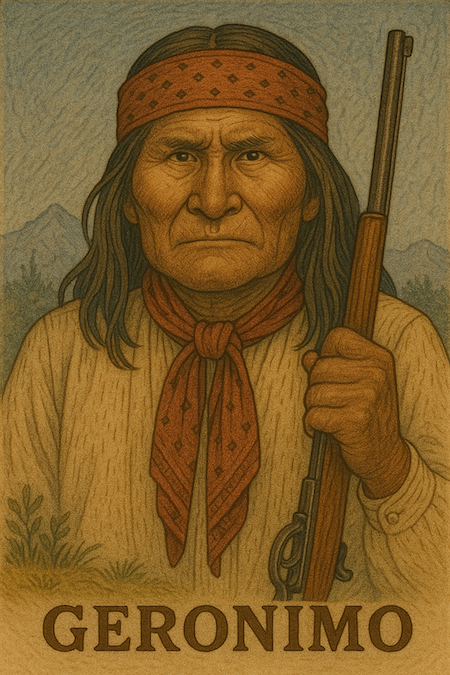
Depiction of White Painted Woman This story is central to Apache identity because it explains the tribe’s spiritual connection to the land and emphasizes the values of courage, protection, and harmony. It also connects directly to the Sunrise Ceremony, where girls are blessed with Changing Woman’s strength and endurance. WarfareThe Apache were renowned warriors who used guerrilla tactics—ambushes, hit-and-run raids, and deep knowledge of the land—to fight enemies and resist settlers, soldiers, and rival tribes. They valued bravery and cunning in battle. Leaders like Geronimo, Cochise, and Victorio became legendary for their resistance against U.S. and Mexican military forces in the 19th century.
History Timeline
Discussion Questions
Origin of the NameThe name "Apache" comes from the Zuni word apachu, meaning "enemy." The Apache themselves used names that meant "the people." They belong to the Athabaskan language family, related to tribes in Alaska and Canada, showing they migrated south long ago. RangeThe Apache lived in the Southwestern U.S.—Arizona, New Mexico, Texas, Oklahoma—and northern Mexico. Different groups, such as the Mescalero, Chiricahua, Jicarilla, and Lipan, had their own areas. DietApache food came from hunting, gathering, and some farming. They hunted deer, bison, and rabbits, gathered roots and berries, and roasted mescal plants. Some grew corn, beans, and squash when possible. Home TypeMost Apache built wickiups, dome-shaped shelters covered with brush or hides. On the plains, some groups used tipis, which were easy to move when following the buffalo. CultureApache culture valued family, courage, and survival skills. Elders passed down wisdom, and music and dance were part of ceremonies. The Sunrise Ceremony celebrated girls becoming women, guided by the spirit of White Painted Woman (Changing Woman). Storytelling taught lessons, often through trickster tales about Coyote. The Story of White Painted WomanIn Apache myth, White Painted Woman survived a great flood and gave birth to two sons, Child of Water and Killer of Enemies. These twins defeated dangerous monsters so humans could live safely. She represents renewal and balance, and her story is honored in ceremonies that remind the Apache of strength and resilience. |