Anne Hutchinson |
|||
Puritan Dissenters Detailed Lesson Plan | Puritan Dissenters Power Point Presentation |
|||
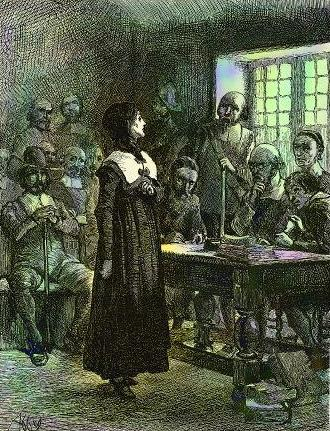
Early LifeAnne Hutchinson was born in 1591 in Alford, England. She grew up in a deeply religious family and learned to read the Bible at a young age. She married William Hutchinson in 1612, and together they had many children. In 1634, the family left England for the Massachusetts Bay Colony in America, seeking religious freedom.Religious Beliefs and ConflictIn Massachusetts, Hutchinson began holding meetings in her home where she discussed sermons and shared her own interpretations of the Bible. She believed that people could have a direct relationship with God without the help of ministers. This belief challenged the strict religious leaders of the colony, who feared it would weaken their authority.The Antinomian ControversyHutchinson’s ideas sparked what became known as the Antinomian Controversy, a major dispute over religious authority. She criticized ministers for teaching that people could earn God’s grace through good deeds, instead of relying on faith alone. Her popularity and boldness worried the leaders, including Governor John Winthrop.Trial and BanishmentIn 1637, Hutchinson was put on trial for her religious views and for challenging the leaders’ authority. She defended herself skillfully but was eventually convicted of heresy and banished from Massachusetts. She and her family moved to Rhode Island, which was known for religious tolerance.Later Life and LegacyAnne Hutchinson later moved to what is now New York. In 1643, she and most of her family were killed during a Native American attack. Despite her tragic end, Hutchinson is remembered as a strong, independent woman who fought for religious freedom and the right to speak one’s mind.
Discussion Questions
Glossary
Five Interesting Facts
Timeline
Early LifeAnne Hutchinson was born in 1591 in England. She learned the Bible well and married William Hutchinson. In 1634, they moved to Massachusetts to practice their religion freely.Religious DisagreementsAnne held meetings at her home to talk about the Bible. She taught that people could speak to God directly, without ministers. This upset Puritan leaders who wanted strict control.Trial and BanishmentIn 1637, Anne was put on trial for her beliefs. She was banished from Massachusetts and moved to Rhode Island, where people had more religious freedom.Later LifeAnne later moved to New York. In 1643, she was killed in a Native American attack. She is remembered as a brave woman who stood up for religious freedom. |