Naragansett Nation |
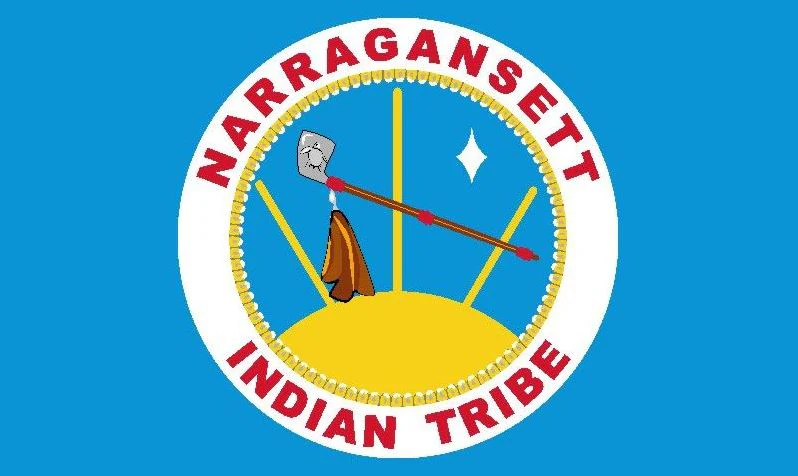
Naragansett Nation Flag |
Origin of the NameThe name “Narragansett” comes from an Algonquian word often interpreted as “people of the small point” or “people of the narrow river.” This refers to the tribe’s homeland along the coastline and bays of what is now Rhode Island. Early European records vary in spelling, but the meaning consistently ties to their maritime homeland.
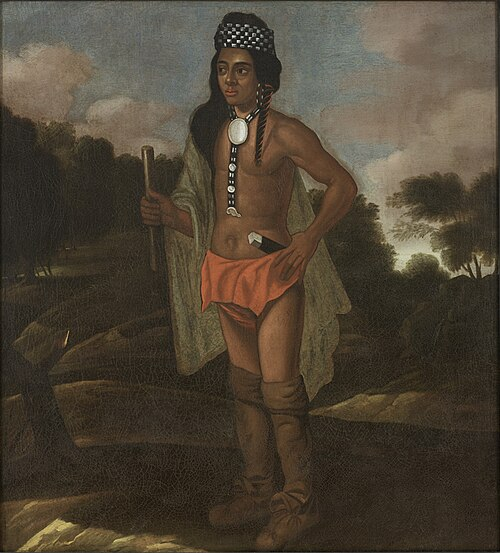
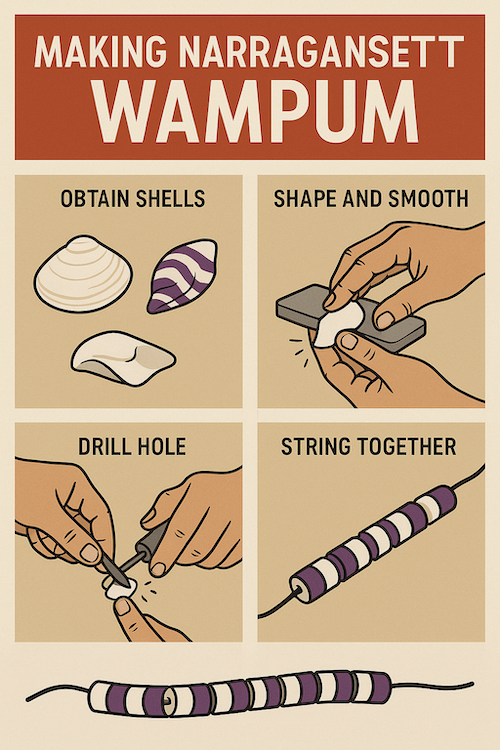
Naragansett sachem Ninigret - author of painting is unknown RangeThe Narragansett occupied most of present-day Rhode Island, including Narragansett Bay, and parts of southeastern Connecticut and southern Massachusetts. Their territory was rich in coastal resources, with sheltered coves, salt marshes, and forested uplands. DietThe Narragansett diet was diverse, drawing heavily on both land and sea. They cultivated corn, beans, and squash (the “Three Sisters”) and gathered wild plants such as berries and nuts. Fishing, shellfishing, and hunting were equally important—men caught cod, bass, and bluefish, harvested clams and oysters, and hunted deer, turkeys, and waterfowl. They also stored surplus food for winter. Home TypeThe Narragansett lived in dome-shaped wigwams made of sapling frames covered with woven mats or bark. Villages often featured multiple family homes grouped together near water sources. In winter, they moved inland to more sheltered locations, while summer villages were closer to the shore for fishing and trade. CultureNarragansett culture was deeply tied to the sea, the land, and seasonal cycles. They spoke an Algonquian language and were known for their fine wampum craftsmanship, using white and purple shells for trade, tribute, and ceremonial purposes. Kinship was central, with extended families forming strong clans. Naragansett WampumThe Narragansett were renowned for their skill in crafting wampum, small cylindrical beads made from the white shells of quahog clams and the purple parts of whelk shells. Creating wampum was a labor-intensive process, requiring careful shaping, smoothing, and drilling using stone or metal tools. Wampum held deep cultural significance—it was used not as ordinary money but as a symbol of agreements, records of important events, and sacred gifts in ceremonies. Long strings or woven belts of wampum conveyed messages, sealed alliances, and marked treaties between tribes and with European colonists. The high quality of Narragansett wampum made it a valuable trade good throughout the Northeast, and their craftsmanship was so respected that neighboring tribes and colonists often sought Narragansett-made beads for important exchanges.
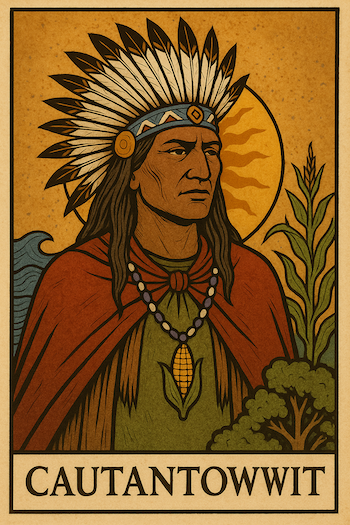
Rendering of Cautantowwit MythologyMythology included stories of creation and moral lessons involving animals and spirits. Cautantowwit, in Narragansett tradition, is the great spirit and creator who dwells in the southwest, a direction associated with warmth, life, and abundance. He is often credited with sending the gentle, life-giving winds of summer and ensuring the cycles of growth that sustain people, animals, and plants. In some stories, Cautantowwit shaped the land, filled the seas with fish, and gave the Narragansett their first corn, teaching them how to cultivate it. He embodies generosity and balance, reminding people to live in harmony with nature and with each other. Seasonal ceremonies honored him, particularly in the late summer and harvest time, as a way of giving thanks for his blessings.
WarfareThe Narragansett were considered a powerful tribe in southern New England, skilled in both diplomacy and warfare. They used bows, arrows, and stone-headed clubs, and could mobilize large forces. They often formed alliances with neighboring tribes but also engaged in conflicts over territory and resources, notably with the Pequots and Mohegans. During the Pequot War (1636–1638), they allied with the English colonists against the Pequots. However, in King Philip’s War (1675–1676), they opposed English expansion, leading to devastating losses.
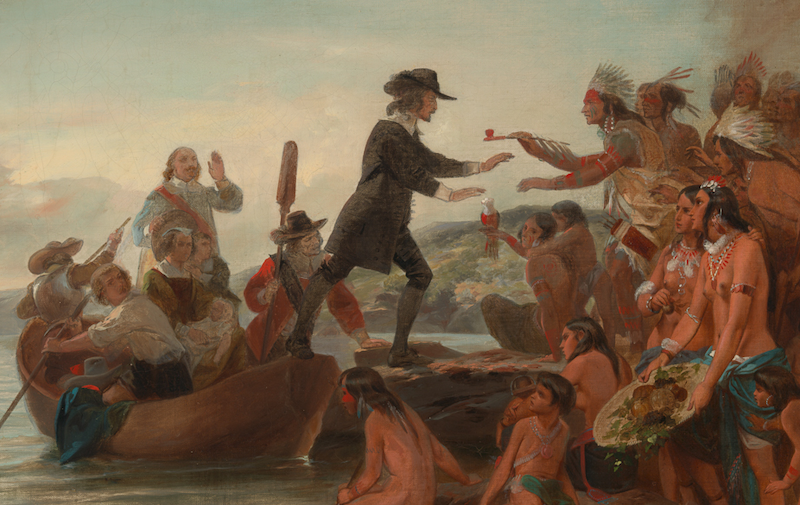
Naragansett people greeting Roger Williams, founder of Providence: The Landing of Roger Williams in 1636 (1857); Alonzo Chappel History Timeline
Discussion Questions
Origin of the NameThe name “Narragansett” comes from an Algonquian word meaning “people of the small point” or “people of the narrow river,” describing their homeland along Rhode Island’s coast and bays. RangeThe Narragansett lived in most of present-day Rhode Island, especially around Narragansett Bay, and parts of southeastern Connecticut and southern Massachusetts. DietThey farmed corn, beans, and squash, fished for cod and bass, collected clams and oysters, and hunted deer, turkeys, and waterfowl. Food was stored for winter. Home TypeThe Narragansett lived in dome-shaped wigwams made from saplings and mats or bark. Summer villages were near the shore; winter homes were inland for shelter. CultureThey spoke an Algonquian language and were famous for making high-quality wampum from shells, used in ceremonies and trade. Legends included Cautantowwit, the great spirit who sent warm summer winds. Seasonal feasts celebrated planting, harvest, and fishing. WarfareThe Narragansett were powerful and skilled in both diplomacy and battle. They allied with the English in the Pequot War (1636–1638) but fought against them in King Philip’s War (1675–1676), suffering heavy losses. History Timeline
Discussion Questions
|