Salish Nation |
|
|
|
Origin of the NameThe name Salish originally referred to a specific group of Native people living around the Flathead Valley of western Montana. Over time, linguists used the term “Salish” to describe a much larger family of related languages spoken throughout the Pacific Northwest. The Salish people themselves call their language Selis̓, and they are part of a widespread group known today as the Interior Salish. The word “Salish” roughly translates to “the people,” reflecting how they saw themselves as a unified community tied to the land and each other. RangeThe traditional Salish homelands stretched across the interior regions of the Pacific Northwest, primarily in what is now western Montana, northern Idaho, and eastern Washington. The Flathead (a subgroup of the Salish) occupied the Bitterroot and Flathead Valleys, while other Salish-speaking groups lived along the upper Columbia River, the Pend Oreille River, and parts of British Columbia. Today, many members of the Salish Confederated Tribes live on the Flathead Indian Reservation in Montana. DietThe Salish diet was shaped by their mountain and river environment. They hunted deer, elk, and mountain sheep, and fished for salmon, trout, and whitefish. Seasonal gathering of roots, berries, and plants was important—particularly camas roots, bitterroot, and huckleberries. They preserved much of their food by drying or smoking it to last through the harsh winters. Trade with neighboring tribes also provided them with goods like dried salmon or coastal shells. Home TypeThe Salish built different types of shelters depending on the season. In winter, they lived in large, semi-subterranean lodges made of poles and earth, which provided insulation from the cold. During warmer months, they often used tipis covered with animal hides or bark for easier mobility when following game or fishing runs. These homes were functional and reflected the Salish people’s deep understanding of their changing environment.
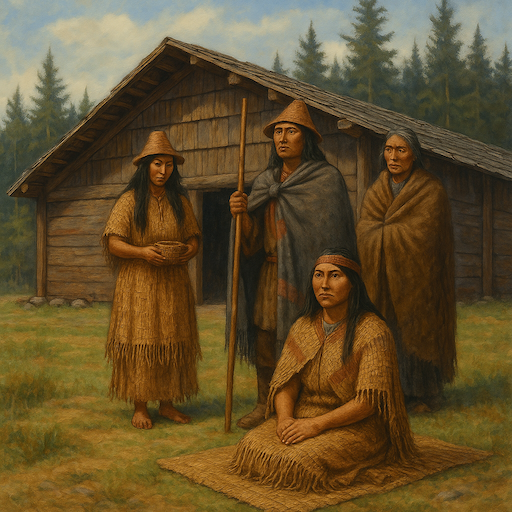
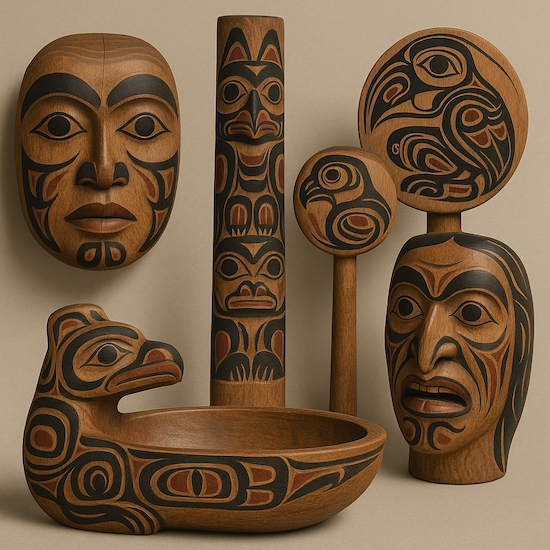
Depiction of a Salish family next to their longhouse. CultureSalish culture was rich with oral traditions, ceremonies, and a strong spiritual connection to the natural world. Storytelling was central to passing down history and moral lessons, often featuring Coyote, a trickster figure who taught important values through his adventures. The Salish practiced seasonal ceremonies to give thanks for successful hunts and harvests. Art was another vital part of their identity—basket weaving, beadwork, carvings, and painted designs carried deep symbolism. Respect for nature, community cooperation, and balance between humans and the earth were key cultural principles. Salish CarvingsSalish carvings are a powerful expression of art, spirituality, and storytelling. Traditionally, the Salish people carved figures, masks, and tools from cedar wood, a material valued for its strength and spiritual purity. These carvings often depicted animals, spirits, and legendary beings that symbolized moral lessons or tribal identity. Unlike the more towering totem poles of the Northwest Coast tribes, Salish carvings were generally smaller and more personal—used in ceremonies, homes, and dances. Carvers would create spindle whorls, bowls, and ritual masks decorated with bold geometric patterns and flowing natural forms. Each carving carried deep meaning, linking the artist to ancestors, the land, and the spiritual world. Today, Salish artists continue this ancient craft, blending traditional designs with modern influences to keep their heritage alive.
Examples of Salish masks and carvings WarfareThe Salish were generally peaceful but would defend their territories from enemy tribes such as the Blackfeet. Before acquiring horses in the 1700s, their mobility was limited, but once horses arrived through trade, they expanded their hunting grounds and occasionally joined alliances with neighboring tribes. Warfare was often about protecting hunting lands, retrieving stolen horses, or avenging wrongs. Warriors earned status for bravery, but Salish warfare was guided by rules of honor and community responsibility. History Timeline
Discussion Questions
Origin of the NameSalish first referred to the people of the Flathead Valley in western Montana. Linguists later used it for a wider family of related languages across the Pacific Northwest. The people call their language Selis̓, meaning “the people.” RangeTraditional Salish lands covered parts of western Montana, northern Idaho, eastern Washington, and into British Columbia. The Flathead (Interior Salish) lived in the Bitterroot and Flathead Valleys. Today many are part of the Confederated Salish and Kootenai Tribes on the Flathead Reservation, Montana. DietFood came from rivers, forests, and valleys: salmon, trout, whitefish, deer, elk, and mountain sheep. People gathered camas, bitterroot, and berries—especially huckleberries. Drying and smoking preserved meat and fish for winter. Trade added items like coastal shells and dried salmon. Home TypeHousing changed with seasons. Winters used insulated semi-subterranean lodges. In warmer months, families used portable tipis or bark-covered shelters while traveling to fish or hunt. CultureSalish culture centers on respect for nature, kinship, and oral tradition. Stories—often about Coyote, the trickster—teach lessons and history. Artists make baskets, beadwork, and carved items such as spindle whorls and masks. Ceremonies thank the Creator for harvests and hunts, and elders guide community life. WarfareGenerally peaceful, the Salish defended lands against groups like the Blackfeet. After horses arrived in the 1700s, travel and hunting expanded. Raids or conflicts aimed to protect territory, recover horses, or settle grievances, and bravery brought honor balanced with responsibility to the community. History Timeline
Discussion Questions
|