Washington History |
 |
Washington state, located in the Pacific Northwest region of the United States, has a deep and varied history that spans thousands of years. From the earliest Indigenous peoples to European exploration and modern innovation, Washington’s story reflects the many cultural and economic forces that shaped it. Its diverse landscapes—from rugged coastlines to the towering Cascade Mountains—mirror its complex past and enduring heritage. Indigenous PeoplesThe earliest inhabitants of Washington were Indigenous groups such as the Coast Salish, Chinook, and Yakama. These peoples had a strong connection to the land and developed advanced hunting, fishing, and agricultural methods. The Coast Salish built large longhouses and thrived on maritime trade, while the Yakama became skilled horsemen with a powerful equestrian culture. Their traditions and craftsmanship continue to influence Washington today through art, festivals, and place names.
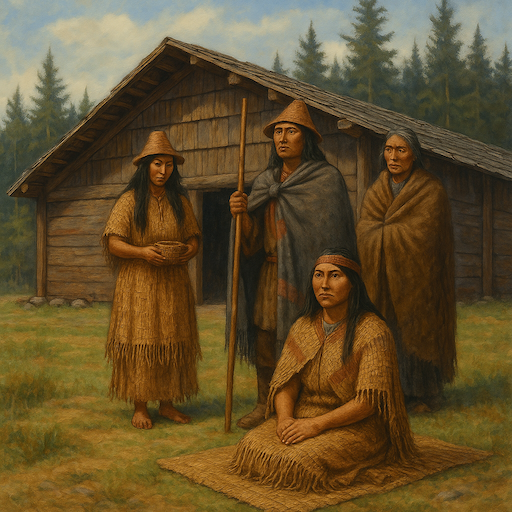
Depiction of Salish people and their longhouse. Exploration and SettlementEuropean contact began in 1774 when Spanish explorer Juan Pérez reached the Washington coast. Later, in 1805, American explorers Lewis and Clark journeyed through the region, paving the way for further exploration and settlement. By the mid-1800s, fur traders, missionaries, and settlers began arriving in large numbers, transforming the cultural and environmental landscape of the Pacific Northwest.
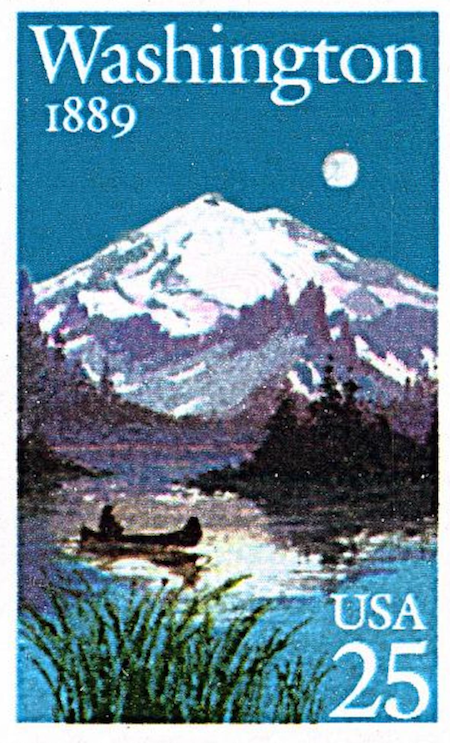
Lewis and Clark postage Stamp Statehood and Modern Washington StateWashington became a U.S. territory in 1853 and achieved statehood in 1889. The early 20th century brought rapid industrial growth through logging, fishing, and farming. The rise of major companies such as Boeing and later Microsoft reshaped the economy, establishing Washington as a center of innovation. During World War II, the state contributed significantly to aircraft and military production. Today, Washington’s economy blends technology, aerospace, agriculture, and outdoor recreation. Seattle stands out for its creative energy and cultural diversity, while Tacoma’s industrial legacy remains strong. The state’s breathtaking natural beauty continues to draw millions of visitors each year. Discussion Questions
Glossary
Timeline of Washington State History
Washington State OverviewWashington state, located in the Pacific Northwest, has a deep history shaped by Indigenous cultures, explorers, and modern innovation. Its mountains, forests, and coastline tell the story of a state built through cultural exchange and economic growth. Native CulturesBefore European arrival, groups like the Coast Salish, Chinook, and Yakama lived throughout Washington. They fished, hunted, and traded along rivers and coasts. The Coast Salish built longhouses and were expert sailors, while the Yakama became known for horse breeding and trade. Many of their traditions continue to influence Washington today. Exploration and SettlementSpanish explorer Juan Pérez reached the coast in 1774, and Lewis and Clark arrived in 1805. Their journeys led to the arrival of fur traders, missionaries, and settlers. By the 1850s, Washington had become an important area for trade and new settlements. Growth and ModernizationWashington became a U.S. territory in 1853 and a state in 1889. Its economy grew through logging, fishing, and farming. Later, major industries such as Boeing and Microsoft helped turn the state into a leader in technology and aerospace. Today, Washington is known for its natural beauty, thriving cities like Seattle and Tacoma, and a strong, diverse economy. |