The Compromise of 1850 |
|
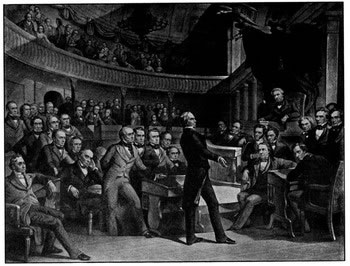
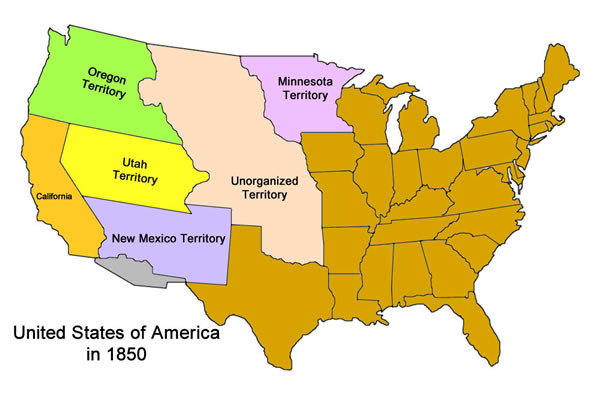
Slavery in the New Territories?The Compromise of 1850 was primarily about the issue of slavery in America's new territories acquired after the Mexican War, though other, less important issues were included as well. California had already adopted an anti-slavery constitution and appliedfor statehood. The question, then, was whether slavery should be allowed in the new territories. Both pro-slavery and anti-slavery advocates argued over the issue, yet neither side was strong enough to administer a plan of action.The Union is Threatened; Clay Brokers Another CompromiseThe slavery issue quickly became a crisis that threatened the Union. In an attempt to maintain a balance between free and slave states, Henry Clay offered the famous compromise. Clay's Compromise called for the admission of California as a free state, the organization of the new territories of New Mexico and Utah, with the slavery issue left to those citizens, settlement of border disputes between Texas and New Mexico, a prohibition of slave trade in the District of Columbia, and a more stringent Fugitive Slave Law which outlined penalties for individuals who harbored runaway slaves. The compromise was accepted by moderates throughout the country, and may have postponed southern secession for a decade. Learn more about: Mexican-American War | Henry Clay A Band-Aid on a Gaping WoundAlthough the Compromise of 1850 was a good temporary solution, its precedent led to future violence in Kansas, and ultimately, could not prevent the onset of the Civil War eleven years later.
Discussion Questions
Slavery in the New TerritoriesThe Compromise of 1850 was mostly about whether slavery should be allowed in the new western lands gained after the Mexican-American War. California had already written an anti-slavery constitution and wanted to become a state. People on both sides of the slavery debate argued, but neither side had enough power to decide the issue.The Union is Threatened; Clay Offers a CompromiseThe debate over slavery became serious and threatened to divide the country. To keep peace between free and slave states, Henry Clay proposed a compromise. His plan allowed California to join as a free state, let people in Utah and New Mexico decide about slavery, settled a border fight between Texas and New Mexico, banned the slave trade in Washington, D.C., and made a stricter law to catch runaway slaves. Many moderates accepted the compromise, and it likely delayed the Civil War by ten years.A Temporary SolutionThe Compromise of 1850 helped for a little while, but it did not solve the slavery issue. Later, violence in Kansas and other events led to the Civil War eleven years later. |
|
| Compromise of 1850 Activities | |
|