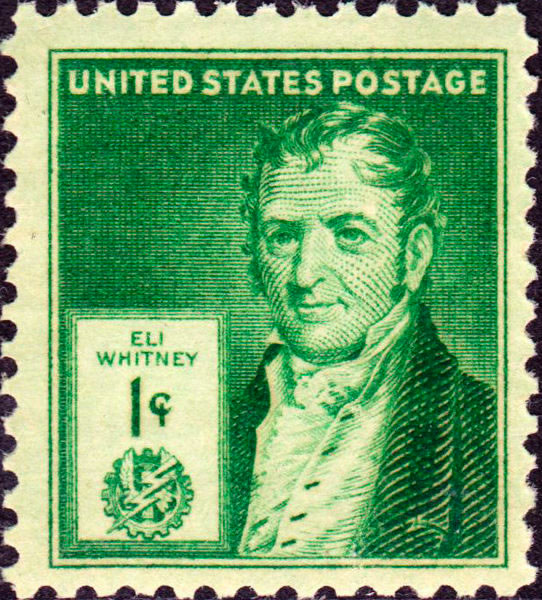
Eli Whitney and the Invention of the Cotton Gin |
| Eli Whitney, the inventor of the cotton gin, was born on December 8, 1765, in Westborough, Massachusetts. His mother died when he was only eleven years old. At age 14, Eli had started his own business making and selling nails in his father's workshop during the Revolutionary War. Eli Moves South to Make His FortuneWhile working as a school teacher and farmer, Whitney was able to save enough money to attend college at Yale University. After graduating with honors from Yale, he studied law, but failed to finish his studies because he couldn't pay tuition. Consequently, Eli decided to make his fortune by moving to the South. During his travels southward, he met the Revolutionary War hero Nathanael Greene’s widow. Taking a liking to Whitney, Mrs. Greene invited him to visit her family's Georgia plantation. Mrs. Greene and her soon to be husband, Phineas Miller, welcomed Eli and the two men later became partners in business. The Effect of the Invention of the Cotton GinAfter visiting cotton plantations in the south, Eli saw a need for an invention that would allow cottonfarmers to harvest their cotton more efficiently for market. In 1793, Whitney was able to create such an invention that would change the harvesting of cotton forever. The invention of the "Cotton Gin" (short for Cotton Engine) helped to revolutionize the processing of cotton crops throughout the southern United States. The cotton gin is a device that mechanically removes the sharp seeds from cotton plants, thereby enabling plantation owners to produce 55 pounds of cotton per day. Whitney’s cotton gin was said to be one of the most important contributions to America’s Industrial Revolution. It was also said to have reinvigorated the practice of slavery, a practice that may have been in decline in the south before the invention. Cotton soon became America's most important export and represented over 50% of the value of all goods shipped abroad from its shores between 1820 and 1860. LegacyWhile Eli Whitney is best known for inventing the cotton gin, he is also credited with the invention of the cotton milling machine. However, historians are not quite sure if he was the sole inventor of the cotton milling machine or if others were also working on the invention of these milling machines during the same time period. Being a true inventor at heart, Eli Whitney never stopped working on his inventions until his death on January 8, 1825. In the years before he died, Eli invented mechanical devices designed to help ease the pain of his prostate cancer. Discussion Questions
Early LifeEli Whitney was born on December 8, 1765, in Westborough, Massachusetts. His mother died when he was eleven. At age 14, during the Revolutionary War, he started a small business making and selling nails in his father's workshop. Moving SouthWhitney worked as a teacher and farmer to save money for college. He graduated from Yale University, then began studying law but had to quit because he couldn’t afford the tuition. Hoping to find success, he moved south. On his journey, he met the widow of Revolutionary War hero Nathanael Greene. She invited him to her plantation in Georgia, where he became friends and later business partners with her fiancé, Phineas Miller. The Cotton GinWhitney saw how hard it was to remove seeds from cotton by hand. In 1793, he invented the cotton gin, a machine that made this job much faster. The cotton gin could clean 55 pounds of cotton a day. This invention changed cotton farming and helped power the Industrial Revolution. However, it also led to a rise in slavery in the South. Between 1820 and 1860, cotton became America's biggest export, making up over half of all goods shipped overseas. LegacyBesides the cotton gin, Whitney is also linked to the invention of the cotton milling machine, though it’s unclear if he was the only inventor. He kept inventing throughout his life. Before he died on January 8, 1825, he even created devices to ease the pain of his prostate cancer. |
| Cotton Activities |