Harriet Beecher Stowe's Uncle Tom's Cabin |
|
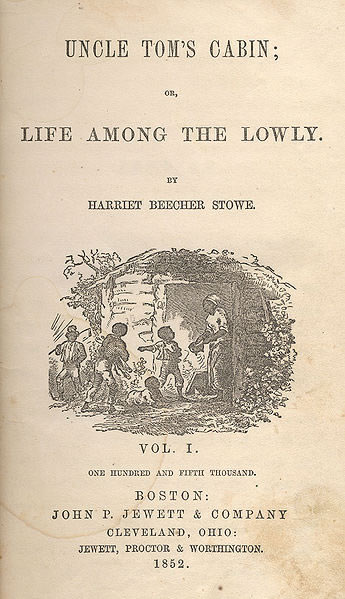
Harriet Beecher Stowe was an American author and abolitionist, most famous for authoring Uncle Tom's Cabin in 1852. Abolitionist RootsHarriet was born on June 14, 1811, in Litchfield, Connecticut. She had four siblings, including her brother, the famous abolitionist preacher Henry Ward Beecher. After enrolling in a seminary run by her sister, Harriet moved to Cincinnati, Ohio to be with her father who was the president of Lane Theological Seminary. In 1836, she married Calvin Ellis Stowe, a professor at the seminary and outspoken abolitionist. Together, they had seven children and housed several runaway slaves as part of the Underground Railroad. They eventually moved to Brunswick, Maine, where Calvin became a professor at Bowdoin College. A Polarizing PublicationAfter the passage of the 1850 Fugitive Slave Act, Harriet published her first installment of Uncle Tom's Cabin in an antislavery journal known as The Era. Uncle Tom's Cabin was an antislavery novel, fully published in 1852, that illustrated the horrors of slavery in the Southern United States. The book was meant to convince Northern readers of the urgency in ending slavery. The story was so powerful, and so polarizing, that it had a significant effect on sectional relations in the United States, and is often considered one of the causes of the deterioration in relations between the North and South. Slavery advocates were outraged by the novel, many of whom claimed it to be utterly false. The book was wildly popular in England, where over 1.5 million copies eventually circulated.
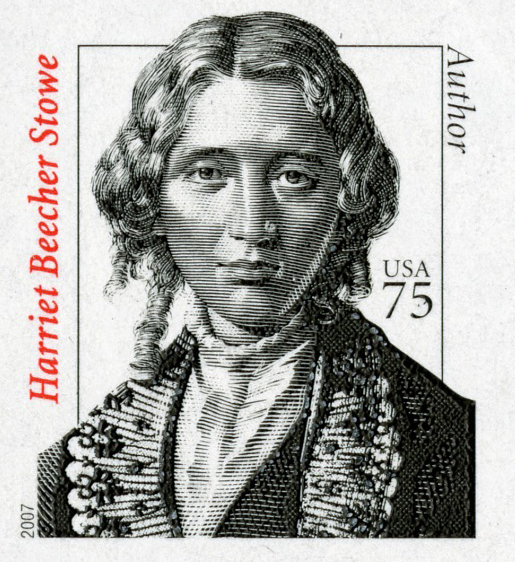
Harriet Beecher Stowe United States Postage Stamp Only Outsold by the Bible!Harriet Beecher Stowe quickly became a household name and Uncle Tom's Cabin became the best-selling novel, and second best-selling book in the 19th Century - it was only outsold by the Bible. Stowe's book helped fuel the abolitionist cause and Abraham Lincoln is sometimes quoted as saying "So you're the little lady that started this great war!" upon their meeting at the start of the Civil War. Literary NeighborsAfter Uncle Tom's Cabin, Harriet wrote many other books. For 23 years prior to her death, she lived next door to the famous author Mark Twain in Hartford, Connecticut. Today, the house is preserved as the Harriet Beecher Stowe House. There is also a Harriet Beecher Stowe House in Brunswick, Maine, where her famous novel was written. She died on July 1, 1896. Discussion Questions
Harriet Beecher Stowe: Author and AbolitionistHarriet Beecher Stowe was an American writer best known for her anti-slavery novel, Uncle Tom's Cabin, published in 1852. The book had a major impact on the fight against slavery in the United States. Abolitionist RootsHarriet was born on June 14, 1811, in Litchfield, Connecticut. Her family was active in religious and social causes, including her brother Henry Ward Beecher, a famous abolitionist preacher. She studied at a seminary and later moved to Ohio, where her father worked at Lane Theological Seminary. In 1836, she married Calvin Ellis Stowe, an abolitionist professor. The couple had seven children and helped escaped slaves as part of the Underground Railroad. They later moved to Maine, where Calvin taught at Bowdoin College. A Powerful NovelAfter the Fugitive Slave Act passed in 1850, Harriet began writing Uncle Tom's Cabin. The novel showed the cruelty of slavery and was meant to inspire people in the North to support ending it. It quickly became very popular but also caused controversy, especially in the South. Some people claimed the story was not true. Over 1.5 million copies were sold in England. Famous and InfluentialUncle Tom's Cabin became the best-selling novel of the 1800s, second only to the Bible. Harriet became very well known. President Abraham Lincoln is said to have called her “the little lady who started this great war” when they met at the start of the Civil War. Life After Her Famous BookHarriet wrote many more books after Uncle Tom’s Cabin. She lived for over 20 years next to the writer Mark Twain in Hartford, Connecticut. Her home there is now a museum. Another home in Brunswick, Maine, where she wrote her famous novel, is also preserved. She died on July 1, 1896. |
| Harriet Beecher Stowe Activities |