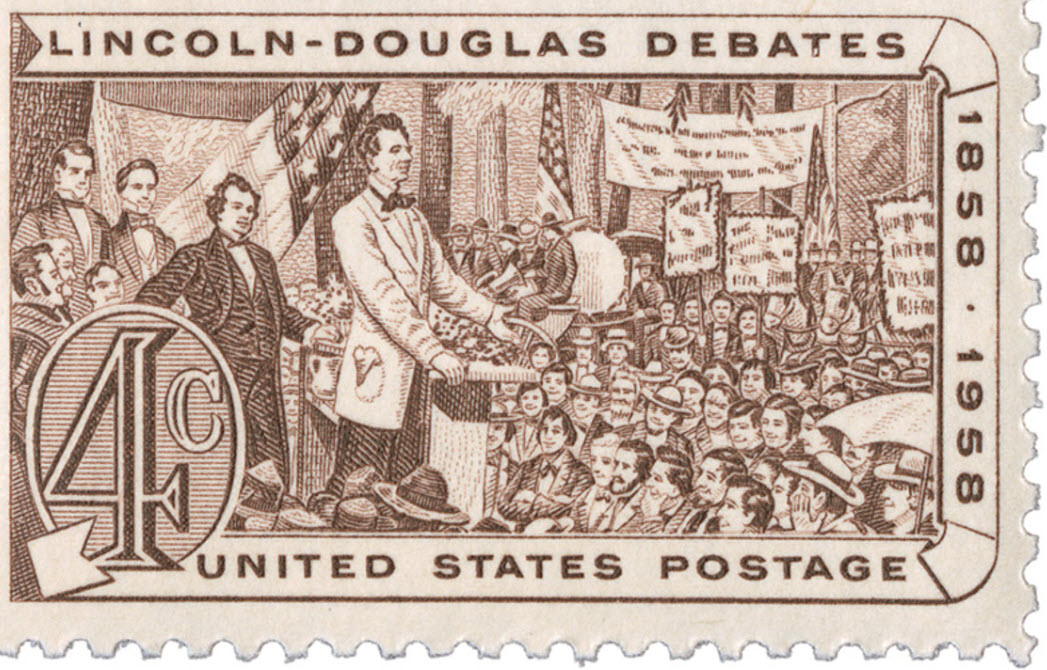
The Lincoln-Douglas Debates |
|
The SpeakersIn 1858, Abraham Lincoln and Stephen A. Douglas engaged in a series of seven debates in the congressional districts of Illinois over the issue of slavery. Both were vying for the Illinois Senate seat to be elected by the state legislature. Lincoln was an anti-slavery Republican and Douglas, nicknamed the "Little Giant" for his small stature but powerful voice, was the pro-slavery Democrat. Although Douglas would ultimately win the Senate, the debates helped propel Lincoln to national prominence. Slavery in the New TerritoriesThe major theme of the debate was the extension of slavery into new territories. In 1854, the passing of the Kansas-Nebraska Act (authored by Douglas) allowed for popular sovereignty in the new territories. Popular sovereignty meant that residents of a state or territory could vote whether to allow slavery. The “Dangerous Radical”Throughout the seven debates, Douglas claimed that Lincoln was a "dangerous radical" for his stance against popular sovereignty. He frequently referenced Lincoln's famous Republican nomination speech in which he claimed "a government cannot permanently endure half slave, half free," in accusing him of threatening the stability of the nation. Not an Abolitionist?Lincoln attacked the "monstrous injustice" of slavery and referenced the murderous events in Kansas as evidence that popular sovereignty was harmful to the nation. He claimed that "the crisis would be reached and passed when slavery was put in the course of ultimate extinction." Despite his stance against slavery, the debates revealed that Lincoln did not necessarily consider Blacks his equal. He denied he was an abolitionist in saying "And in as much as they cannot so live, while they do remain together there must be the position of superior and inferior, and I as much as any other man am in favor of having the superior position assigned to the white race." Who won?Despite winning the popular vote for the senate seat by more than 30,000 votes, it was Douglas who prevailed because he won the electoral vote. During the debates, however, Lincoln's tough questioning of Douglas caused a split in Democratic Party resulting in Lincoln's victory over Douglas in the Presidential Election of 1860. The beating, now called the Caning of Senator Sumner, served to further strain relations between the North and South and brought the country one step closer to Civil War. Discussion Questions
The SpeakersIn 1858, Abraham Lincoln and Stephen A. Douglas held seven debates in Illinois about slavery. They were both trying to win a seat in the U.S. Senate. Lincoln was an anti-slavery Republican, and Douglas was a Democrat who supported slavery. Douglas won the Senate seat, but the debates made Lincoln more well-known across the country. Slavery in the New TerritoriesThe main topic of the debates was whether slavery should be allowed in new U.S. territories. The Kansas-Nebraska Act, written by Douglas in 1854, said people in each territory could vote on the issue. This idea was called popular sovereignty. The “Dangerous Radical”Douglas said Lincoln was a "dangerous radical" because he didn’t support popular sovereignty. He pointed to Lincoln’s speech that said the country could not stay “half slave and half free,” saying it would cause division and danger to the nation. Not an Abolitionist?Lincoln called slavery a "great injustice" and used the violence in Kansas as proof that popular sovereignty was harmful. He said slavery should eventually end. However, Lincoln also said he did not believe Black people were equal to whites. He stated that he supported white people having the higher position in society. Who Won?Even though Lincoln got more votes from the people, Douglas won the Senate seat because of how the voting system worked. But Lincoln’s strong arguments hurt Douglas’s support and split the Democratic Party. This helped Lincoln win the presidency two years later in 1860. |
| Lincoln-Douglas Debates Activities |