Partisan Politics of the Civil War Era |
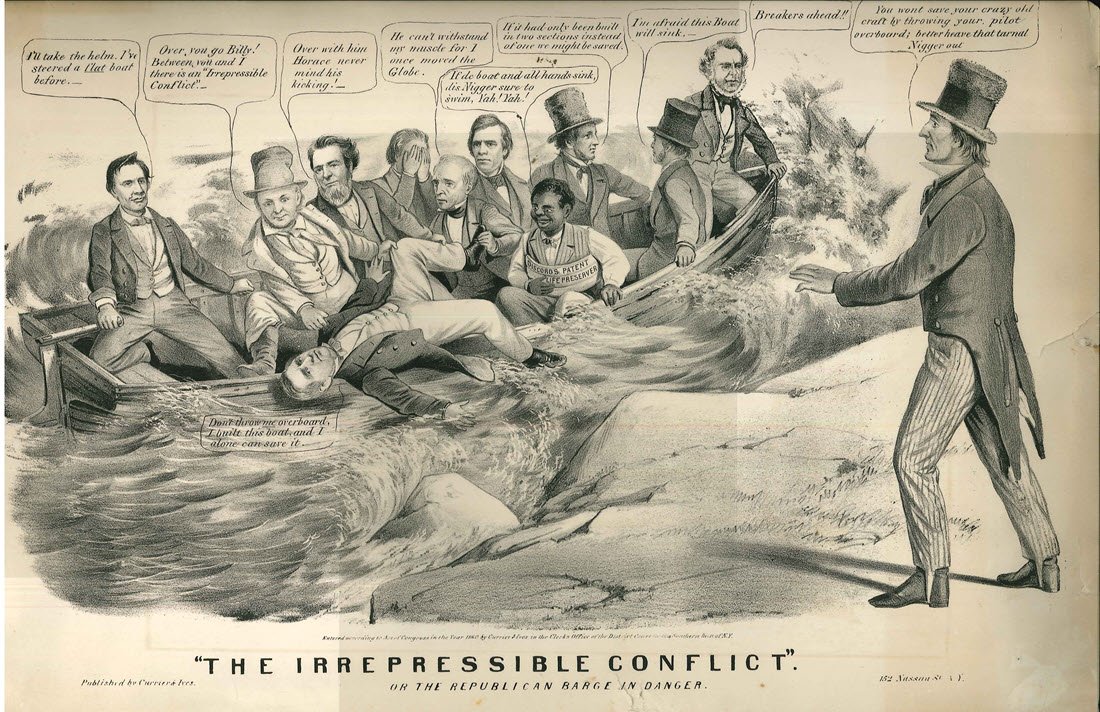
Political Cartoon depicting the early struggles of the Republican Party |
The Civil War era in the United States was marked by intense political upheaval and polarization as the nation grappled with the issue of slavery and the future of the Union. Against the backdrop of mounting tensions, several political parties emerged, each representing distinct interests, ideologies, and visions for the future of the country. This article delves into the key political parties of the Civil War era, shedding light on their positions, leaders, and contributions to one of the most pivotal periods in American history. Democratic PartyThe Democratic Party was one of the dominant political forces in the United States during the Civil War era. It was a broad coalition that included both Northern and Southern Democrats, though the party was deeply divided over the issue of slavery. This led to the party breaking into two factions, severely weakening its overall position. Northern Democrats tended to be more moderate and focused on preserving the Union while supporting the idea of popular sovereignty. Steven A. Douglas was one of the most prominent Northern Democrats and would serve as the party's presidential candidate in the Election of 1860. Southern Democrats were staunch defenders of states' rights and slavery and believed that slavery was a national institution. Any attempt to abolish slavery, or, to prevent its spread was unconstitutional. John C. Breckenridge was among the most prominent Southern Democrat, and would serve as the party's presidential candidate in the Election of 1860. Republican Party
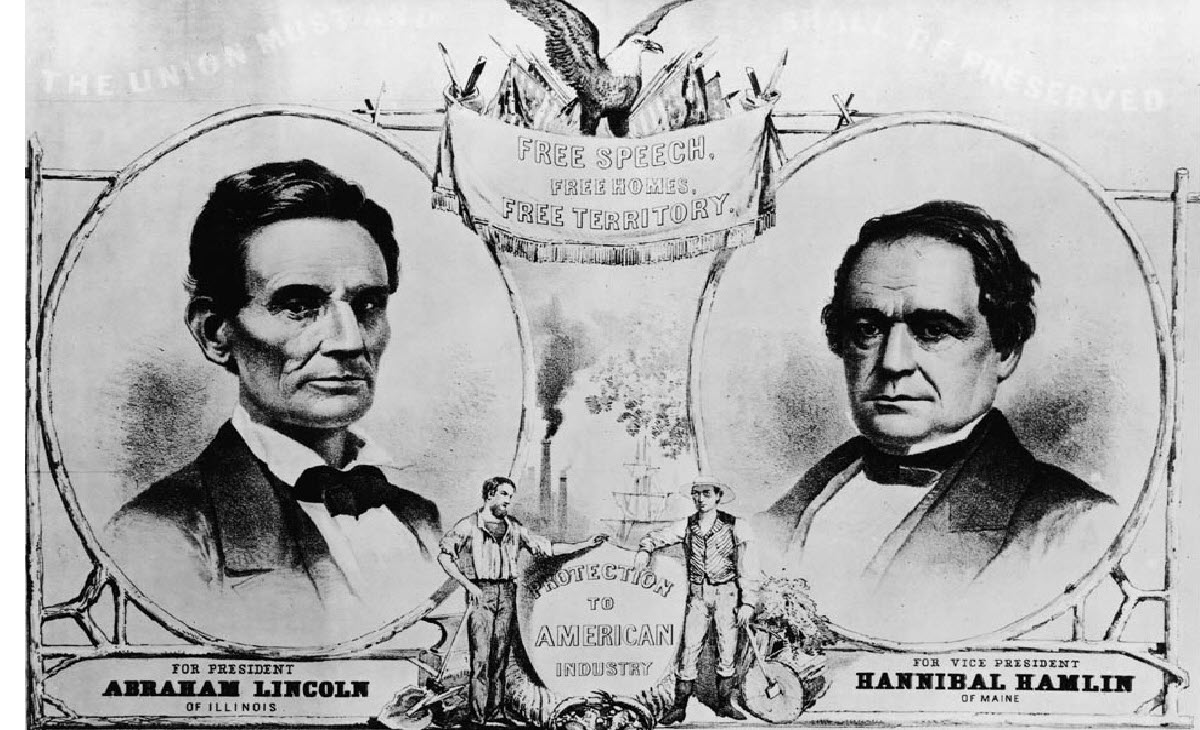
Republican Candidate Abraham Lincoln in the Election of 1860 The Republican Party emerged in the 1850s as a new political force committed to opposing the expansion of slavery into the Western territories. Formed as a coalition of anti-slavery activists, former Whigs, and Free Soilers, the Republican Party quickly rose to prominence as the primary opposition to the Democrats. Republicans advocated for a platform of free labor, economic development, and abolitionism. Notable Republican leaders during this period included Abraham Lincoln, Salmon P. Chase, and William H. Seward. Constitutional Union Party:The Constitutional Union Party was a short-lived political party formed in 1860 in an attempt to bridge the growing divide between Northern and Southern states. Composed of former Whigs and moderate Democrats, the Constitutional Union Party sought to avoid the issue of slavery and focus on preserving the Union through compromise, conciliation, and a strict interpretation of the Constitution. However, the party's efforts ultimately proved futile, and it quickly faded from the political scene. Know-Nothing PartyThe Know-Nothing Party, also known as the American Party, was a nativist political movement that emerged in the 1850s in response to the wave of immigration sweeping across the United States. The party espoused anti-immigrant and anti-Catholic sentiments and advocated for restrictions on immigration and the naturalization of foreigners. While the Know-Nothings enjoyed some electoral success in the early years of the Civil War era, they were ultimately eclipsed by the growing tensions over slavery. Free Soil PartyThe Free Soil Party was an anti-slavery political party formed in the 1840s by abolitionists, Free Soilers, and disgruntled Democrats and Whigs. The party's platform called for the exclusion of slavery from the Western territories and the promotion of free labor and economic opportunity. While the Free Soil Party was relatively short-lived, it played a significant role in shaping the political landscape of the Civil War era and laying the groundwork for the emergence of the Republican Party. Discussion Questions
A Time of DivisionDuring the Civil War era, the United States was deeply divided over slavery and the future of the country. Many political parties formed to represent different ideas and regions. Democratic PartyThe Democratic Party was one of the strongest parties at the time but became divided over slavery. Northern Democrats wanted to keep the Union together and let states vote on slavery (popular sovereignty). Stephen A. Douglas was their main leader in the 1860 election. Southern Democrats strongly supported slavery and believed it was a right protected by the Constitution. John C. Breckinridge was their presidential candidate in 1860. Republican PartyThe Republican Party was created in the 1850s to stop slavery from spreading into new lands in the West. It was made up of people who were against slavery, including former Whigs and Free Soilers. Abraham Lincoln was their candidate in the 1860 election. Constitutional Union PartyThis party was formed in 1860 by people who wanted to keep the country together without talking about slavery. They believed in following the Constitution and wanted peace between the North and South. The party did not last long. Know-Nothing PartyThis party, also called the American Party, was against immigrants and Catholics. It wanted to stop immigration and make it harder for foreigners to become U.S. citizens. It was popular for a short time but faded as slavery became a bigger issue. Free Soil PartyThe Free Soil Party started in the 1840s. It wanted to stop slavery in the Western territories and supported free labor and new economic chances. The party didn’t last long, but many of its ideas helped form the Republican Party. |