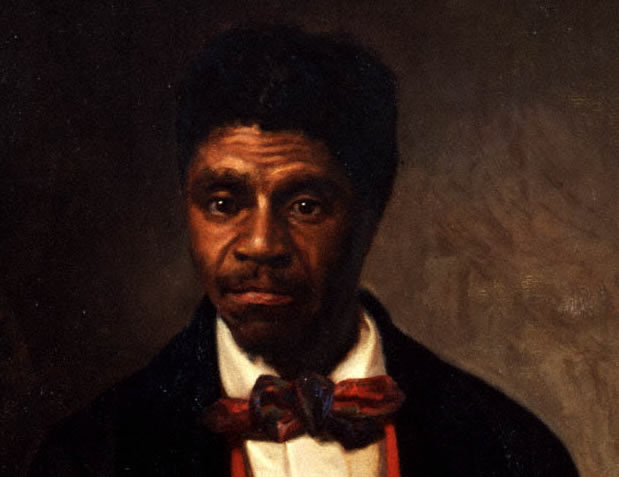
The Dred Scott Decision |
|
Dred Scott was a slave who sued for his freedom in a case presented to the Supreme Court of the United States in 1856. The case, Dred Scott v. Sandford, is one of the most famous cases of all time. Scott's Claim; Taney's Racist JudgmentScott's lawyer argued that although he and his wife were slaves, since they had lived in the Illinois Territory (where their owner, Dr. John Emerson often traveled to), where slavery was illegal, they were entitled to their freedom. The case went through various local courts until it was heard by the U.S. Supreme Court. According to Chief Justice Roger Taney, Dred Scott and his wife were not entitled to bring the lawsuit before the Supreme Court because they were not official citizens of the United States. Seven out of the nine justices agreed. In essence, the court declared that slaves had no rights and no claim to freedom. In addition, Taney invoked the Fifth Amendment, claiming that private property could not be taken from its owner without due process. In addition, the court also ruled that the institution of slavery could not be prohibited in new territories, and that the Missouri Compromise of 1820 was unconstitutional (which prohibited slavery in some of the lands acquired in the Louisiana Purchase ). The Divide WidensTo abolitionists, the decision confirmed their fears that Southerners were intent on extending slavery throughout the nation. The ruling increased the tension between politicians in the North and the South and reduced the chance for any diplomacy or negotiations that may have prevented war. Discussion Questions
Dred Scott Fights for His FreedomDred Scott was a slave who tried to win his freedom by taking his case to the U.S. Supreme Court in 1856. The case, called Dred Scott v. Sandford, became one of the most famous court cases in American history. Scott’s Argument and the Court’s DecisionScott’s lawyer said that since Dred Scott and his wife had lived in the Illinois Territory—where slavery was illegal—they should be free. The case was passed through several lower courts before reaching the Supreme Court. Chief Justice Roger Taney ruled that Scott and his wife could not even sue in court because they were not U.S. citizens. Most of the justices agreed. The court also said that slaves were considered property, and taking property without due process violated the Fifth Amendment. In addition, the court said that Congress could not ban slavery in new territories, which made the Missouri Compromise unconstitutional. A Nation Further DividedAbolitionists were outraged by the decision. They believed it showed that Southern leaders wanted to spread slavery everywhere. The ruling made the conflict between the North and South even worse and made it harder to find a peaceful solution to the growing crisis. |