The Missouri Compromise |
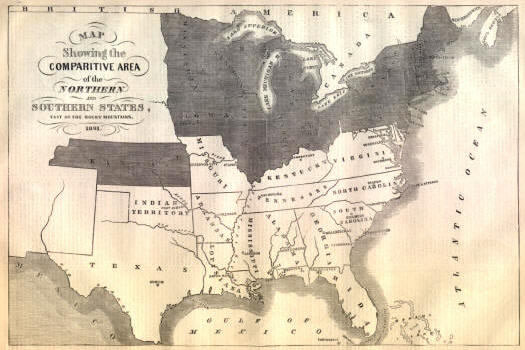
Missouri Applies for StatehoodIn 1819, as Missouri began drafting a state constitution in preparation for statehood, New York congressman James Tallmadge introduced two antislavery amendments to the bill which allowed for the creation of Missouri as a state. Despite the fact that Tallmadge's bills were not passed, the issue involving slavery threatened to explode. The Balance in Congress is ThreatenedThe issue of slavery had remained controversial in America since 1787. In 1819, half of America's twenty two states were free states (northern), and half were slave states (southern). Because the free states had larger populations, they controlled the House of Representatives. Free and slave states shared equal representation in the Senate. The admission of Missouri as a free state or slave state would upset the balance. Antislavery members of Congress argued that slavery should be prohibited in new states, while Pro-slavery members of Congress argued that the state should have the right to determine if slavery was legal or illegal within its borders. Clay's CompromiseA compromise was made when Maine applied for statehood in 1820. According to the deal thought of by Henry Clay, if the southern states agreed to the admission of Maine as a free state, Missouri would be admitted as a slave state. In addition, all lands acquired in the Louisiana Purchase north of 36° 30' N latitude would be free. Both the free and the slave states agreed to Clay's compromise. Nevertheless, the influence of the Missouri Compromise would last nearly thirty years before it would be repealed. Discussion Questions
Missouri Applies for StatehoodIn 1819, Missouri began writing a constitution to become a state. Congressman James Tallmadge from New York suggested two changes to the bill that would limit slavery, but they were not approved. Still, the debate over slavery caused a major argument in Congress. The Balance in Congress is ThreatenedSlavery had been a difficult issue in the U.S. since 1787. In 1819, there were 22 states—half free and half slave. The free states had more people, so they controlled the House of Representatives, but both sides had the same number of votes in the Senate. Adding Missouri as either a free or slave state would upset this balance. Lawmakers who opposed slavery wanted to ban it in new states, while those who supported it wanted states to decide for themselves. Clay's CompromiseIn 1820, a compromise was made when Maine also wanted to become a state. Henry Clay proposed that Maine would join as a free state and Missouri as a slave state. He also suggested that all land north of 36° 30' in the Louisiana Purchase would be free of slavery. Both sides agreed, and this deal became known as the Missouri Compromise. It helped keep peace for almost 30 years until it was later overturned. |
| Missouri Compromise Activities |