Battle of Gettysburg: Day 1 - July 1, 1863 |
||
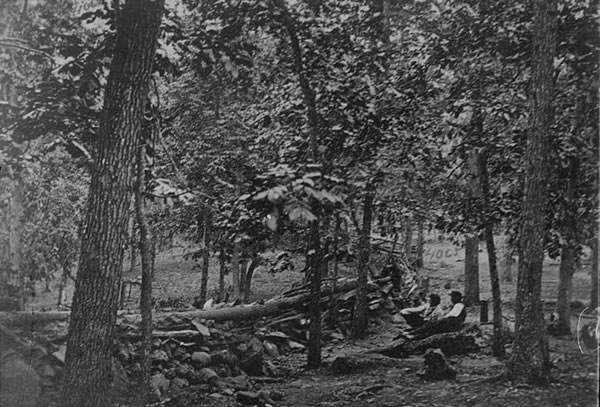
Culp's Hill |
||
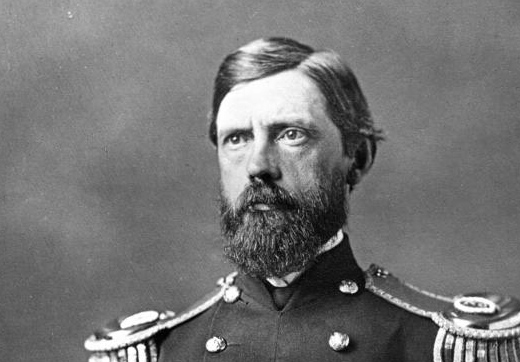
The Ridges of GettysburgAnticipating a Confederate assault, Union Brigadier General John Buford and his soldiers would produce the first line of defense. Buford positioned his defenses along three ridges west of the town. Buford's goal was simply to delay the Confederate advance with his small cavalry unit until greater Union forces could assemble their defenses on the three storied ridges south of town known as Cemetery Ridge, Cemetery Hill, and Culp's Hill's. These ridges were crucial to control of Gettysburg. Whichever army could successfully occupy these heights would have superior position and would be difficult to dislodge. The Death of Major General ReynoldsThe first of the Confederate forces to engage at Gettysburg, under the Command of Major General Henry Heth, succeeded in advancing forward despite Buford's defenses. Soon, battles erupted in several locations, and Union forces would suffer severe casualties. Union Major General John Reynolds would be killed in battle while positioning his troops. Major General Abner Doubleday, the man eventually credited with inventing the formal game of baseball, would assume command. Fighting would intensify on a road known as the Chambersburg Pike, as Confederate forces continued to advance.
Jubal Early's Successful AssaultMeanwhile, Union defenses positioned north and northwest of town would soon be outflanked by Confederates under the command of Jubal Early and Robert Rodes. Despite suffering severe casualties, Early's soldiers would break through the line under the command of Union General Francis Barlow, attacking them from multiple sides and completely overwhelming them. Barlow would be wounded and captured. Union forces were forced to retreat to Cemetery Hill, west of town, to regroup. Here, command of the battlefield was turned over to Major General Winfield Hancock. Hancock made the decision that the bulk of his forces would be deployed at Gettysburg, ensuring it would be the scene of the largest battle of the War. Confusing OrdersOn the Confederate side, Lee instructed Major General Richard Ewell to take Cemetery Ridge "if practical." Ewell determined such an assault to be impractical leaving Union forces to form defenses on the ridge. Ewell's decision not to assault Cemetery Ridge and the reeling Union forces has been viewed as a major mistake and missed opportunity for the Confederacy. At the end of the first day of Gettysburg, only a little more than 1/4 of the total number of troops for the two sides combined had been engaged in battle. Discussion Questions
Proceed to Gettysburg: Day 2The Ridges of GettysburgUnion General John Buford expected the Confederates to attack, so he set up the first line of defense on three ridges west of Gettysburg. His goal was to slow the Confederate army with his small cavalry until more Union troops arrived. The Union planned to hold the high ground on Cemetery Ridge, Cemetery Hill, and Culp’s Hill—key spots for controlling the battlefield. The Death of General ReynoldsConfederate troops under General Henry Heth attacked and broke through Buford’s defenses. Heavy fighting followed, and Union General John Reynolds was killed while placing his troops. General Abner Doubleday then took over command. Fighting grew intense along the Chambersburg Pike as Confederate forces kept advancing. Jubal Early Breaks ThroughConfederate generals Jubal Early and Robert Rodes attacked Union forces north and northwest of town. They surrounded and defeated Union troops led by General Francis Barlow, who was wounded and captured. Union soldiers retreated to Cemetery Hill, where General Winfield Hancock took command and decided to defend Gettysburg. His decision helped make the battle one of the largest of the war. A Missed OpportunityGeneral Lee told Confederate General Richard Ewell to take Cemetery Ridge “if practical.” Ewell decided not to attack, which allowed Union forces to build strong defenses. Many believe this was a big mistake for the Confederates. At the end of the first day, only about one-fourth of all the troops had fought so far. |
||
| Gettysburg Activities | ||
|