Battle of Shiloh Church (TN) |
|
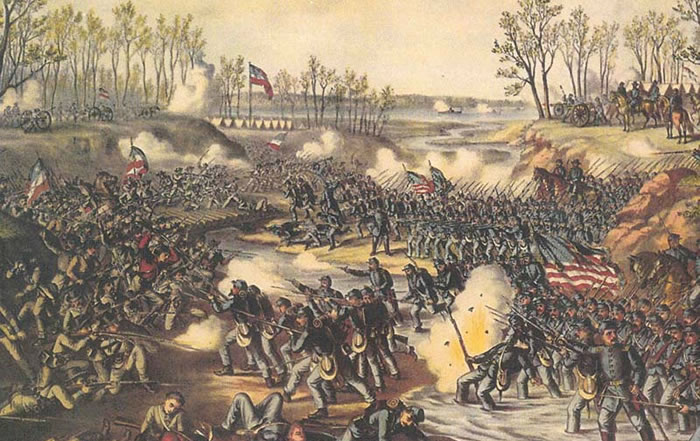
Confederate StrategyThe Battle of Shiloh Church, sometimes referred to as the Battle of Pittsburg Landing (in the South), was a major engagement of the Western Theater of the American Civil War that occurred on April 6-7, 1862, in western Tennessee. The Union Army of the Tennessee, led by future president and hero of the Civil War, Ulysses S. Grant, had occupied much of Tennessee after winning the Battles at Forts Henry and Donelson. Confederate forces under Generals P.G.T. Beauregard and Albert Sidney Johnston launched a surprise attack on Grant's Army of nearly 50,000, which was encamped on the west bank of the Tennessee River. The Confederates hoped to drive Grant's army into nearby swamps before reinforcements could arrive and to prevent two major divisions of the Union army from uniting in Tennessee. The Hornet's Nest and Intense FightingOn the morning of April 6, Johnston's army launched a surprise attack on Grant. Confederate forces, however, proved inexperienced with inadequate weaponry. Furthermore, Johnston and Beauregard differed concerning attack strategy, which led to mass confusion amongst Confederate ranks. Nevertheless, the attack proved effective, as many shocked Union soldiers threw down their weapons and ran. Union Brigadier General William T. Sherman, however, rallied his troops, despite being wounded and having three horses shot out from under him. Confederate forces, however, continued to gain ground, and many acquired more effective weapons from those left behind by dead or fleeing Union soldiers. Meanwhile, Union forces had also been overrun at a portion of the battlefield known as the "Hornet's Nest." Confederate forces would ultimately capture as many as 2,400 Union soldiers after surrounding this position, but the brave Union stand allowed General Grant to establish a strong three-mile long defense line with 50 cannon and several gunboats positioned in the Tennessee River at Pittsburg Landing. During this part of the battle, General Johnston was killed, adding even more confusion in the Confederate ranks.
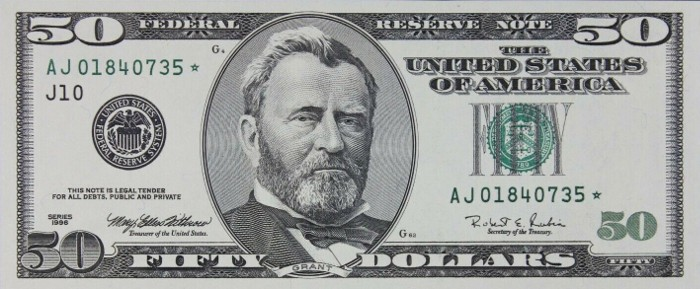
Ulysses S. Grant on the $50 Bill Counting Chickens Before they Hatch, by P.G.T. BeauregardBy the end of the day, Confederate forces had pushed the Union back along the river, but not into the swamps. The Union Army of the Tennessee would fight another day. General Beauregard, however, believed he had Grant exactly where he wanted him, and celebrated a "complete" Confederate victory prematurely. By 4:00 in the morning of April 7th, Grant's army received significant reinforcements giving them a huge advantage in manpower. Beauregard ignored intelligence that suggested Union reinforcement. The Devastating Union CounterattackOn April 7th, Beauregard ordered his Army to attack Union ranks and drive them entirely into the river. Grant, now reinforced by Don Carlos Buell's Division of the Ohio, and Lew Wallace's division, launched a devastating surprise counterattack from defensive positions along the river. Beauregard's Confederates fought bravely, but were low on morale and supplies. They were forced to move to positions behind the Shiloh Church and eventually retreated to Corinth, Mississippi. Grant, knowing his soldiers were exhausted, failed to order pursuit of the fleeing Confederates. On April 8th, Grant sent General Sherman on a mission to find out whether or not the Confederates had made a full retreat. In what came to be known as the Battle of Fallen Timbers, Union forces came upon a Confederate hospital camp. Confederate forces launched a wild attack under Colonel Nathan Bedford Forrest that resulted in the capture of 100 or so Union soldiers before retreating at the sight of the larger Union force.
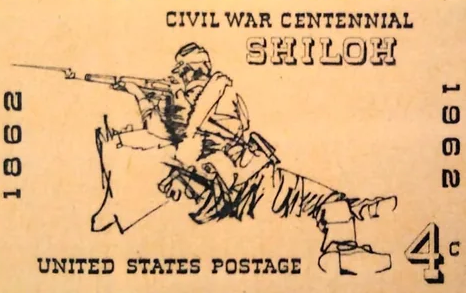
Deadliest Battle in American History (to that point)Despite the Union victory, General Grant was vilified in the Northern press for failing to pursue the Confederates. Many called for Grant, who had a reputation for being a drunk, to be removed from command. President Lincoln refused. The Battle of Shiloh left the Confederate strongholds of Memphis and Corinth, Mississippi vulnerable to Union occupation. Both would fall into Union hands in 1862. The battle resulted in a staggering 24,000 combined casualties, by far, the deadliest engagement in American history to that point. Discussion Questions
Confederate Strategy at ShilohThe Battle of Shiloh, also called the Battle of Pittsburg Landing, took place on April 6–7, 1862, in western Tennessee. Confederate Generals Beauregard and Johnston launched a surprise attack on Union General Ulysses S. Grant’s army, hoping to defeat him before Union reinforcements could arrive and to stop Union armies from joining forces in Tennessee.Fierce Fighting and the Hornet’s NestOn April 6, the Confederates attacked, but their inexperience and poor weapons caused confusion. Despite that, they surprised many Union soldiers, causing them to flee. Union General Sherman helped rally troops, though he was wounded. The Confederates pushed through, capturing 2,400 Union soldiers at a spot called the "Hornet’s Nest." This delay gave Grant time to build strong defenses with cannons and gunboats. Confederate General Johnston was killed during the battle, causing further confusion.Beauregard's MistakeBy the end of the first day, the Confederates had pushed Union forces back but didn’t achieve their goal of trapping them in swamps. General Beauregard wrongly believed they had won and ignored signs that Union reinforcements were arriving. Overnight, Grant’s army was strengthened and prepared for a counterattack.The Union CounterattackOn April 7, Grant, now reinforced, launched a strong counterattack with help from new Union divisions. Confederate troops, tired and short on supplies, tried to fight back but had to retreat to Corinth, Mississippi. Grant didn’t chase them right away, but sent General Sherman to check their retreat the next day. At the Battle of Fallen Timbers, Union troops were briefly attacked by Confederates but the Confederates fled after seeing the larger Union force.A Costly Union VictoryEven though the Union won, Grant was harshly criticized for not chasing the Confederates. Many wanted him removed from command, but President Lincoln supported him. The battle opened the door for Union control of Memphis and Corinth. With about 24,000 total casualties, it was the deadliest battle in American history at that time. |
| Battle of Shiloh Activities |