Sherman's March to the Sea |
Sherman's March to the Sea |
|
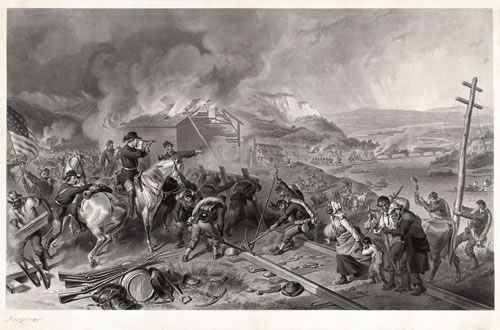
Sherman's March to the Sea is the popular name given to the military campaign under the Command of Union General William Tecumseh Sherman, in which Union forces tore through Georgia between November 15 and December 21, 1864, destroying Confederate property, infrastructure, railroads, and farmlands as well as civilian targets. Demoralizing GeorgiaSherman's March to the Sea was born from the idea that the Confederates would only surrender if the economy and collective psyche was broken. Union Generals Ulysses S. Grant and William T. Sherman endeavored to break the will of the Southern people by reducing their land and property to ruins in utilizing a practice called scorched earth warfare. In addition, rather than opening supply lines, Sherman ordered his army to "live off the land," which meant he gave his men permission to requisition supplies and food in any way possible, including by taking them from civilians by force.
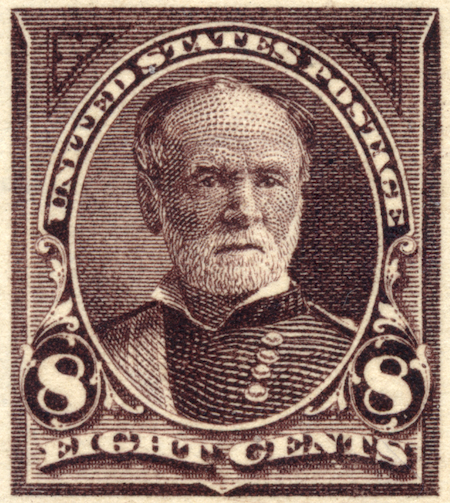
William T. Sherman Total WarfareOn November 15, 1864 Sherman's army of 62,000 men divided into two columns and began the "march" south from the devastated city of Atlanta toward Savannah that would eventually result in over $100 million dollars in damage (in 1864 value). Interestingly, Sherman's personal guard was comprised mostly of the 1st Alabama Cavalry Regiment, a southern unit loyal to the Union. In all, Sherman's Army destroyed nearly 300 miles of railroad tracks and numerous bridges and telegraph lines. It took at least 9.5 million pounds of corn and 10.5 million pounds of animal fodder. Any cotton gins or mills in the path of Sherman's army were also destroyed. When Sherman finally reached Savannah, he offered it as a "Christmas" gift to President Lincoln. Savannah was spared from being torched. On to the CarolinasIn early 1865, Sherman's army turned north into South Carolina where his soldiers were eager to lay ruin to the state they believed started the war. On February 17, 1865, he occupied the capital city of Columbia, which was set aflame and largely ruined. A few days later, Sherman's Army entered North Carolina where they took the port city of Wilmington on February 22. On April 26th, 1865, Sherman accepted the formal surrender of Joseph Johnston, who commanded the last major Confederate army in the field. Discussion Questions
Grant’s Mission: Crush Lee’s ArmyIn 1864, Union General Ulysses S. Grant started the Overland Campaign to destroy Confederate General Robert E. Lee’s army and capture Richmond, the Confederate capital. Grant tried to move his army between Lee’s army and Richmond. The campaign included three major battles and many smaller fights. Over two months, there were around 73,000 total casualties. The Union suffered high losses, but Lee’s army lost a higher percentage of soldiers and was pushed closer to defeat. Battle of the WildernessOn May 5, 1864, Union and Confederate armies fought in a dense forest known as the Wilderness. Grant wanted to avoid fighting there, but Lee moved quickly to block him. The forest made it hard to see and fight, and fires even broke out during the battle. Fighting lasted two days, with almost 29,000 casualties. The Union lost about 17,666 soldiers. Spotsylvania CourthouseAfter the Wilderness, Grant tried to move toward Richmond again. But Lee reached Spotsylvania Courthouse first and built defenses. The battle lasted almost two weeks. One of the worst parts was at the "Bloody Angle," where soldiers fought in trenches and even hand-to-hand for nearly 24 hours. Over 32,000 total casualties were recorded. Grant then moved his army southeast. Battle of Cold HarborOn May 31, 1864, the armies met again at Cold Harbor, near Richmond. The Confederates had strong defenses stretching seven miles. On June 3, Grant ordered a Union attack that failed badly. Nearly 13,000 Union soldiers were killed or wounded, while the Confederates lost fewer than 6,000. Grant regretted the attack. This Confederate victory raised hopes in the South and caused anger in the North. Still, it would be Lee’s last major victory. Next: PetersburgAfter Cold Harbor, Grant moved his army across the James River to attack Petersburg, a key supply center for Richmond. Instead of trying to destroy Lee’s army in battle, Grant chose a new strategy: surround and starve the Confederates. This shift marked the beginning of the end for the Confederacy. |
| Sherman's March to the Sea Activities |