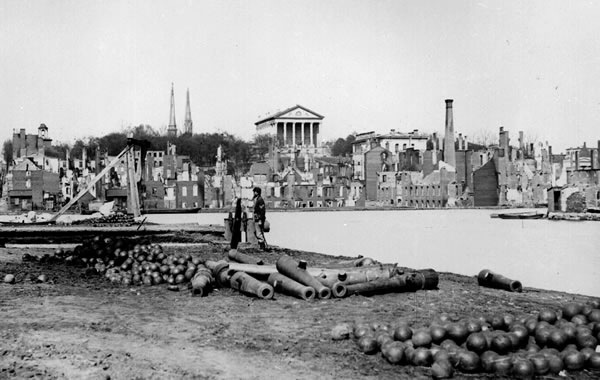
The Fall of Richmond

Evacuation Fire at Richmond


Fleeing Richmond

As Petersburg, Virginia, teetered on the brink of disaster, and Union forces managed to destroy its final supply line, plans were made for the evacuation of the Confederate capital at Richmond. Jefferson Davis and his entire cabinet packed up all records, contracts, documents, and Confederate treasure, and boarded a train on the last available railroad toward Danville, Virginia.

A City in Flames

As Confederate military forces fled, they set fire to bridges, armories, and supply warehouses. Such fires spread out of control and ultimately destroyed large parts of the city. Union soldiers would extinguish the fires after the mayor officially surrendered the city.

The Liberator Arrives

On April 4th, President Lincoln traveled from Grant’s headquarters at City Point to tour the dystopian city. Upon his arrival, he was greeted by throngs of now liberated slaves who treated him as a God or idol.  Lincoln eventually made his way to the White House of the Confederacy, the headquarters of the Confederate government and Jefferson Davis. Lincoln is said to have sat in the office chair of Jefferson Davis before touring the house, which was spared from the flames that melted much of the rest of the city.

Discussion Questions

  1. Why did Jefferson Davis and his cabinet decide to leave Richmond, and what did they take with them?
  2. How did the fires in Richmond start, and why did they get out of control?
  3. What was the significance of Lincoln’s visit to Richmond, especially to the newly freed slaves?
  4. What do you think Lincoln’s visit to Jefferson Davis’s home symbolized at the end of the war?

Fleeing Richmond

As Union troops cut off the last supply line to Petersburg, plans were made to evacuate Richmond, the Confederate capital. President Jefferson Davis and his cabinet took important records, money, and documents, and escaped by train to Danville, Virginia.

A City in Flames

As Confederate soldiers left Richmond, they set fire to bridges, weapon stores, and supply buildings. The fires got out of control and burned large parts of the city. Union troops put out the flames after the mayor surrendered.

The Liberator Arrives

On April 4, 1865, President Abraham Lincoln came from City Point to visit Richmond. Crowds of newly freed slaves greeted him joyfully, calling him a hero. Lincoln visited the former home of Jefferson Davis, which had not been burned, and sat in Davis’s chair before walking through the house.

Fall of Richmond Activities