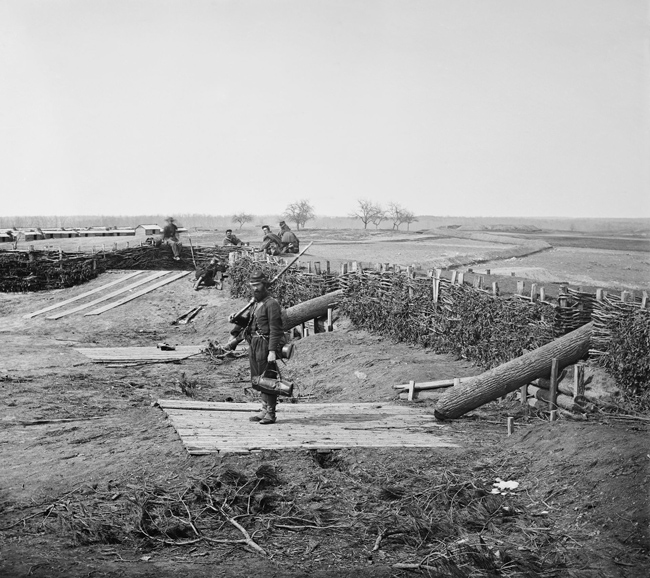
Early in the Civil War, Lincoln believed a decisive blow against the Confederate capital at Richmond would serve to bring a quick end to what was becoming a surprisingly gruesome affair. Following the stunning defeat at Bull Run, General George McClellan was named Commander of the Army of the Potomac - the largest branch of the Union Army. Although McClellan was beloved by his soldiers, he had proved hesitant to launch major offensives against the Confederates, even with huge advantages in manpower, positioning, or intelligence. As the war progressed, this unfortunate tendency became increasingly impactful as McClellan blamed the weather, his subordinate officers, faulty intelligence, or even the incompetence of Lincoln and his administration for his failures, all the while suggesting in letters to his wife that he was the only man who could save the Union. The goal of the Peninsula Campaign in 1862 was to deliver that decisive blow to the Confederates at their capital. Lincoln wanted McClellan to move swiftly from Northern Virginia, but McClellan refused his repeated urgings to move. McClellan claimed he was badly outgunned and outmanned. He had received a faulty report that the Confederates had positioned 100,000 soldiers at Manassas Junction, Virginia, with at least 300 artillery pieces. While McClellan and the Army of the Potomac stalled for weeks considering their options, the Confederate Army under Joseph Johnston moved to organize an impenetrable defense around Richmond that would ultimately render McClellan's Peninsula Campaign a failure. As it turned out, the 100,000 soldiers at Manassas turned out to be only 40,000, and most of the dreaded artillery pieces were nothing more than logs painted to appear like cannons. These painted logs were perfect examples of Quaker Guns - harmless props designed to appear like actual weapons.
At the start of the Civil War, President Abraham Lincoln believed that capturing the Confederate capital of Richmond could quickly end the conflict. After the Union's shocking loss at Bull Run, General George McClellan was put in charge of the Army of the Potomac. Though his soldiers admired him, McClellan often hesitated to launch attacks—even when he had more troops and better positioning. Instead of acting, he blamed weather, bad intelligence, other generals, and even Lincoln for his failures, while privately telling his wife that he was the only one who could save the Union.
The Peninsula Campaign of 1862 aimed to strike Richmond, but McClellan ignored Lincoln’s orders to move quickly. He claimed the Confederate army at Manassas had 100,000 soldiers and 300 cannons, based on faulty intelligence. While McClellan delayed, Confederate General Joseph Johnston built strong defenses around Richmond. In reality, there were only about 40,000 Confederate troops—and many of the “cannons” were just logs painted to look like guns. These fake cannons were called Quaker Guns, used to trick the enemy into thinking they were real weapons.
The Embarrassing Quaker Gun Incident
It's not my fault!
Those Aren't Guns, They're Logs!
Discussion Questions
It's Not My Fault!
Those Aren't Guns, They're Logs!