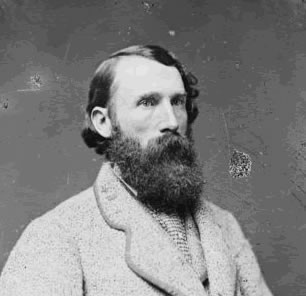
A.P. Hill |
|
Ambrose Powell Hill was born November 9, 1825, in Culpeper, Virginia. Known as “Little Powell,” A.P. Hill graduated from the US Military Academy in 1847. He served in the Seminole Wars and Mexican-American War and was made First Lieutenant in 1851. In 1861, Hill resigned his commission in the US Army and was appointed colonel of the 13th Virginia Infantry Regiment when Virginia seceded. Hill quickly distinguished himself and was promoted to brigadier general and command of a brigade in the Confederate Army of the Potomac. Hill was known as an effective and highly emotional leader. He was said to get so “worked up” before a battle that he would often become sick. During the war, Hill was often stricken with various illnesses that reduced his effectiveness. Nevertheless, Hill quickly became one of the highest ranked Confederate generals and performed admirably in the Peninsula Campaign (1862) and Battle of Williamsburg. Hill’s unit, known as “The Light Division,” participated in several decisive battles including Cedar Mountain, Fredericksburg, Antietam, and Chancellorsville—where Hill himself was wounded. After Stonewall Jackson was killed at Chancellorsville, Hill was promoted to lieutenant general and placed in command of the newly created Third Corps of Lee’s Army, which he led in the Gettysburg Campaign of 1863 and at the Siege of Petersburg (1864–1865). Just days before the Confederate surrender at Appomattox Courthouse, however, Hill was killed by a Union soldier at Petersburg, Virginia. Today, Fort A.P. Hill in Caroline County, Virginia, is named in his honor. A World War II US Naval ship was also named in his honor. Discussion Questions
Early Life and Military BackgroundAmbrose Powell Hill, known as "Little Powell," was born on November 9, 1825, in Culpeper, Virginia. He graduated from the U.S. Military Academy in 1847 and served in both the Seminole Wars and the Mexican-American War, becoming a First Lieutenant in 1851. Joining the ConfederacyWhen Virginia seceded in 1861, Hill resigned from the U.S. Army and became colonel of the 13th Virginia Infantry Regiment. He quickly proved himself and rose to brigadier general in the Confederate Army, known for his intense emotions and physical sickness before battles. Success in BattleDespite recurring illnesses, Hill gained a strong reputation and led “The Light Division” in major battles such as Cedar Mountain, Fredericksburg, Antietam, and Chancellorsville. After General Stonewall Jackson's death, Hill was promoted to lieutenant general and took command of the Third Corps in Lee’s army. Final Days and LegacyHill fought in the Gettysburg Campaign and the long Siege of Petersburg. Just days before the Confederate surrender, he was killed by a Union soldier near Petersburg. His legacy lives on through Fort A.P. Hill and a World War II naval ship named in his honor. |