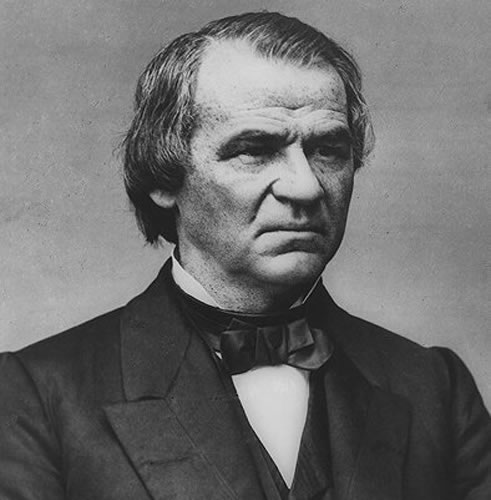
Andrew Johnson |
Advocate of the Common ManAndrew Johnson was the 17th president of the United States. He was born in Raleigh, North Carolina, in 1808. He was born into poverty and ran away to Tennessee at an early age. After starting his own tailor shop, he married Eliza McCardle. He soon entered politics and became known as an adept speaker. He frequently spoke against the Southern aristocracy and was an advocate for the common man and poor farmer. Southerner Against the SouthJohnson was elected to the House of Representatives in 1835, and later, to the Senate in 1841. In 1853, Johnson became governor of Tennessee. He then served as a Democrat in the United States Senate until 1862. During secession and the Civil War, Johnson was the only senator from a seceded state that continued to participate in Congress. President Abraham Lincoln appointed him military governor of Tennessee after the state fell into Union hands, and he became Lincoln’s vice president in 1864. After President Lincoln was assassinated in 1865, Johnson was sworn in as America’s 17th president.
Johnson's Actions in Reconstruction - NPS.gov video Clashes with Congress; ImpeachmentDuring his term in office, Johnson presided over Reconstruction, the period after the Civil War in which the Southern states were reintegrated into the Union. Johnson and Congress argued over the specifics of Reconstruction. Johnson favored a quick restoration of rights and privileges, whereas Congress favored a more gradual approach. Tensions grew when Johnson replaced Secretary of War Edwin M. Stanton. Republicans claimed Johnson violated the newly passed Tenure of Office Act. The House of Representatives passed a resolution to impeach Johnson. Although he was acquitted (19 votes to 18), he was the first president to be impeached. Discussion Questions
Glossary
Five Interesting Facts
High Point in CareerJohnson's high point was likely his appointment as Lincoln’s vice president and his rise to the presidency after Lincoln’s assassination, a dramatic shift for someone who began life in poverty. Low Point in CareerThe low point of Johnson’s career was his impeachment by the House of Representatives and near-removal from office, reflecting the deep conflict between him and Congress. Simplified VersionEarly Life and PoliticsAndrew Johnson was born in 1808 in North Carolina and grew up poor. He moved to Tennessee, started a tailor shop, and married Eliza McCardle. Johnson entered politics and supported the rights of everyday people, not the wealthy class. During the Civil WarJohnson served in Congress and became governor of Tennessee. During the Civil War, he stayed loyal to the Union, even though Tennessee had seceded. President Lincoln made him military governor and later chose him as vice president. After Lincoln’s death in 1865, Johnson became president. Reconstruction and ImpeachmentAs president, Johnson led the country through Reconstruction. He disagreed with Congress on how to rebuild the South. He wanted quick reunification, while Congress wanted more control. When he fired Secretary of War Edwin Stanton, he was impeached for breaking a new law. Johnson stayed in office by just one vote in the Senate. |