Jefferson Davis |
|
|
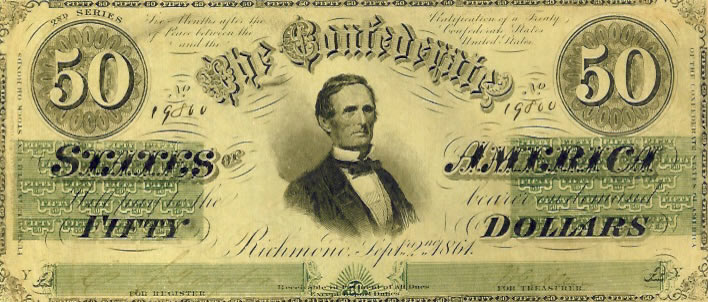
Jefferson Davis was a famous soldier and politician. He is best known for serving as the president of the Confederacy from 1861–1865. He was the Confederacy’s only president. Early Military ExperienceJefferson Davis was born in Christian County, Kentucky, on June 3, 1808. He was the youngest of ten children. In 1818, Davis attended Jefferson College in Mississippi before transferring to Transylvania University in Lexington, Kentucky. In 1824, Davis entered the United States Military Academy and was commissioned as a second lieutenant in 1828. Senator of MississippiThe next fifteen years of Davis’s life were rather uneventful. In 1844, however, he was elected to the US House of Representatives. In 1845, Davis married Varina Howell. After fighting bravely in the Mexican War, in particular, at the Siege of Monterrey, Davis was appointed acting senator of Mississippi when Senator Jesse Spright died suddenly in 1847. Soon after, the Senate made Davis chairman of the Committee on Military Affairs. Davis, however, resigned his seat in the Senate and ran for governor of Mississippi in 1851. He was defeated by Henry Stuart Foote by 999 votes. Aligning with President PierceLeft without political office, Jefferson Davis campaigned strongly for Franklin Pierce’s bid for the presidency. Davis and Pierce shared a strong view that the federal government should not interfere with the states’ rights. Pierce was elected as America’s 14th president and made Jefferson Davis his secretary of war. Although Pierce served only one term as president, Davis successfully reentered the Senate in 1857. Initially Against SecessionAs talk of secession ruminated throughout the Southern states concerning the issues of states rights and slavery, Davis urged preservation of the Union. Nevertheless, with the election of Abraham Lincoln as president (a slavery opponent), South Carolina officially seceded from the Union. Though he was fundamentally against secession, Jefferson Davis then announced the secession of Mississippi from the Union and resigned from the Senate. President of the ConfederacyFour days after announcing secession, Davis was commissioned as major general of Mississippi troops in the Confederate Army. On February 9, 1861, Davis was made provisional president of the Confederacy. Davis and his family then took up residence at the White House of the Confederacy at Richmond, Virginia, in May of 1861. Davis was elected to a six-year term and promptly put General Robert E. Lee in command of the Confederate Army.
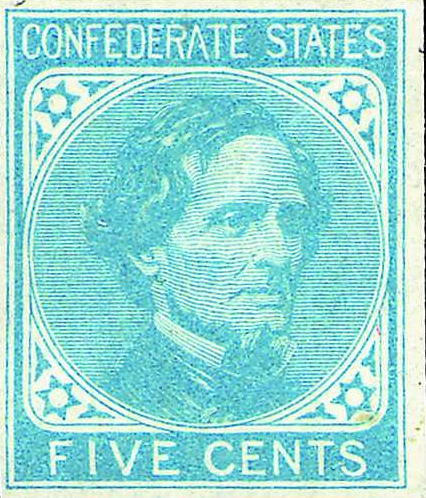
Jefferson Davis Confederate Postage Stamp Questionable Leadership During the Civil WarAfter initial success in the Civil War, it soon became clear that the Confederacy was at a major disadvantage. In July of 1863, after the Confederate defeat at the Battle of Gettysburg, Davis refused Lee’s offer to surrender to Union forces. Most scholars believe that Davis’s leadership was poor during the Civil War. He was responsible for the idea that all lands in the Southern territory should be defended with equal strength and firepower. This theory played directly into the hands of the Union Army, which was able to coordinate efforts to strike lethal blows at crucial Southern locations. Davis is also blamed for allowing Confederate generals to invade hostile Northern territory while essential ports along the Confederate portion of the Mississippi River were falling into Union hands. Davis was also seemingly poor at handling his generals and judging their competence. On the Run and CorneredAs the Confederacy fell, Davis escaped to Danville, Virginia. While trying to flee to Meridian, Mississippi, Davis was captured and imprisoned along the Virginia coast. He was indicted for treason in 1866 but was released from jail after bail was posted by prominent politicians. In 1870, Davis became president of the Carolina Life Insurance Company. After writing several books about the Confederacy, Davis died in New Orleans, Louisiana, at the age of 81 in 1889. Discussion Questions
Early Life and Military CareerJefferson Davis was born on June 3, 1808, in Christian County, Kentucky. He was the youngest of ten children. Davis studied at Jefferson College and Transylvania University before joining the U.S. Military Academy in 1824. He became a second lieutenant in 1828.Rise in PoliticsAfter some quiet years, Davis was elected to the U.S. House of Representatives in 1844. He fought bravely in the Mexican War and later became a senator for Mississippi in 1847. He led the Senate's Committee on Military Affairs but resigned to run for governor of Mississippi in 1851, losing by only 999 votes.Secretary of War and Return to SenateDavis supported Franklin Pierce’s campaign for president. When Pierce won, he made Davis Secretary of War. Davis returned to the Senate in 1857 and argued that the federal government should not interfere with states’ rights.Secession and Confederate PresidencyThough Davis was originally against secession, he left the Senate when Mississippi seceded. He was made president of the Confederacy in 1861. Davis lived in Richmond, Virginia, and put Robert E. Lee in charge of the Confederate Army.Leadership During the Civil WarAt first, the Confederacy had success in the war, but they soon began to lose ground. Davis’s leadership was criticized. He wanted to defend all areas equally, which weakened the Confederate Army’s strength. He also made poor decisions about where to send troops and how to manage his generals.Capture and Later LifeWhen the Confederacy fell, Davis tried to escape but was captured and jailed. He was charged with treason but later released. He became president of a life insurance company, wrote several books, and died in 1889 at the age of 81. |
| Jefferson Davis Activities |