Early Life and Military Education
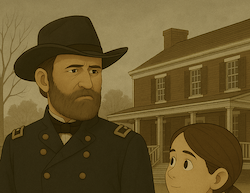
Ulysses Simpson Grant was born on April 26, 1822, in Point Pleasant, Ohio. Although his father disagreed, Grant joined the U.S. Military Academy and graduated in the middle of his class. After graduation, he served under General Zachary Taylor in the Mexican War. Before the Civil War, he struggled with other jobs and was not very successful.
Grant's Rise During the Civil War
When the Civil War began, Grant was working in his father’s leather shop in Illinois. He became a militia commander and was quickly promoted to brigadier general. Known for his bold tactics, Grant played a key role in Union victories. In 1862, he won battles at Fort Henry and Fort Donelson, where he earned the nickname “Unconditional Surrender Grant.” Although the Battle of Shiloh was costly, Grant's leadership led to Union control of the Mississippi River. He also captured Vicksburg and broke Confederate lines at Chattanooga.
Final Victory and Lee’s Surrender
In 1864, President Lincoln appointed Grant general in chief of all Union armies. His "Overland Campaign" included brutal battles like Wilderness, Cold Harbor, and Petersburg, which wore down Confederate forces. Lee’s army defended Petersburg and Richmond for ten months before surrendering. On April 9, 1865, Lee surrendered to Grant, ending the Civil War.
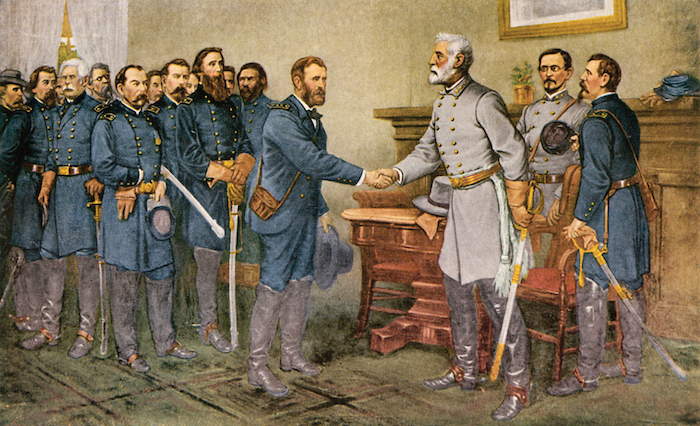
Grant Receiving Lee's Surrender at Appomattox Courthouse
Presidency and Later Life
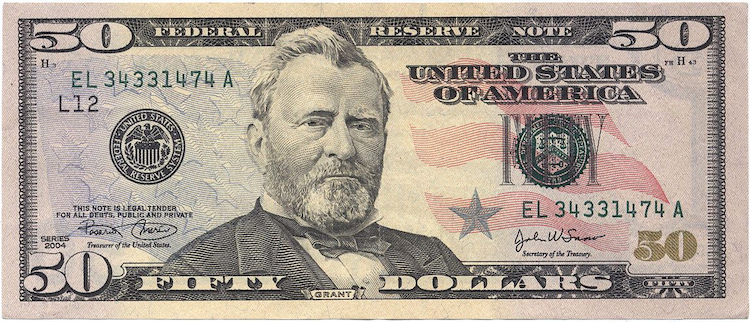
Grant was elected president in 1869, but his presidency was troubled by corruption and scandals. He helped oversee Reconstruction but was linked to a failed attempt to control the gold market. After leaving office, Grant joined a financial firm that went bankrupt. He died of throat cancer in 1885, shortly after completing his personal memoirs, which earned $450,000 for his family. Today, Ulysses S. Grant is honored on the U.S. fifty-dollar bill.
Discussion Questions
- Why was Ulysses S. Grant given the nickname “Unconditional Surrender Grant” during the Civil War?
- What role did Grant’s military leadership play in helping the Union control the Mississippi River?
- How did Grant’s presidency differ from his military career?
- What lasting impact did Grant have on American history, both during and after the Civil War?
Early Life and Military Start
Ulysses S. Grant was born in 1822 in Point Pleasant, Ohio. He went to the U.S. Military Academy and served in the Mexican War. Before the Civil War, he struggled to succeed in civilian life.
Grant in the Civil War
At the start of the Civil War, Grant was working in his father’s leather shop. He became a militia leader and was soon promoted to general. Grant’s bold and aggressive style helped the Union win important battles like Fort Henry and Fort Donelson, where he got the nickname “Unconditional Surrender Grant.” Although the Battle of Shiloh was costly, his leadership helped the Union control the Mississippi River. He later captured Vicksburg and won at Chattanooga.
Victory Over the Confederacy
In 1864, President Lincoln made Grant the top general. His campaigns at battles like Wilderness, Cold Harbor, and Petersburg caused heavy losses on both sides, but weakened General Lee’s army. Lee held Petersburg and Richmond for ten months before surrendering to Grant on April 9, 1865, ending the Civil War.
President and Later Life
Grant was elected president in 1869. His time as president was full of scandals and financial problems. After leaving office, he joined a financial firm that failed. He died of throat cancer in 1885, just after writing his memoirs, which made money for his family. Today, his face is on the U.S. fifty-dollar bill.