Battle of Fort Beausejour |
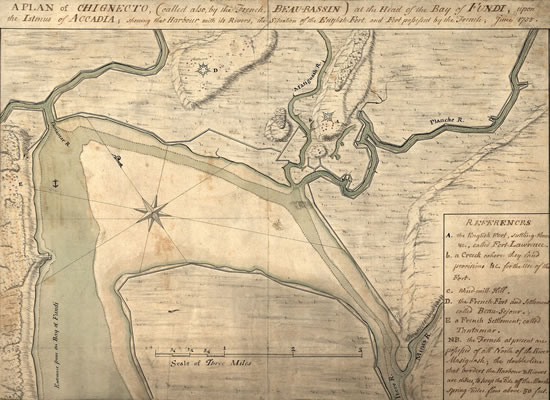
Map of the Isthmus of Chignecto |
The Battle of Fort Beausejour occurred between June 3 and June 16, 1755. It was one of the first battles of the French and Indian War. 2,000 British soldiers under the command of Robert Mockton besieged the fort on June 3. British forces hoped to capture Fort Beausejour to gain control of the nearbly Isthmus of Chignecto, which connects the peninsula of Nova Scotia with the rest of North America. French defensive forces, numbering only 162, withstood the siege and bombardment for thirteen days before surrendering on June 16. Discussion Questions
Glossary
The Battle of Fort BeauséjourThe Battle of Fort Beauséjour occurred between June 3 and June 16, 1755. It was one of the first battles of the French and Indian War. The Siege BeginsOn June 3, 2,000 British soldiers under the command of Robert Monckton surrounded the fort. The British hoped to take Fort Beauséjour in order to gain control of the nearby Isthmus of Chignecto, a key area connecting Nova Scotia to the rest of North America. The SurrenderFrench defenders, with only 162 soldiers, held off the British siege and heavy bombardment for thirteen days. On June 16, they surrendered the fort to British forces. |