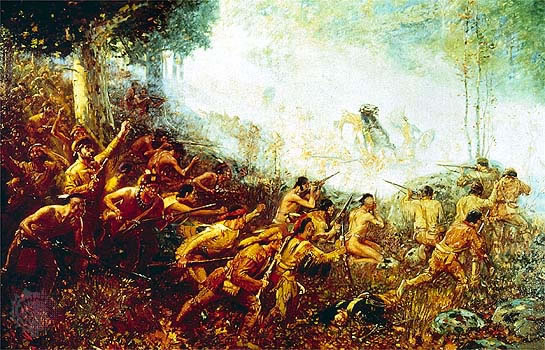
Battle of Fort Niagara |
|
As part of a British plan to remove French forts from the Great Lakes and Ohio River Valley, for the purposes of invading New France from three different directions, British forces under the command of General John Prideaux and William Johnson defeated the French resistance in a 20-day long siege on July 26, 1759. As a result of the defeat, the French were forced to abandon several other forts and consolidate their forces for the defense of Quebec City. They also gave up a crucial supply center for their western forts. For the British, the victory at Fort Niagara meant control of the eastern Great Lakes. Discussion Questions
Glossary
The SiegeIn July 1759, British forces led by General John Prideaux and William Johnson attacked Fort Niagara. Their goal was to capture French forts around the Great Lakes and Ohio River Valley. The siege lasted 20 days. On July 26, the French surrendered the fort. The ResultsAfter losing the battle, the French had to leave other forts and focus on protecting Quebec City. They also lost an important place to store supplies for their western forts. For the British, winning Fort Niagara gave them control of the eastern Great Lakes. |