Battle of the Thousand Islands |
|
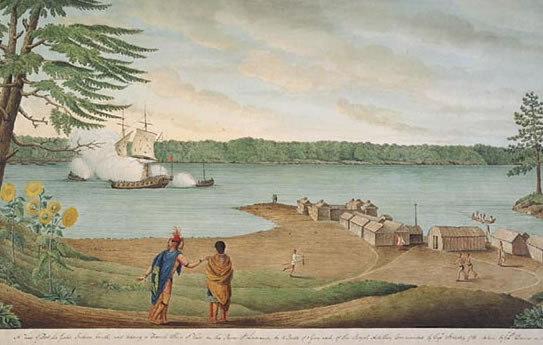
The Battle of the Thousand Islands was fought between August 16 and August 24, 1760. It was one of the last major battles of the French and Indian War, and represented one of the last French defense efforts before Montreal fell. In part of a three-pronged attack to surround the French stronghold of Montreal from the northeast, south, and west, British General Jeffrey Amherst and about 10,000 soldiers set out from Oswego and headed northeast. Meanwhile, two British ships headed up the St. Lawrence River to assist in Amherst's land attack. On August 16, fighting began. Furious gun battles ensued over a period of days between the British ships and French gunfire from within fort. Eventually, the two British ships, and another ship captured by British forces, were either sunk or rendered useless by French fire. Nevertheless, British guns continued to pound the French fort until a series of fires started within the fort. The siege continued until August 24, when the French ran out of ammunition and surrendered. Discussion Questions
Glossary
IntroductionThe Battle of the Thousand Islands took place from August 16 to August 24, 1760. It was one of the last major battles of the French and Indian War and one of France’s final efforts to defend Montreal. The British PlanBritish General Jeffrey Amherst led about 10,000 soldiers in a plan to surround Montreal from three sides. Amherst’s group moved northeast from Oswego. Two British ships also sailed up the St. Lawrence River to help in the land attack. The BattleFighting began on August 16. British ships exchanged heavy gunfire with the French fort. The French defenders managed to damage or sink all the British ships. However, British land forces kept attacking the fort with cannons. VictoryBritish cannons caused several fires inside the French fort. After days of fighting, the French ran out of ammunition. On August 24, the French surrendered. The British were now one step closer to capturing Montreal. |