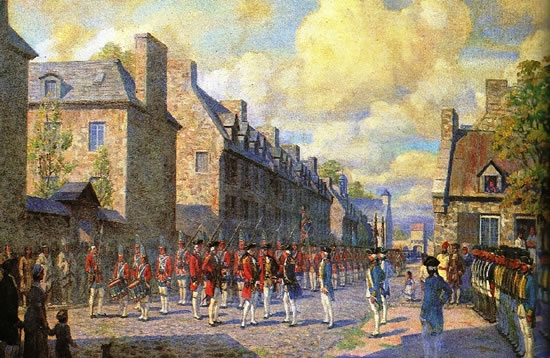
Surrender of Montreal |
|
After the British had taken Quebec City, it was only a matter of time before the French stronghold of Montreal would fall. On September 6, 1760, British forces of nearly 18,000, under the command of Jeffrey Amherst besieged Montreal. Only 2,100 French soldiers were left to defend the city. After three days, they were forced to surrender, and Montreal was in the hands of the British. The siege of Montreal marked the end of French rule in North America. The war officially ended on February 10, 1763, with the signing of the Treaty of Paris. As a result of the war, France gave up nearly all of its territory in North America. In addition, they agreed not to build any military establishments in India, which made England the dominant power there. Discussion Questions
Glossary
The Final BattleAfter the British captured Quebec City, they prepared to take Montreal. On September 6, 1760, 18,000 British troops led by Jeffrey Amherst surrounded the city. Only 2,100 French soldiers were there to defend it. After just three days, the French surrendered. Montreal fell to the British, ending French control in North America. The End of the WarThe French and Indian War officially ended on February 10, 1763, with the signing of the Treaty of Paris. France gave up almost all its land in North America. It also agreed not to build military bases in India, which allowed Britain to become the strongest power there. |