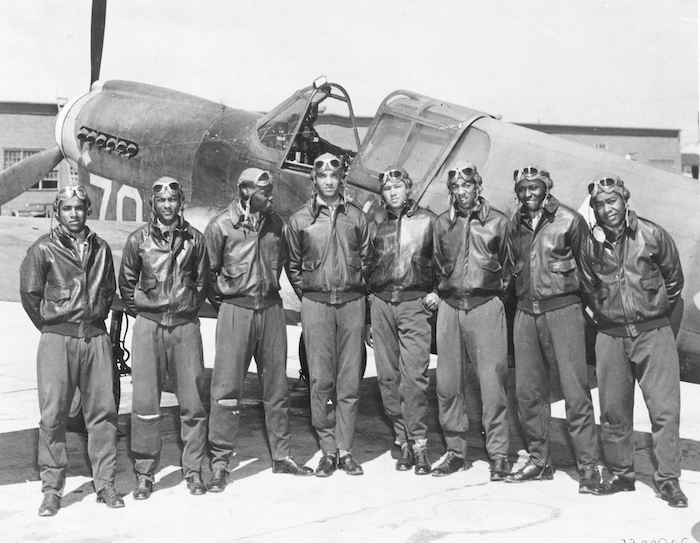
The Tuskegee Airmen |
IntroductionThe Tuskegee Airmen were a group of American fighter and bomber pilots that fought in World War II. These men were extraordinary not only because they were deployed overseas to fight in North Africa and parts of Italy in a very dangerous war, but also because they were the first all African American squadron of airmen in history. Before that time, no African American had been allowed to be a pilot in the military. Through great adversity, these men proved to America that heroes are worthy of great respect, no matter their skin color. DiscriminationThe group of 922 men were taught to fly and fight at the Tuskegee Institute in Tuskegee, Alabama. These men were still subject to Jim Crow Laws and the military was still mostly segregated, meaning that black and white soldiers could not fight together for the same cause. Even while serving their country, people of color were treated with discrimination. Eleanor Roosevelt, the First Lady of the United States during World War II, was a great supporter of the Tuskegee Airmen. She visited the airfield in Alabama to inspect the aircraft, watch training demonstrations, and even take a short flight with a few of the pilots. She was a believer in equal rights for all, and worked hard to take a stance on civil rights in support of African Americans that worked in the armed forces. Were they Invincible?A myth that circulated throughout the news during World War II was that there had never been a loss of a Tuskegee Airman while fighting overseas. However, years later, it was discovered that at least 25 bombers were lost in battle. Though this was sad news to discover, it answered many questions for families that wondered what had happened to their loved ones when the men did not return home from the war. LegacyOnce the war ended, the impressive aviators had collected more than 150 Distinguished Flying Crosses, a military award given to those that show exceptional bravery during flight on a combat mission. Many other Tuskegee Airmen spent the rest of their lives working to end segregation in the United States Armed Forces, and eventually succeeded. Discussion Questions
Glossary
IntroductionThe Tuskegee Airmen were a group of African American fighter and bomber pilots in World War II. They were the first Black pilots in the U.S. military and showed great bravery while fighting in North Africa and Italy. At that time, African Americans were not allowed to be military pilots, so their success was very important. DiscriminationThe 922 Tuskegee Airmen trained at the Tuskegee Institute in Alabama. During this time, Black and white soldiers were kept separate, and African Americans faced unfair treatment. Even while fighting for their country, they dealt with discrimination. First Lady Eleanor Roosevelt supported them and even visited the airfield to watch their training and take a flight. She believed in equal rights for all people. Were They Invincible?Some people believed that no Tuskegee Airman was ever lost in battle. But later, it was found that at least 25 bombers were lost. Even though this was sad news, it helped families understand what happened to some of the men who didn’t come home. LegacyBy the end of the war, the Tuskegee Airmen had earned more than 150 Distinguished Flying Crosses for bravery. Many of them continued to fight against segregation in the military, and their efforts helped lead to more fairness and equal treatment in the Armed Forces. |
| Tuskegee Airmen Activities |