Pomo Nation |
|
|
|
Origin of the NameThe word "Pomo" comes from a term in the Pomoan languages meaning “those who live at red earth hole.” It originally described a specific village near Clear Lake in present-day California, but it was later applied by anthropologists and settlers to all related groups that shared linguistic and cultural ties. The Pomo did not originally call themselves by this name; they identified by their specific village or band. RangeThe Pomo traditionally inhabited northwestern California, especially around Clear Lake, the Russian River Valley, and along the Pacific Coast. Their territory extended from the redwood forests of Mendocino County inland to Lake County, giving them access to diverse ecosystems: ocean, river, lake, and forest. DietThe Pomo had a rich diet based on the varied environments of their homeland. Acorns were a staple food, ground into meal and made into mush or bread. They also gathered seeds, roots, berries, and nuts. Fish such as salmon and trout were caught in rivers and lakes, while the coastal bands harvested clams, mussels, and seaweed. Deer, rabbits, and waterfowl provided important sources of meat. Home TypeThe Pomo built homes suited to their environment. In the coastal regions, they used redwood bark to construct cone-shaped houses. Inland groups often built semi-subterranean homes with earth covering, which provided insulation. Temporary brush shelters were also common during seasonal food-gathering trips.
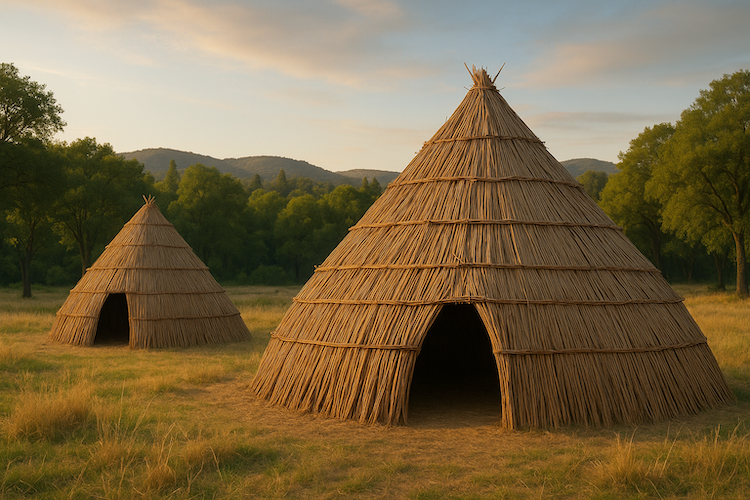
A depiction of Pomo homes CultureThe Pomo are most famous for their beautiful baskets, often decorated with feathers, beads, and shells. These baskets were used for carrying food, cooking, ceremonies, and as gifts. The Pomo also had a rich tradition of myths and stories that explained the world around them. For example, some stories told how Coyote helped shape the land or how the sun and moon came to be. These myths were passed down by storytellers to teach lessons and connect the people to nature. Ceremonies were important too, often led by shamans (spiritual healers) who prayed for good health, rain, or success in gathering food. Traditional dances, songs, and seasonal celebrations helped keep the community together and honored the spirits of the natural world. Pomo BasketryPomo basketry is considered some of the finest in the world, both for its artistry and craftsmanship. The Pomo wove baskets from local plants such as willow, sedge roots, bulrush, and redbud, each material chosen for its strength, color, or flexibility. Some baskets were large and sturdy for carrying food, while others were tightly woven and waterproof for cooking with hot stones. What made Pomo baskets especially famous were their decorative designs and delicate detail. Skilled weavers added feathers from quail or meadowlarks, beads made from clamshells, and even tiny pieces of abalone shell to create shimmering patterns. Some baskets were so small and finely made that they could hold water even though they were no bigger than a thimble. Basket weaving was usually done by women, and the knowledge was passed down through generations. Beyond being practical tools, baskets were also spiritual objects, used in ceremonies, given as gifts, and traded with other tribes. Today, Pomo baskets are treasured as both cultural symbols and works of art, preserving an important tradition that continues among Pomo descendants.
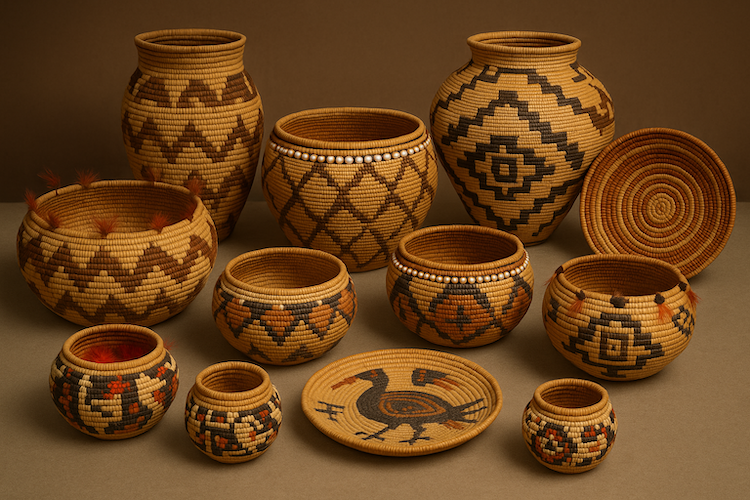
A depiction of Pomo baskets A Special Pomo MythOne well-known Pomo myth tells the story of Coyote and the creation of the world. In the beginning, the earth was covered with water, and the animals had no place to live. Coyote, who was clever and tricky, worked with Turtle to bring up mud from the bottom of the sea. After many tries, Turtle finally surfaced with a bit of earth on his back. Coyote spread the mud and made it grow until it became dry land where people and animals could live. In some versions, Coyote also helped bring fire to the people and taught them how to survive. This myth shows the Pomo belief in the close connection between animals, humans, and the natural world, and it highlights Coyote’s role as both a helper and a trickster in their stories. WarfareThe Pomo were generally not known for large-scale warfare but did engage in conflicts with neighboring tribes over territory, resources, or revenge. They used bows and arrows, clubs, and spears when necessary. Raids and ambushes were more common than organized battles. History Timeline
Discussion Questions
Origin of the NameThe name "Pomo" comes from a word in their language that means “people who live at red earth hole.” It first described one village near Clear Lake in California, but later was used to describe many related groups. RangeThe Pomo lived in northern California, mainly around Clear Lake, the Russian River, and the Pacific Coast. Their lands included forests, rivers, and ocean areas. DietThe Pomo ate acorns, seeds, berries, and roots. They fished for salmon and trout, hunted deer and rabbits, and gathered shellfish and seaweed along the coast. HomesPomo homes were built from local materials. Some were cone-shaped houses made of redwood bark, while others were partly underground and covered with earth for warmth. They also made brush shelters while traveling for food. CultureThe Pomo are most famous for their beautiful baskets, often decorated with feathers and shells. They told stories, practiced ceremonies, and believed in spiritual healers called shamans. History
Discussion Questions
|