California History |
|
|
|
History of CaliforniaThe history of California is long and complex, stretching back thousands of years before the arrival of European explorers. From its earliest Native American cultures to the Spanish mission system, the Gold Rush, and the rise of Hollywood, California has a diverse and varied history. Early InhabitantsThe earliest known inhabitants of California were Native American tribes such as the Chumash, Miwok, Pomo, and Yokuts. These groups developed unique cultures closely tied to the land and natural resources. They built complex societies, established trade networks, and created languages and traditions that continue today. Spanish ColonialismIn 1769, Spanish explorers led by Gaspar de Portolá and Franciscan missionary Junipero Serra arrived in California. They established a chain of missions along the coast, serving as centers of commerce, farming, and religious instruction. The Spanish colonial period lasted until 1821, when Mexico gained independence from Spain.
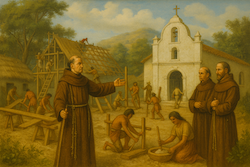
Depiction of Juniper Serra and other missionaries in California The Gold RushIn 1848, the discovery of gold in California sparked one of the largest migrations in American history. Hundreds of thousands traveled from around the world, hoping to find wealth. The Gold Rush transformed California’s economy, population, and culture, and made San Francisco a major city.
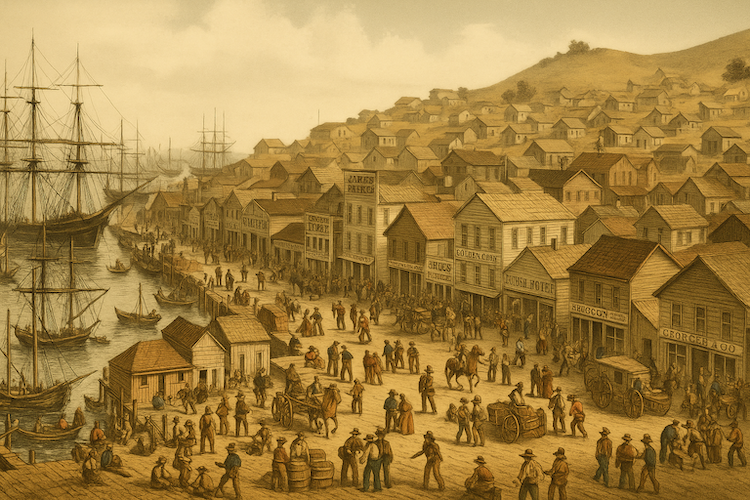
Depiction of the boomtown San Francisco at the peak of the Gold Rush Statehood and BeyondCalifornia became a state in 1850 through the Compromise of 1850. The population grew quickly, and industries such as agriculture, oil, and aerospace expanded. In the 20th century, California became a cultural and economic leader, with Hollywood, Napa, and Silicon Valley shaping its identity. Challenges and OpportunitiesToday, California is the most populous U.S. state, home to over 39 million people of diverse backgrounds. While it is a center of innovation and culture, it also faces serious challenges such as wildfires, drought, housing costs, and income inequality. Discussion Questions
Glossary
Timeline of California History
Simplified History of CaliforniaCalifornia’s history stretches back thousands of years. Native American tribes such as the Chumash, Miwok, and Pomo built societies, traded, and developed lasting traditions. In 1769, Spanish explorers and missionaries created a chain of missions along the coast, which shaped early farming and trade. After Mexico gained independence in 1821, California became Mexican territory until the U.S. took control in 1846. The Gold Rush and StatehoodThe discovery of gold in 1848 brought hundreds of thousands of people to California, quickly changing its population and economy. California became a state in 1850, and industries such as farming, oil, aerospace, and entertainment helped it grow rapidly. Growth in the 20th CenturyBy the 20th century, California was a leader in culture and business. Hollywood, Napa Valley, and Silicon Valley became famous worldwide for entertainment, agriculture, and technology. The state’s booming industries attracted people from across the nation and the globe. California TodayToday, California has over 39 million residents and is known for its diversity and innovation. However, it also faces challenges such as wildfires, drought, housing costs, and inequality. Its history of growth, migration, and cultural change continues to shape the state’s identity. |