Early Life
Cesar Chavez was born on March 31, 1927, in Yuma, Arizona. His family owned a small farm, but they lost it during the Great Depression. After that, his family became migrant farm workers, traveling from place to place to find work. Cesar experienced the harsh conditions of farm labor at a young age, which shaped his later goals in life.
Fighting for Workers’ Rights
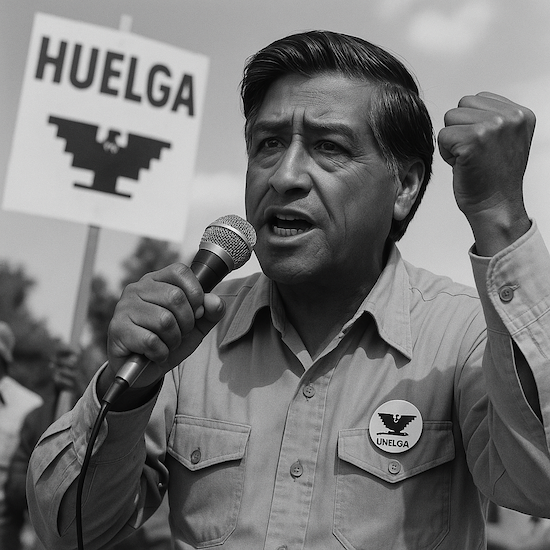
As a young man, Chavez served in the U.S. Navy during World War II. After returning home, he worked in the fields again. He saw farmworkers facing low pay, unsafe working conditions, and little respect. Determined to change this, he became a community organizer. In 1962, Chavez co-founded the National Farm Workers Association with Dolores Huerta. This organization later became the United Farm Workers (UFW).
Nonviolent Protests
Chavez believed in peaceful protest. He led marches, boycotts, and hunger strikes to draw attention to the struggles of farmworkers. One of the most famous campaigns was the grape boycott of the 1960s, where consumers were asked not to buy grapes until workers received better pay and treatment. His efforts brought national attention to farmworkers’ rights.
Legacy
Cesar Chavez became a symbol of hope and justice for Latino Americans and all workers. He showed that ordinary people could make change through unity and nonviolence. Chavez died on April 23, 1993, but his work lives on. His birthday, March 31, is celebrated as Cesar Chavez Day in many states.
Discussion Questions
- What events in Cesar Chavez’s early life influenced his decision to fight for farmworkers’ rights?
- Why did Chavez believe nonviolent protest was the best way to bring about change?
- How did the grape boycott help the United Farm Workers gain attention?
- Why do you think Cesar Chavez is remembered as a hero today?
Glossary
- Migrant worker – A person who moves from place to place to find work.
- Community organizer – Someone who helps groups of people work together to solve problems.
- Boycott – Refusing to buy or use certain products as a form of protest.
- Nonviolent protest – Demonstrating for change without using violence.
- Union – An organization of workers formed to protect their rights and interests.
Five Interesting Facts
- Cesar Chavez fasted for 25 days in 1968 to promote nonviolence.
- He co-founded the United Farm Workers with Dolores Huerta, another famous activist.
- Chavez never earned more than $5,000 a year while leading the UFW.
- He was deeply inspired by the teachings of Mahatma Gandhi and Martin Luther King Jr.
- Schools, parks, and streets across the U.S. are named after him.
Timeline
- 1927 – Born in Yuma, Arizona.
- 1946–1948 – Served in the U.S. Navy.
- 1962 – Founded the National Farm Workers Association.
- 1965 – Led the Delano grape strike and boycott.
- 1968 – Went on a 25-day hunger strike.
- 1993 – Died in San Luis, Arizona.
- 2000 – March 31 declared Cesar Chavez Day in many states.