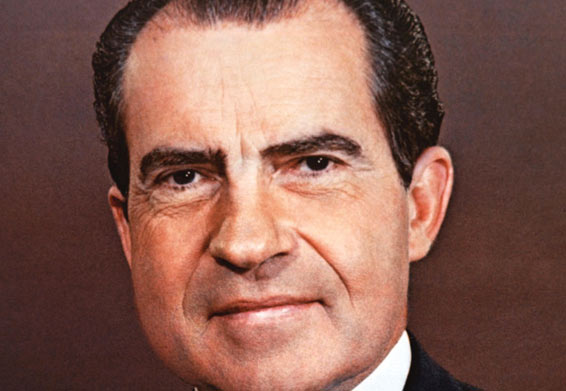
Richard Nixon |
|
|
|
Early Life and EducationRichard Nixon was born on January 9, 1913, in California. He grew up in a poor household, though his parents ensured their children never fully realized their poverty. His parents’ modest jobs instilled in Nixon a strong work ethic. Nixon excelled in school and was accepted to Harvard, but his family could not afford the tuition. Instead, he enrolled in a smaller local college and later earned a scholarship to Duke University Law School. After graduating, he returned to his hometown to work at a local law firm. Convicting TraitorsAfter briefly serving in the military, Nixon entered politics when he was elected to the House of Representatives. He gained recognition for his work on the Marshall Plan, which provided economic aid to struggling European nations after World War II. Nixon became known for his role on the House Un-American Activities Committee, especially for investigating Alger Hiss, whom he believed to be a Soviet spy. His strong stance against Communism boosted his national profile. Vice-President to EisenhowerNixon’s career advanced significantly when Dwight D. Eisenhower chose him as his Vice President. Nixon expanded the role of the office, often stepping in when Eisenhower was ill. He supported important legislation such as the Civil Rights Act of 1957 and the Social Security Act. Nixon also took on a greater role in foreign affairs than most previous Vice Presidents. 37th PresidentIn 1960, Nixon ran for President against John F. Kennedy. Although praised for the strength of his arguments, Nixon lost to Kennedy’s charisma and television presence. Devastated, Nixon briefly stepped back from politics. However, when President Lyndon B. Johnson chose not to run in 1968, Nixon seized the opportunity and won the election, becoming the 37th President of the United States. The Vietnam War Ends; The Military Draft is EliminatedNixon faced the ongoing Vietnam War upon taking office. He introduced “Vietnamization,” shifting more responsibility to South Vietnamese forces while reducing American involvement. He also authorized heavy bombing campaigns. In 1973, a cease-fire agreement ended direct U.S. involvement in the war. Nixon also signed legislation ending the military draft. His administration oversaw school desegregation in the South, the opening of diplomatic relations with China, and the creation of the Environmental Protection Agency (EPA). Watergate Scandal and ResignationDespite these accomplishments, Nixon’s presidency is overshadowed by the Watergate Scandal. In 1972, operatives tied to his campaign broke into the Democratic National Committee headquarters at the Watergate Hotel. When the FBI investigated, Nixon attempted to obstruct the inquiry by involving the CIA. Evidence later revealed Nixon had secretly recorded Oval Office conversations. After refusing to release the tapes, he was ordered by the Supreme Court to turn them over. Facing certain impeachment, Nixon resigned in August 1974. His successor, Gerald Ford, later pardoned him. The scandal left many Americans mistrustful of the government. Later LifeFollowing his resignation, Nixon wrote books and traveled extensively. He died on April 18, 1994, at the age of 81, from a stroke. Most Well-Known Quote“I am not a crook.” Discussion Questions
Glossary
Five Interesting Facts
Timeline of Richard Nixon’s Life
Early Life and EducationRichard Nixon was born in 1913 in California. His family had little money, but his parents taught him to work hard. Nixon studied law at Duke University and returned to his hometown to work as a lawyer. Rise in PoliticsAfter serving briefly in the military, Nixon was elected to Congress. He became known for investigating Alger Hiss, a suspected Communist spy, which made him a national figure. His reputation as a strong anti-Communist helped him rise quickly in politics. Vice PresidentNixon became Vice President under President Dwight Eisenhower. He expanded the role by helping with foreign policy and important laws such as the Civil Rights Act of 1957. He often stepped in when Eisenhower was sick. President of the United StatesNixon lost the 1960 presidential election to John F. Kennedy but won in 1968 after Lyndon Johnson chose not to run. As President, Nixon ended U.S. involvement in the Vietnam War, ended the military draft, helped enforce school desegregation, opened relations with China, and created the Environmental Protection Agency (EPA). Watergate and ResignationNixon’s presidency ended in scandal. His aides broke into Democratic offices at the Watergate Hotel, and Nixon tried to cover it up. Secret tapes revealed his role in the scandal. Facing impeachment, he resigned in 1974, the only U.S. President ever to do so. Later YearsAfter resigning, Nixon wrote books and traveled. He died in 1994 at the age of 81. |