Ute Nation |
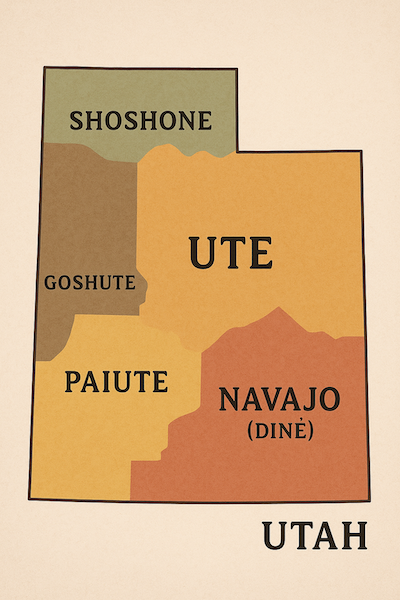
Utah Tribes Map |
Origin of the NameThe name “Ute” comes from the Spanish word Yuta, which may have derived from an Apache term meaning “high up” or “people who live high.” The Ute people call themselves Núuchiu or Núu, meaning “the people.”
RangeThe Ute traditionally lived across the central and southern Rocky Mountains, including present-day Utah, Colorado, Wyoming, eastern Nevada, northern Arizona, and northern New Mexico. Their territory included mountain valleys, high plateaus, and desert basins, giving them access to diverse ecosystems.
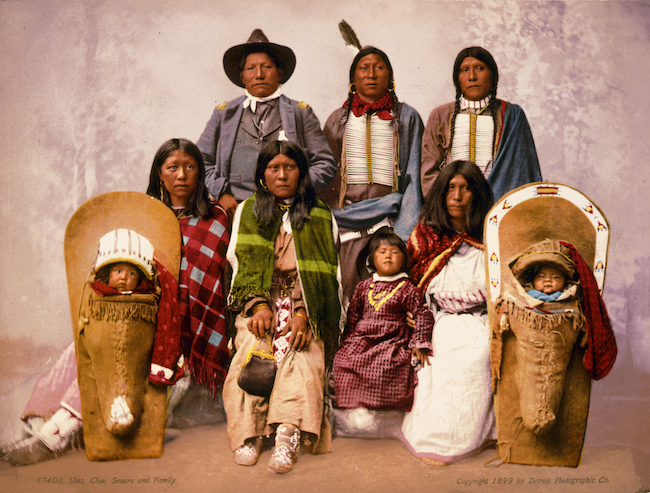
Ute Family (1899) DietThe Ute diet was shaped by the environment and changed after they acquired horses in the 1600s. Traditionally, they hunted deer, elk, bison, rabbits, and other game. They also gathered nuts, berries, roots, and seeds. Fish from mountain rivers supplemented their meals. After contact with Europeans, they traded for corn, beans, and European goods. With horses, bison hunting on the plains became a major food source until herds declined in the 19th century. Home TypeThe Ute lived in brush shelters, wickiups (dome-shaped huts made from branches and brush), and, after acquiring horses, tipis. Tipis became more common because they were portable and fit the nomadic lifestyle of horse-mounted buffalo hunters.
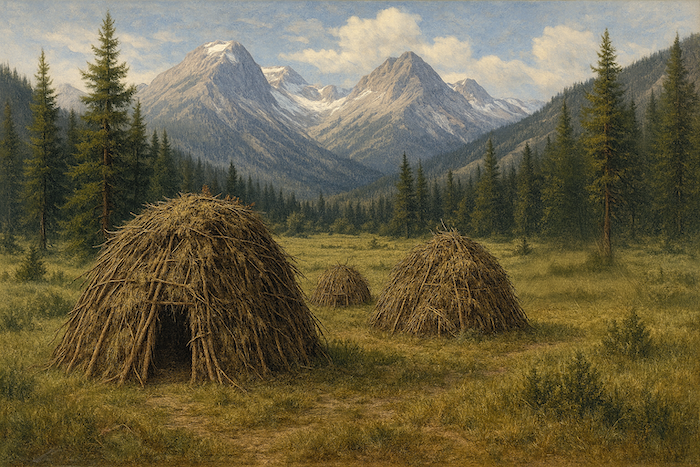
Depiction of Ute Wickiups CultureThe Ute culture blended mountain traditions with Plains influences. They were skilled hunters, horse riders, and traders. Their culture included:
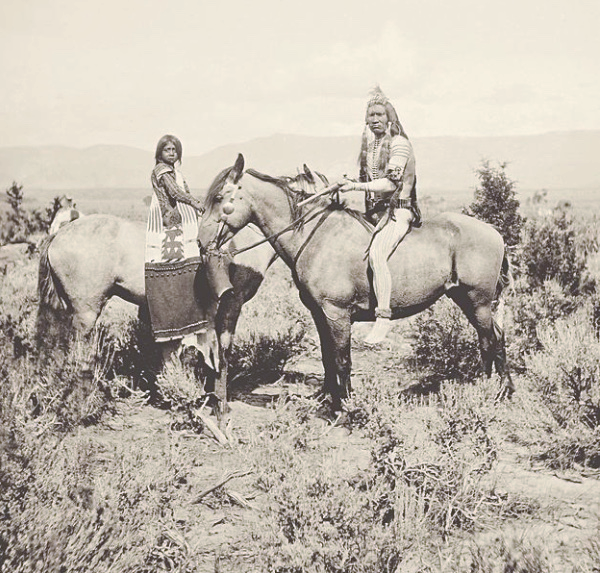
Ute Warrior and Girl (1873) Myths and StoriesThe Origin of the Bear Dance: According to Ute tradition, a hunter once wandered into the mountains at the end of winter. He saw a bear standing upright, moving back and forth while scratching a tree and humming a deep rhythm. The bear spoke to the hunter, telling him to take this dance back to his people so they could remember the harmony between humans and animals, and to celebrate the renewal of life after the cold months. The hunter returned and taught his people the Bear Dance, which has been held each spring ever since. The dance not only honors bears but also renews relationships, encourages courtship, and brings strength for the year ahead. Coyote the Trickster: In Ute stories, Coyote is a trickster who often gets himself into trouble while teaching important lessons. One story tells of Coyote boasting that he could make the sun rise earlier than anyone else. He shouted to the sun and bragged, but when he looked again, the sun had not moved. Embarrassed, he tried harder, running to the east to pull it up himself. Instead, he grew tired and hungry, proving that arrogance leads to failure. Such tales remind listeners of the dangers of pride and foolishness while also providing humor. WarfareBefore acquiring horses, the Ute fought with bows, clubs, and spears, often defending hunting grounds. After horses spread into their culture, they became formidable warriors on horseback. They raided neighboring tribes, such as the Apache and Navajo, and later clashed with European settlers and the U.S. military. Firearms and horses enhanced their military power in the 1700s and 1800s. History Timeline
Discussion Questions
Origin of the NameThe name “Ute” comes from the Spanish word Yuta, which may have come from an Apache word meaning “high up” or “people who live high.” The Ute people call themselves Núuchiu or Núu, meaning “the people.” RangeThe Ute lived in the central and southern Rocky Mountains, in areas of today’s Utah, Colorado, Wyoming, Nevada, Arizona, and New Mexico. Their homeland included mountains, valleys, and desert areas. FoodThe Ute hunted deer, elk, bison, and rabbits. They also gathered nuts, berries, roots, and seeds, and caught fish in rivers. After they got horses in the 1600s, hunting bison on the plains became very important. Later they also traded for corn, beans, and new goods from Europeans. HomesThe Ute lived in brush shelters and wickiups, which were dome-shaped huts made from sticks and brush. After horses arrived, they often lived in tipis, which were easy to carry when traveling. CultureThe Ute were skilled hunters, horse riders, and traders. They spoke the Ute language, part of the Uto-Aztecan family. Clothing was made of animal skins, with beads and quill decorations. The Ute held special ceremonies, such as the Bear Dance in spring to celebrate renewal. Later they also practiced the Sun Dance, which focused on sacrifice and spiritual strength. Music with drums, rattles, and flutes was used for songs, healing, and stories. Stories and BeliefsThe Bear Dance: Long ago, a hunter saw a bear moving to a rhythm while scratching a tree. The bear told him to take this dance back to his people. Since then, the Bear Dance is held each spring to honor bears, bring strength, and help renew friendships. Coyote the Trickster: In Ute stories, Coyote often makes mistakes that teach lessons. In one story, he bragged that he could make the sun rise early. He shouted and pulled but failed, becoming tired and hungry. This story teaches about the dangers of pride and foolishness. WarfareBefore horses, the Ute fought with bows and spears to protect their hunting grounds. With horses, they became strong fighters on horseback, raiding enemies and later battling U.S. soldiers and settlers in the 1800s. History Timeline
Discussion Questions
|