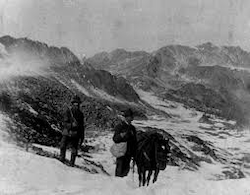
Colorado became a U.S. territory in 1861 after the Pike’s Peak Gold Rush drew settlers to the region. It was admitted as the 38th state in 1876, earning the nickname the "Centennial State" since it joined 100 years after the Declaration of Independence.
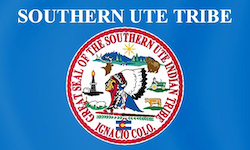
The Ute people are Native Americans from the Great Basin and Rocky Mountain regions, especially present-day Utah and Colorado. Traditionally, they were skilled hunters, gatherers, and horsemen, and they continue to preserve their culture and traditions today.
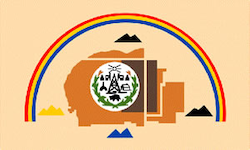
The Navajo, or Diné, are Native American people from the Southwest United States, known for their rich traditions, farming, and sheep herding. They are renowned for their weaving, silver jewelry, and ceremonies that focus on harmony, healing, and balance with nature.
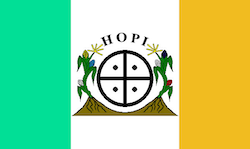
The Puebloan people are Native American groups from the Southwestern United States, especially in present-day Arizona, New Mexico, Colorado, and Utah. They are known for their farming, cliff dwellings, multi-story adobe homes, ceremonial kivas, and rich spiritual traditions involving Kachinas.
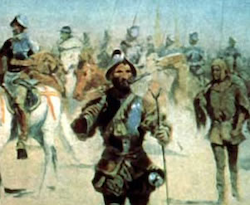
Francisco Coronado was a Spanish explorer who led a major expedition through the American Southwest in search of the legendary Seven Cities of Gold. Although he never found the riches he sought, his journey marked the first European sightings of the Grand Canyon and helped map much of the interior of North America.
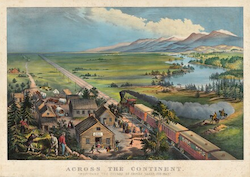
Manifest Destiny was the 19th-century belief that the United States was destined by God to expand its territory across North America. It was used to justify westward expansion, the displacement of Native Americans, and wars such as the Mexican-American War.
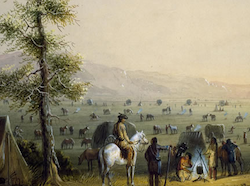
The Santa Fe Trail was a 19th-century trade route that connected Missouri with Santa Fe, New Mexico. It was used by traders, settlers, and the military, playing a key role in westward expansion.