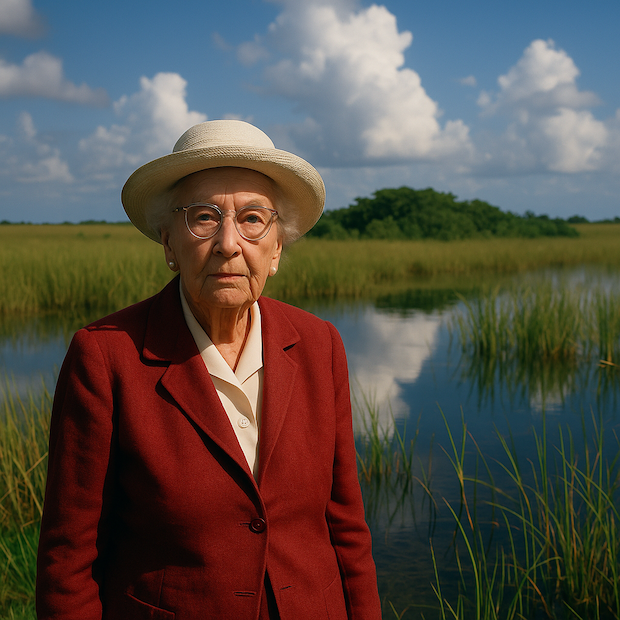
Marjory Stoneman Douglas |
Early LifeMarjorie Stoneman Douglas was born on April 7, 1890, in Minneapolis, Minnesota. She grew up in Massachusetts after her parents separated and later attended Wellesley College, where she studied English. From an early age, she loved reading and writing. After college, she worked as a reporter and later moved to Florida, where she would make her greatest impact. Career as a WriterDouglas began her career as a journalist for the Miami Herald, writing news stories and columns. She was also a skilled fiction writer, publishing short stories and novels. Her writing often explored themes of nature and society, but she became most famous for her nonfiction work. She had a clear, strong voice that made readers pay attention to her ideas. Champion of the EvergladesMarjorie Stoneman Douglas is best remembered for her fight to protect the Florida Everglades. In 1947, she published her most famous book, The Everglades: River of Grass. This book showed people that the Everglades was not just a swamp to be drained, but a vital ecosystem that supported wildlife and people. Her words changed how Americans thought about the Everglades and sparked conservation efforts. Later Life and LegacyEven into her 90s and 100s, Douglas remained an active defender of the environment. She gave speeches, organized conservation groups, and fought against projects that threatened the Everglades. She lived to be 108 years old, passing away on May 14, 1998. Today, she is remembered as one of America’s greatest environmental activists, and schools, parks, and organizations bear her name in honor of her work. Discussion Questions
Glossary
Five Interesting Facts
Timeline
Early LifeMarjorie Stoneman Douglas was born in 1890 in Minnesota but grew up in Massachusetts. She studied English at Wellesley College and loved reading and writing. After college, she became a reporter and later moved to Florida. Writing and ActivismDouglas wrote news articles, short stories, and novels, but her most famous work was The Everglades: River of Grass in 1947. This book helped people understand that the Everglades was an important ecosystem, not just a swamp. She spent the rest of her life speaking, organizing, and fighting to protect the Everglades. LegacyDouglas lived to be 108 years old and received the Presidential Medal of Freedom in 1993. She is remembered as one of America’s greatest defenders of the environment. Schools and parks in Florida are named after her to honor her lasting impact. |