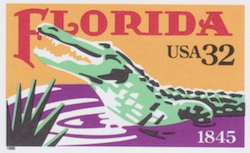
Florida was originally inhabited by Indigenous peoples such as the Timucua and Calusa before being claimed by Spain in the early 16th century. It became a U.S. territory in 1821 and joined the Union as the 27th state in 1845.
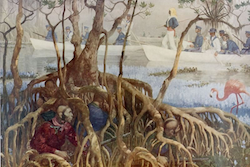
The Seminole Nation formed in the 18th century from a mix of Native American groups, including Creek refugees, who settled in Florida. They are known for resisting U.S. removal efforts during the Seminole Wars, maintaining a strong cultural identity despite displacement.
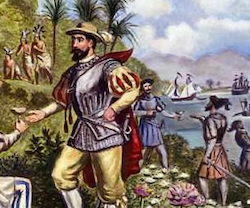
Ponce de León was a Spanish explorer and conquistador best known for leading the first official European expedition to Florida in 1513. He is famously associated with the legendary search for the Fountain of Youth, though he was primarily motivated by exploration and colonization.
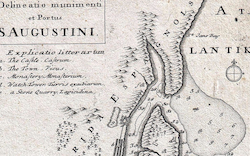
St. Augustine was founded in 1565 by Spanish admiral Pedro Menéndez de Avilés, making it the oldest continuously occupied European settlement in what is now the United States. Established as a military outpost and missionary base, it became a key center of Spanish influence in Florida.
The Adams-Onis Treaty of 1821 was an agreement between the United States and Spain in which the U.S. acquired Florida and settled boundary disputes from the Louisiana Purchase. In return, the U.S. paid up to $5 million in American claims against Spain and gave up claims to parts of Texas and the Southwest.
The Seminole Wars were a series of conflicts between the U.S. military and the Seminole tribe in Florida, beginning in 1817 and lasting until 1858. These wars were primarily driven by the U.S. government's efforts to remove the Seminoles from their land, with the Seminoles fiercely resisting, especially under leaders like Osceola, and ultimately being forced onto reservations in Oklahoma.
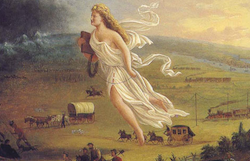
Manifest Destiny was the belief that the United States was meant to expand westward across the continent. As new territories were added, fierce debates over whether slavery would be allowed in these areas increased tensions between the North and South, helping lead to the Civil War.
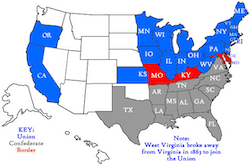
The secession of Southern states in 1860 and 1861, initiated by South Carolina, was a direct response to the election of Abraham Lincoln, whose anti-slavery stance threatened the institution central to the Southern economy and way of life. This collective withdrawal from the Union led to the formation of the Confederate States of America, setting the stage for the outbreak of the Civil War.
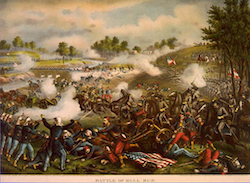
The American Civil War (1861–1865) was fought between the Northern states (Union) and the Southern states that seceded to form the Confederacy, primarily over the issues of slavery and states’ rights. It resulted in the preservation of the Union and the abolition of slavery, but at the cost of over 600,000 lives.
Florida’s orange industry began in the 1500s when Spanish explorers introduced the first orange trees to the region. By the late 19th century, oranges had become a major crop, making Florida a leading producer of citrus fruits in the United States.