Florida History |
 |
Florida’s Early Exploration and NamingFlorida, located in the southeastern United States, has a deep and diverse history that began in 1513 when Spanish explorer Juan Ponce de León arrived. The name “Florida” comes from Spain’s Easter celebration, Pascua Florida, meaning “Feast of Flowers.”
Juan Ponce de Leon Spanish and British RuleIn the 16th and 17th centuries, Florida was under Spanish control, and they built missions and forts, including St. Augustine in 1565, the first permanent European settlement in the New World. In 1763, Spain ceded Florida to Britain in exchange for Havana, Cuba. During this period, the region became a hub for pirates and smugglers.
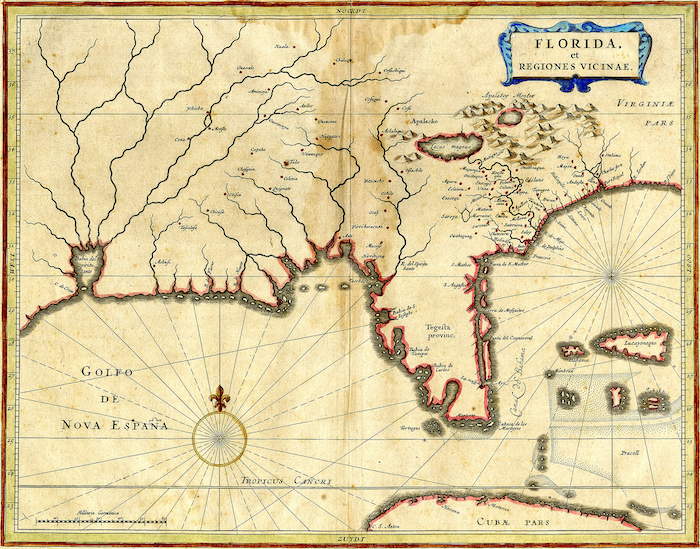
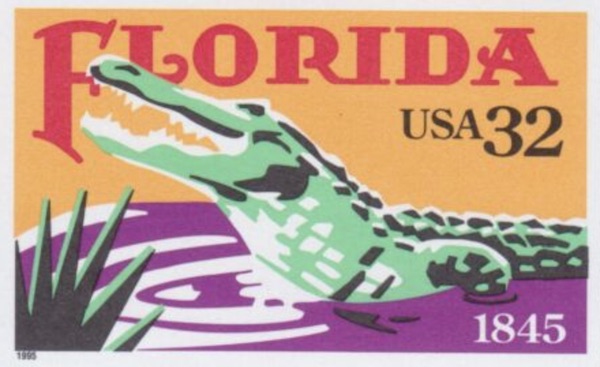
Early map of the peninsula of Florida Florida Joins the United StatesBritain returned Florida to Spain in 1783, but the U.S. acquired it in 1821 through the Adams-Onís Treaty. Florida became the 27th state in 1845. During the Civil War, it joined the Confederacy, and its ports were used for military operations against Union forces. Growth and DevelopmentAfter the Civil War, Florida expanded rapidly thanks to railroads, which attracted tourists and investors. The early 20th century saw a real estate boom as coastal resorts were built. Later, major attractions like Disney World and Universal Studios made Florida a top tourist destination. Modern FloridaToday, Florida is one of the fastest-growing states, known for its tourism industry, diverse population, and vibrant cities such as Miami and Orlando. The state continues to face challenges, including hurricanes and environmental issues, yet remains an important cultural and economic hub. Discussion Questions
Glossary
Florida History Timeline
Early Exploration and Colonial PeriodFlorida’s history began in 1513 when Juan Ponce de León arrived and named the land after Spain’s Easter festival, Pascua Florida, meaning “Feast of Flowers.” Spain controlled Florida for centuries, establishing St. Augustine in 1565, the first European settlement in the New World. In 1763, Spain traded Florida to Britain, which later returned it in 1783. Becoming a U.S. StateThe U.S. gained Florida in 1821 through the Adams-Onís Treaty, and it became the 27th state in 1845. Florida sided with the Confederacy during the Civil War, using its ports for military operations. Growth and TourismAfter the war, railroads transformed Florida, attracting tourists and investors. A real estate boom in the 1920s and later the creation of major theme parks like Disney World made Florida a top vacation destination. Modern FloridaToday, Florida is a fast-growing state with vibrant cities and a strong tourism industry. Despite challenges like hurricanes and environmental concerns, it remains a major cultural and economic center in the U.S. |