You need to login/subscribe to access this feature
Annotation
Add to Student Dashboard
Select a category, or create a new one:
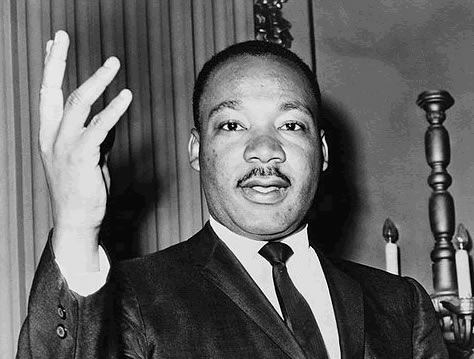
Martin Luther King Jr.
Introduction
The reverend Dr. Martin Luther King Jr. was one of the most influential and inspirational Civil Rights leaders in American history. Born in 1929, King graduated from Morehouse College in 1948 and then from the Crozer Theological Seminary with a Bachelor's in Divinity in 1951. He received a Ph.D in Systematic theology in 1955 from Boston University.
Standing with Rosa Parks
In 1954, King became pastor of the Dexter Avenue Baptist Church in Montgomery, Alabama where he led the bus boycott in Montgomery, Alabama after Rosa Parks was arrested for refusing to give up her seat on a public bus. The boycott lasted 381 days and resulted in King being arrested. Despite his arrest, the boycott ultimately resulted in the Supreme Court outlawing discrimination on intrastate buses.
Perfecting the Peaceful Protest
After the boycott, King helped in the founding of the Southern Christian Leadership Conference (SCLC) which advocated the peaceful protest of Black churches concerning Civil Rights (especially in the American south). Primarily inspired by the non-violent protests conducted by Mahatma Gandhi in India, King was instrumental in helping his cause gain national attention through the media. Because of his efforts, civil rights became the top political issue of the early 1960's.
He Had a Dream
In 1963, King delivered the immortal speech "I have a Dream" in front of the Lincoln Memorial during the March on Washington. Over 250,000 people gathered around the National Mall in support. King's speech electrified the crowd and is considered one of the greatest speeches in American history. King later led protests and gave speeches for the African American right to vote, desegregation, and fair hiring.
King is Instrumental in the Passing of the Civil Rights Act of 1864
In 1964, King's hopes were realized when congress passed the Civil Rights Act of 1964 and then, the Voting Rights Act of 1965. On October 14, 1964, King was awarded the Nobel Peace Prize for his leadership in non-violent protest.
Anti-war Sentiments
King became a prominent political figure and expressed his opposition of American involvement in the Vietnam War. In 1967, King called America "the greatest purveyor of violence in the world today." Although King was always hated by southern white segregationists, his speech against America turned many in mainstream media against him.
Assassination
In 1968, while he was organizing a march to protest the working conditions of black sanitation workers in Memphis, Tennessee, he was assassinated by James Earl Ray at the Lorraine Hotel. Because he was under FBI surveillance at the time, many believe the agency was involved in the assassination (although there is no proof). Furthermore, some reports have suggested that the FBI, and its chief officer J. Edgar Hoover, threatened to reveal evidence of extra-marital affairs King engaged in if he refused to curtail his Civil Rights efforts.
Powerful Legacy
300,000 people attended King's funeral. President Lyndon B. Johnson declared a national day of mourning. Today, numerous schools, buildings, and highways are named for Martin Luther King Jr. In 1986, a U.S. national holiday was established in honor of Martin Luther King Jr., which is called Martin Luther King Day. It is observed on the third Monday of January each year, around the time of King's birthday. On January 18, 1993, for the first time, Martin Luther King Day was officially observed in all 50 U.S. states. Below is an excerpt from King's famous I have a Dream speech.
I have a dream that one day this nation will rise up and live out the true meaning of its creed: "We hold these truths to be self-evident: that all men are created equal." I have a dream that one day on the red hills of Georgia the sons of former slaves and the sons of former slaveowners will be able to sit down together at a table of brotherhood. I have a dream that one day even the state of Mississippi, a state sweltering with the heat of injustice, a state sweltering with the heat of oppression, will be transformed into an oasis of freedom and justice. I have a dream that my four children will one day live in a nation where they will not be judged by the color of their skin but by the content of their character. I have a dream today.
I have a dream that one day down in Alabama, with its vicious racists, with its governor, having his lips dripping with the words of interposition and nullification, one day right there in Alabama little black boys and black girls will be able to join hands with little white boys and white girls as sisters and brothers. I have a dream today. I have a dream that one day every valley shall be exalted, every hill and mountain shall be made low, the rough places will be made plain, and the crooked places will be made straight, and the glory of the Lord shall be revealed, and all flesh shall see it together. This is our hope. This is the faith that I go back to the South with. With this faith we will be able to hew out of the mountain of despair a stone of hope. With this faith we will be able to transform the jangling discords of our nation into a beautiful symphony of brotherhood. With this faith we will be able to work together, to pray together, to struggle together, to go to jail together, to stand up for freedom together, knowing that we will be free one day.
I have a Dream Speech
Discussion Questions
How did Martin Luther King Jr.’s educational background influence his approach to civil rights?
Why was nonviolent protest an effective strategy for the Civil Rights Movement?
What impact did the "I Have a Dream" speech have on American society and politics?
How did King’s stance on the Vietnam War affect his popularity and influence?
Glossary
Boycott – A refusal to use or buy goods or services as a form of protest.
Segregation – The enforced separation of different racial groups in daily life.
Nonviolent Protest – Demonstrating for a cause without using physical force.
Civil Rights Act of 1964 – A landmark U.S. law that outlawed discrimination based on race, color, religion, sex, or national origin.
Nobel Peace Prize – An international award recognizing individuals who promote peace.
Five Interesting Facts
King entered college at age 15.
He was the youngest person to receive the Nobel Peace Prize at the time (age 35).
King was arrested over 20 times for civil rights activities.
His “I Have a Dream” speech was partly improvised.
The Martin Luther King Jr. Memorial in Washington, D.C., is the only one on the National Mall for someone who was not a U.S. president.
Timeline of Martin Luther King Jr.’s Life
1929 – Born in Atlanta, Georgia.
1948 – Graduates from Morehouse College.
1951 – Earns Bachelor’s in Divinity from Crozer Theological Seminary.
1954 – Becomes pastor at Dexter Avenue Baptist Church in Montgomery.
1955 – Receives Ph.D. in Systematic Theology.
1955-1956 – Leads Montgomery Bus Boycott.
1957 – Helps found the Southern Christian Leadership Conference.
1963 – Delivers “I Have a Dream” speech during the March on Washington.
1964 – Civil Rights Act passed; wins Nobel Peace Prize.
1965 – Voting Rights Act passed.
1967 – Speaks out against Vietnam War.
1968 – Assassinated in Memphis, Tennessee.
1986 – Martin Luther King Day established as a U.S. holiday.
1993 – All 50 states observe MLK Day.
2011 – Martin Luther King Jr. Memorial dedicated in Washington, D.C.
Simplified Biography
Introduction
Martin Luther King Jr. was a key leader in the American Civil Rights Movement. Born in 1929, he earned degrees from Morehouse College, Crozer Seminary, and a Ph.D. from Boston University.
Montgomery Bus Boycott
As pastor in Montgomery, Alabama, King led the 1955 bus boycott after Rosa Parks' arrest. The 381-day protest ended with the Supreme Court banning segregation on buses.
Nonviolent Leadership
King co-founded the Southern Christian Leadership Conference, promoting peaceful protests inspired by Mahatma Gandhi. His efforts brought national attention to civil rights.
I Have a Dream
In 1963, King delivered his famous speech during the March on Washington, inspiring millions with his vision of racial equality.
Achievements and Nobel Prize
King’s work helped pass the Civil Rights Act of 1964 and the Voting Rights Act of 1965. That same year, he received the Nobel Peace Prize.
Final Years and Legacy
He opposed the Vietnam War and continued fighting for equality until his assassination in 1968. Today, Martin Luther King Jr. is honored with a national holiday and numerous memorials across the U.S.
Martin Luther King Reading Comprehension Online (grades 3 and up) - This resource includes a historical passage and four multiple choice questions. It gives immediate feedback and a score report. In addition, when you click the "listen" button, you can hear the passage while it highlights the text.
Martin Luther King Reading Comprehension Online (grades 5 and up) - This resource includes a historical passage and seven multiple choice questions. It gives immediate feedback and a score report. In addition, when you click the "listen" button, you can hear the passage while it highlights the text.
Martin Luther King Correct-me Passage - This fun activity requires students to correct a passage about the life of Martin Luther King that has nine factual errors. Students first must discover the errors, then click on them and select the correct answer from the drop down menu.
Martin Luther King Fact or Fiction - This fun activity requires students to read an MLK passage and then, to sort 11 statements into those that are facts and those that are fiction.
Martin Luther King Fact or Fiction (Online) - This fun activity requires students to read an MLK passage and then, to sort 11 statements into those that are facts and those that are fiction. It gives immediate feedback.
Martin Luther King Jr. Postage Stamp Coloring PageThe Martin Luther King Jr. U.S. postage stamp issued in 1979 was the first to honor the civil rights leader, marking the 50th anniversary of his birth. It features a dignified portrait of Dr. King, recognizing his fight for justice and equality in America.