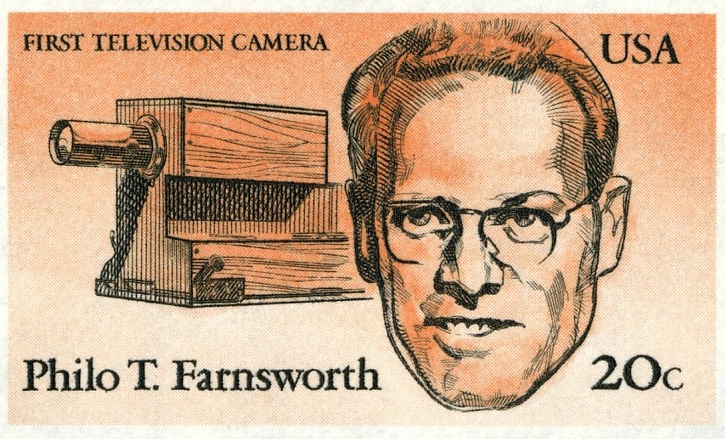
Philo Farnsworth |
|
Early LifePhilo Taylor Farnsworth was born on August 19, 1906, in a log cabin in Beaver, Utah. As a boy, he was fascinated with electricity and machines. His family moved to Idaho when he was 12. It was there, while plowing fields, that he imagined scanning an image line by line the same way he plowed rows in a field. This idea later became the basis for his invention of electronic television. By the time he was a teenager, he was taking apart appliances to see how they worked. His curiosity and love of invention would lead him to change the world. Invention of TelevisionWhile still in high school, Farnsworth imagined sending pictures through the air using electronic signals. At only 21 years old, he built the first fully working electronic television system in 1927. His invention used an “image dissector” tube to turn images into electrical signals that could be sent and displayed on a screen. This idea was far ahead of its time and became the foundation of modern television. Struggles and SuccessEven though Farnsworth invented television, he faced many challenges. Large companies, such as RCA, tried to claim the invention for themselves. Farnsworth spent years in legal battles to prove he was the true inventor. In the end, he won credit for his work, but he did not become very wealthy from it. Still, his invention changed the way people around the world receive news, learn, and are entertained. Later Life and LegacyAfter his television breakthrough, Farnsworth continued to invent. He worked on nuclear fusion, radar, and other technologies. Sadly, he struggled with health problems and financial difficulties. He died on March 11, 1971, in Salt Lake City, Utah. Today, he is remembered as the “Father of Television,” and his creativity continues to inspire inventors and scientists everywhere. Discussion Questions
Glossary
Five Interesting Facts
Timeline
Early LifePhilo Farnsworth was born in 1906 in Utah. As a boy, he loved electricity and machines. He often took things apart to see how they worked. Invention of TelevisionAs a teenager, he thought about sending pictures through the air with electricity. In 1927, at age 21, he built the first working television using his “image dissector” tube. This invention became the base of modern TV. Struggles and LegacyBig companies tried to take credit for his work, but Farnsworth fought in court and won. Even though he did not become rich, his invention changed the world. He later worked on nuclear fusion and other projects. Farnsworth died in 1971, but he is remembered as the Father of Television |