Introduction
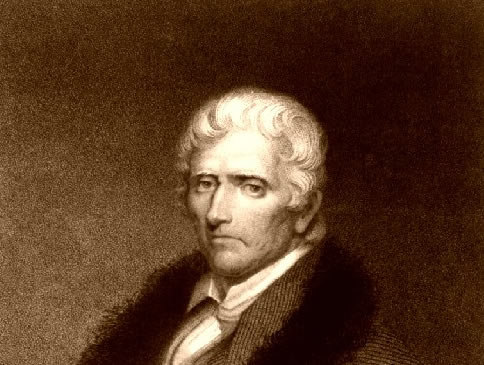
Daniel Boone was a famous American pioneer best known for exploring and settling Kentucky. Daniel was born on October 22, 1734, near present-day Reading, Pennsylvania. He was the son of a Quaker weaver and blacksmith and had ten brothers and sisters.
Into the Wilderness
From an early age, Daniel loved exploring. He was said to have made friends with the local Indians as a boy and was given a rifle by his father when he was twelve, with which he killed his first bear. He quickly learned to shoot and was an expert hunter and marksman. At age fifteen, his family began a year-round voyage to rural North Carolina. At the age of nineteen, he left his family to participate in the French and Indian War. As a soldier in the war, he heard stories of the untamed wilderness in the west. Nevertheless, after the war, Boone returned home and married Rebecca Bryan. Together, Daniel and Rebecca would have ten children. Always the explorer, Daniel would leave his wife and family for months at a time, exploring the wilderness on the edge of the Pennsylvania frontier. He would support his family by selling the animals he shot at market. As settlement increased in the region, competition for available game became stiff. Boone soon fell into debt and was taken to court several times by his creditors. He then moved his family to Yadkin, North Carolina, on the edge of the Blue Ridge Mountains.
Kentucky
During a hunting trip in 1767, Boone first stepped foot in Kentucky. In 1769, he set out with three other frontiersmen to explore the land. On June 7 of that year, Boone and the frontiersmen passed the Cumberland Gap, a gap in the Appalachian Mountains that rests at the intersection of Virginia, Kentucky, and Tennessee. The men next trekked west, where they saw the falls of the Ohio River near modern-day Louisville before heading back to Yadkin. Boone returned to Kentucky with his family in 1773 with the intention of starting a settlement. When part of his party was captured and killed by local Indians, the settlement was abandoned. The massacre was the beginning of what came to be known as Lord Dunmore’s War, a violent struggle between settlers and Shawnee Indians. In 1774, after the Battle of Point Pleasant, the Shawnees were forced to relinquish their lands in Kentucky and West Virginia.
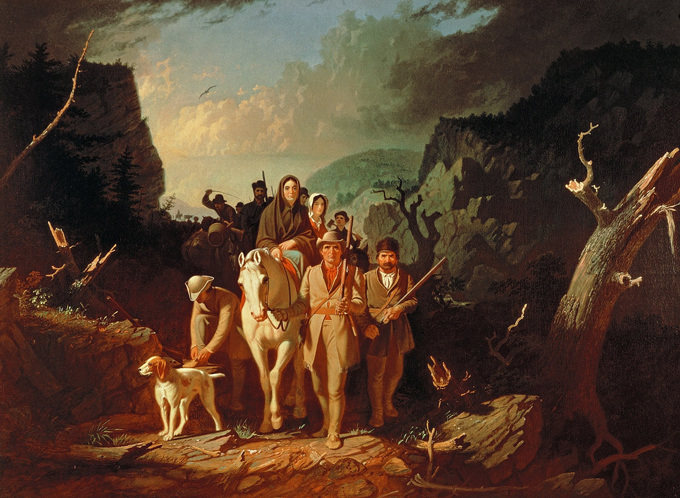 |
| Daniel Boone Escorting Settlers through the Cumberland Gap (1851 - 1852) by George Caleb Bingham |
The Wilderness Road
In 1775, Boone was hired as trailblazer by Richard Henderson, a prominent judge who wished to start a settlement in Kentucky called Transylvania. Boone blazed what came to be known as Wilderness Road, a path through the Cumberland Gap into central Kentucky. Boone and about 30 workers carved and marked the path from the Cumberland Gap to the Kentucky River, where he established the settlement of Boonesborough. Wilderness Road was steep and rough and could only be traversed by foot or by horseback. Thousands of settlers descending upon the region would use the Wilderness Road. In September of that year, Boone brought his family to live in Boonesborough, where there was an abundance of “salt licks.” Previously, salt could only be obtained via the West Indies. Despite the constant threat of Indian attacks, Boone and his family remained at Boonesborough. In 1776, however, local Indians captured his daughter and two other girls. Boone and a group of settlers caught up with the Indians and ambushed them, rescuing the girls. The episode would be dramatized in the famous novel by James Fenimore Cooper, The Last of the Mohicans.
Later Life
Boone would eventually be captured by Shawnee Indians, who adopted him into their tribe. Meanwhile, his wife and family figured him for dead and moved to North Carolina. In 1779, Boone returned to North Carolina and brought his family back to Kentucky, establishing a new settlement known as Boone’s Station. Boone then began making money by finding plots of land for new settlers. He next fought in Ohio Country during the Revolutionary War and then settled near Limestone, Kentucky, where he was named to the Virginia State Assembly (at the time Kentucky was claimed by Virginia). In Limestone, he kept a tavern and worked as a surveyor, horse trader, and land speculator. He even owned slaves and had a chronicle made of his adventures. In 1795, however, Daniel and his wife made the decision to move from Kentucky after a series of failed land speculation deals and mounting debts. Boone’s extensive land claims in Kentucky were never properly registered, and he left the territory he explored with no land. Some of his claims were later restored by the US Government in 1814, in honor of his service to the nation.
The Travels of Daniel Boone Through Kentucky - NPS.gov
Death and Legacy
In 1799, Daniel and Rebecca moved to Missouri in the company of his children and grandchildren. Rebecca died in 1813, and Daniel died on September 26, 1820, and was buried next to Rebecca. Today, Daniel Boone remains an iconic figure in American history. Both a scenic highway and national forest are named in his honor in Kentucky. In addition, the National Boy Scouts were originally called the Sons of Daniel Boone.
Discussion Questions
- What made Daniel Boone a well-known figure in American history?
- How did Boone contribute to the settlement of Kentucky?
- What hardships did Boone face throughout his life?
- Why do you think Boone continues to be remembered today?
Glossary
- Frontiersman: A person who lives on the frontier, or edge of settled territory.
- Trailblazer: Someone who makes a new path or opens up a new area for others.
- Cumberland Gap: A natural pass through the Appalachian Mountains.
- Land speculator: A person who buys land hoping to sell it at a higher price.
Interesting Facts
- Daniel Boone once killed a bear at age twelve.
- He carved out Wilderness Road, which helped thousands of settlers reach Kentucky.
- The novel The Last of the Mohicans was partly inspired by Boone’s rescue of kidnapped girls.
- Despite exploring and settling much of Kentucky, Boone ended up owning no land there.
|
Introduction
Daniel Boone was a well-known American pioneer, born on October 22, 1734, near today’s Reading, Pennsylvania. The son of a Quaker blacksmith and weaver, he was one of eleven children. Boone grew up in a family that valued hard work, and he loved exploring nature from a young age.
Into the Wilderness
Daniel became an expert hunter early in life and killed his first bear at age twelve. At fifteen, his family moved to North Carolina. He served in the French and Indian War at age nineteen, where he heard stories of western lands. After the war, he married Rebecca Bryan, and they had ten children. Boone supported them by hunting and selling meat, though increasing settlement made it harder to find game. Falling into debt, he moved his family to the edge of the Blue Ridge Mountains.
Exploring Kentucky
In 1767, Boone first entered Kentucky. Two years later, he traveled through the Cumberland Gap into the region with other frontiersmen. After returning home, he led his family and others back to settle Kentucky in 1773, but the attempt failed after an attack by Native Americans. This sparked Lord Dunmore’s War, ending with Shawnee land being taken by settlers.
Wilderness Road and Boonesborough
In 1775, Boone was hired to lead settlers into Kentucky through the Cumberland Gap. He and his crew built Wilderness Road, a path to the Kentucky River where they started Boonesborough. The road helped thousands move west. That same year, Boone brought his family to the new settlement. In 1776, his daughter and two other girls were kidnapped by Native Americans, but Boone helped rescue them—a story that later inspired the novel The Last of the Mohicans.
Later Life and Setbacks
Boone was later captured by the Shawnee, who adopted him into their tribe. His family thought he was dead and returned to North Carolina. In 1779, Boone found them and moved them back to Kentucky, founding Boone’s Station. He worked as a land agent and surveyor but lost his land due to poor recordkeeping. Boone also served in the Virginia State Assembly and briefly kept a tavern in Limestone, Kentucky. Despite his fame, he lost most of his wealth and land.
Final Years and Legacy
In 1799, Daniel and Rebecca moved to Missouri with their children. Rebecca died in 1813, and Boone passed away in 1820 at age 85. He is buried beside his wife. Boone remains an American legend for his role in exploring and settling Kentucky. A national forest, a highway, and even the early Boy Scouts were named in his honor.
|