Kentucky History |
||
|
||
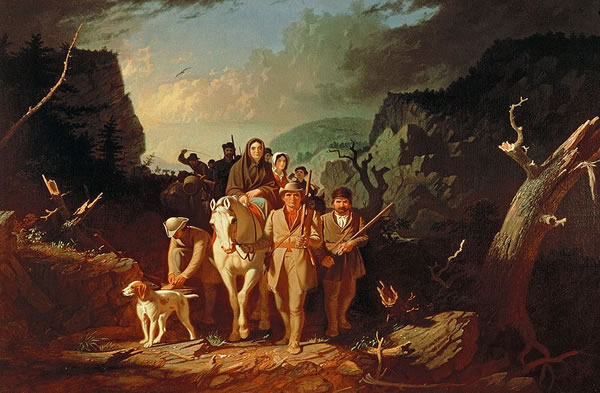
Native American Roots and Early SettlementBefore the arrival of Europeans, the land now known as Kentucky was home to Native American tribes such as the Shawnee and Cherokee. These groups lived in complex societies with established trade routes. The arrival of settlers in the late 1700s, including the famed frontiersman Daniel Boone, disrupted these communities and opened the region to westward expansion.
Daniel Boone and settlers moving through the Cumberland Gap Statehood and Antebellum EraIn 1792, Kentucky became the 15th state to join the Union. During the early 19th century, the state thrived as an agricultural center, with large plantations that relied on enslaved African labor. This period laid the groundwork for the divisions that would become evident during the Civil War. Kentucky and the Civil WarKentucky was a deeply divided state during the Civil War. Although it officially remained in the Union, many citizens supported the Confederacy. The state produced soldiers for both sides, highlighting its internal conflicts. Remarkably, Kentucky was the birthplace of both President Abraham Lincoln (Union) and Jefferson Davis (Confederacy). Reconstruction and Economic GrowthFollowing the Civil War, Kentucky underwent Reconstruction. Efforts were made to rebuild and to integrate formerly enslaved individuals into society. By the late 1800s and early 1900s, Kentucky had diversified its economy through agriculture, manufacturing, and mining. The state also gained recognition for bluegrass music and its burgeoning bourbon industry. 20th Century Civil Rights and Cultural LegacyIn the mid-20th century, Kentucky played a role in the Civil Rights Movement, notably during the Lexington desegregation crisis. The state has since evolved into a diverse and culturally rich part of the American South, known for its music, arts, and lasting historical contributions. Discussion Questions
Glossary
Kentucky is a southeastern U.S. state with a long and diverse history. Before Europeans arrived, tribes like the Shawnee and Cherokee lived there. In the late 1700s, Daniel Boone explored the area. Kentucky became the 15th U.S. state in 1792 and grew quickly through farming, especially on plantations that used enslaved people. During the Civil War, it was torn between the Union and Confederacy, with soldiers fighting for both sides. Interestingly, both President Lincoln and Confederate President Davis were born there. After the war, Kentucky rebuilt and its economy expanded with farming, mining, and industry. The state became famous for bluegrass music and bourbon. In the 20th century, it also played a role in the Civil Rights Movement. Today, Kentucky is known for its culture, history, and contributions to American life |