Ojibwe Nation |
Example of an Ojibwe "band" seal. |
Origin of the NameThe name "Ojibwe" (also spelled Ojibwa, Ojibway, or Chippewa) is believed to come from an Algonquian word meaning "to pucker," possibly referring to the style of their moccasins. The French adapted the name into "Chippewa," which became common in U.S. government records. The Ojibwe refer to themselves as "Anishinaabe," meaning “original people” or “spontaneous beings.” RangeThe Ojibwe are one of the largest Native American groups in North America. Traditionally, they lived around the Great Lakes, particularly in modern-day Michigan, Wisconsin, Minnesota, and Ontario. Some Ojibwe bands also moved west into North Dakota and Montana following the fur trade and buffalo hunting opportunities. DietThe Ojibwe had a varied diet depending on season and location. They hunted deer, moose, and small game, fished in lakes and rivers, and gathered wild plants. A vital food source was wild rice, which they harvested from lakes in late summer. They also collected berries, maple syrup, and nuts, and some groups planted corn, beans, and squash. Home TypeOjibwe people traditionally lived in *wigwams*, dome-shaped homes made from saplings and covered with birch bark or mats. These dwellings were practical for their woodland environment and easy to construct and dismantle. In colder months, they often used insulated lodges and longhouses. CultureThe Ojibwe had a rich spiritual life centered around nature, dreams, and visions. They practiced the Midewiwin, or Grand Medicine Society, a spiritual path involving healing and sacred knowledge. They passed down stories of powerful beings like Nanabozho, a trickster and cultural hero who helped shape the world. Nanabozho is one of the most important figures in Ojibwe mythology. He is a trickster, teacher, and cultural hero who helped shape the world and teach the Ojibwe people how to live in harmony with nature. According to legend, Nanabozho created many animals, named plants, and gave people important tools like fire and language. Though playful and sometimes mischievous, Nanabozho often used cleverness to defeat evil spirits and restore balance to the world. His stories were passed down through generations to teach moral lessons, survival skills, and cultural values. Sweat LodgesThe Ojibwe used sweat lodges as part of their spiritual and healing practices. A sweat lodge is a small, dome-shaped structure made of bent saplings and covered with blankets or hides. Inside, hot stones were placed in a central pit, and water was poured over them to create steam. Participants sat in the dark, steamy space to pray, sing, and purify their bodies and spirits. Sweat lodge ceremonies were led by a spiritual leader and often used for cleansing before important events, healing from illness, or seeking visions. These ceremonies remain an important tradition for many Ojibwe people today. Birch Bark ScrollsOjibwe art is famous for its beadwork, birchbark scrolls, and floral designs. The Ojibwe used birch bark scrolls, known as *wiigwaasabak*, to record complex knowledge, stories, songs, and spiritual teachings. These scrolls were etched with sharp tools and filled with charcoal or pigment to make the designs stand out. Members of the Midewiwin, the Ojibwe medicine society, used them to pass on sacred rituals and ceremonies from one generation to the next. The symbols on the scrolls served as memory aids for oral teachings and were often used during initiation ceremonies or healing practices. These scrolls are a powerful example of how the Ojibwe preserved their history and spirituality through written and oral traditions. Storytelling, drumming, and dancing remain central to Ojibwe culture today.
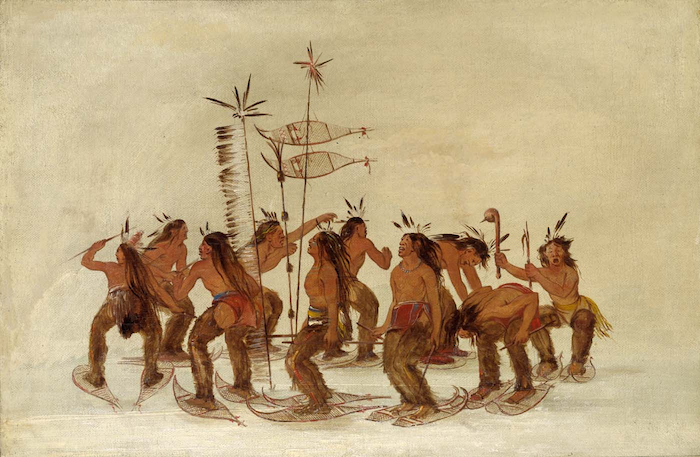
Snowshoe Dance performed by the Ojibwe - Painting by George Catlin Ojibwe Spider CharmThe Ojibwe spider charm, more commonly known today as the dreamcatcher, is a traditional object used to protect sleepers, especially children, from bad dreams. Made from a hoop of willow with a woven web in the center, it was often decorated with feathers and beads. According to Ojibwe belief, the charm would catch harmful dreams in its web while allowing good dreams to pass through the center hole and gently slide down the feathers to the sleeper below. The morning sun would destroy any trapped bad dreams. Over time, the dreamcatcher became a widely recognized symbol of Native American culture.
Ojibwe Spider Charm (1929) WarfareHistorically, the Ojibwe engaged in conflicts with neighboring tribes such as the Dakota (Sioux) and sometimes the Iroquois. They later allied with the French and British during the colonial wars and resisted U.S. expansion in the 19th century. Ojibwe warriors were skilled with bows, clubs, and later firearms, and used canoes for raids and travel across water.
Boy Chief - Painting by George Catlin Discussion Questions
Glossary
Origin of the NameThe name "Ojibwe" may come from a word meaning “to pucker,” referring to their moccasins. The French called them "Chippewa." They call themselves "Anishinaabe," meaning “original people.” RangeThe Ojibwe lived around the Great Lakes—especially in Michigan, Wisconsin, Minnesota, and Ontario. Some groups moved west to North Dakota and Montana. DietOjibwe people hunted animals like deer and moose, fished in lakes, and gathered wild plants. Wild rice was very important to their diet. They also collected berries, maple syrup, and sometimes grew corn and squash. Home TypeThey lived in *wigwams*, round homes made from saplings and birch bark. In winter, they used warmer, thicker lodges. CultureThe Ojibwe believed in spirits and told stories to teach lessons. They practiced Midewiwin, a spiritual healing tradition. Nanabozho, a trickster and hero, appears in many Ojibwe stories. They were known for beautiful beadwork and birch bark scrolls. WarfareThe Ojibwe sometimes fought with tribes like the Dakota and joined the French or British in wars. They used canoes for travel and were skilled with bows and later guns. |