 |
The History of Minnesota
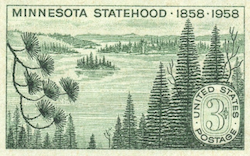
Minnesota was originally home to Native American tribes like the Dakota and Ojibwe before becoming a U.S. territory in 1849 and achieving statehood in 1858. The state played a key role in the lumber and milling industries and was a major supplier of iron ore during the industrial era. |
|
 |
Ojibwe (Chippewa) Nation
The Ojibwe, also known as Chippewa, are one of the largest Indigenous groups in North America, traditionally living around the Great Lakes region. They are known for their rich oral traditions, birchbark canoes, and skilled use of natural resources like wild rice. |
|
 |
Sioux (Lakota)
The Sioux are a group of Native American tribes that traditionally lived in the Great Plains, including present-day North and South Dakota, Minnesota, and Nebraska. Known for their skilled horseback riding, buffalo hunting, and strong warrior culture, the Sioux played a central role in resisting U.S. expansion during the 19th century. |
|
 |
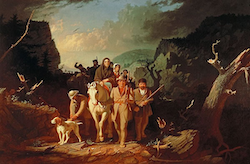
The Explorations of Robert Sieur de la Salle
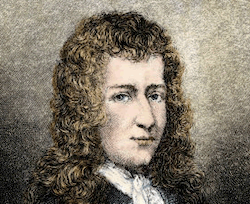
Robert Sieur de La Salle was a French explorer who claimed the entire Mississippi River Basin for France in 1682, naming it Louisiana. His ambitious expeditions expanded French influence in North America, though his final colonization attempt ended in disaster and his own death. |
|
 |
The Northwest Territory
The Northwest Territory was a vast area of land in the early United States, stretching from the Great Lakes to the Ohio River and including parts of modern-day Ohio, Indiana, Illinois, Michigan, Minnesota, and Minnesota. It was gained after the British ceded it following the French and Indian War and eventually became the foundation for several new states.
|
|
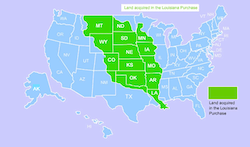 |
Louisiana Purchase
The Louisiana Purchase was a land deal in 1803 where the United States bought a large area of land from France. This purchase doubled the size of the U.S. and included land that would become all or part of 15 states, including Arkansas. |
|
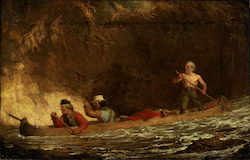 |
The Voyageurs
The Voyageurs were French-Canadian fur traders who transported goods and furs by canoe across vast distances in the 17th and 18th centuries. They played a key role in the North American fur trade, often working closely with Indigenous groups like the Ojibwe. |
|
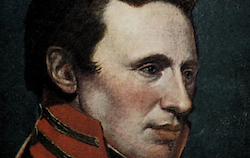 |
The Travels of Zebulon Pike
Zebulon Pike was an American explorer who led expeditions in the early 1800s to chart the southern portion of the Louisiana Territory. During his second journey, he explored the American Southwest and famously attempted to climb the peak now named Pikes Peak in Colorado. |
|
 |
Manifest Destiny
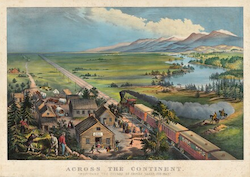
Manifest Destiny was the 19th-century belief that the United States was destined by God to expand its territory across North America. It was used to justify westward expansion, the displacement of Native Americans, and wars such as the Mexican-American War. |
|
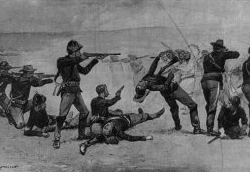 |
Dakota Wars The Dakota Wars were a series of violent conflicts between the Dakota (Sioux) people and American settlers in Minnesota. Sparked by broken treaty promises and widespread starvation, the war led to hundreds of deaths and ended with mass executions and the forced removal of the Dakota from their homeland. |
|