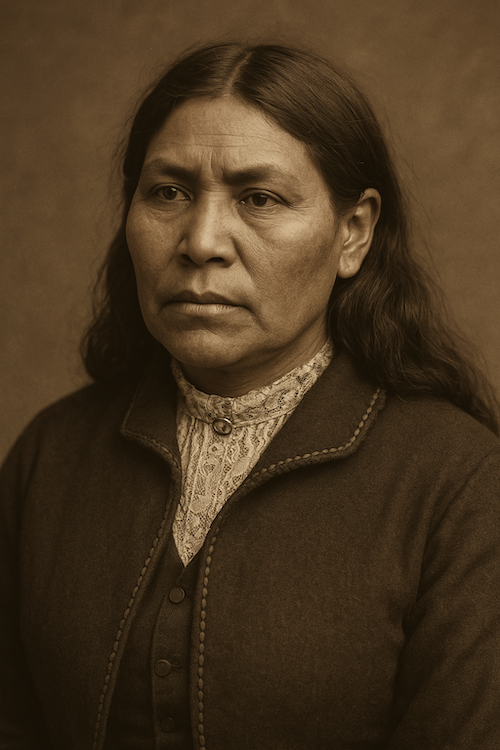
Early Life and Background
Sarah Winnemucca was born around 1844 near what is now Lovelock, Nevada. She was a member of the Northern Paiute tribe and grew up during a time of great change for her people. As a young girl, Sarah learned both the traditions of her tribe and the ways of white settlers who were moving into Paiute lands. Her grandfather, Chief Truckee, encouraged her to learn English so she could help her people deal with the newcomers. When she was still a child, Sarah began attending schools run by white Americans, where she learned to read and write fluently.
Life as an Interpreter and Advocate
As Sarah grew older, she became a skilled interpreter between Native Americans and the U.S. government. She worked as a translator for the U.S. Army and helped her tribe communicate with officials. However, she soon saw how unfairly the government treated Native people. Promised lands and supplies were often taken away or never delivered. This inspired her to speak out for justice. Sarah traveled across the United States giving speeches about Native American rights and the struggles of the Paiute people. She became one of the first Native American women to lecture publicly in English.
Writing and Legacy
In 1883, Sarah Winnemucca wrote a book called *Life Among the Piutes: Their Wrongs and Claims*. It was the first book written and published by a Native American woman. In it, she described the suffering her people experienced and called for fair treatment and education for Native children. Later, she opened a school in Nevada where Native American children could learn both Paiute traditions and academic subjects. Although the school eventually closed, her work helped pave the way for future Native leaders and educators.
Death and Lasting Impact
Sarah Winnemucca died in 1891, but her legacy lives on. She is remembered as a brave and outspoken advocate for her people. Her book remains an important part of Native American literature, and statues and schools have been named in her honor. Sarah’s life showed how one person could bridge two worlds and fight for justice and understanding.
Discussion Questions
- How did Sarah Winnemucca’s ability to speak English help her advocate for her people?
- What challenges did she face when working with the U.S. government?
- Why was her book *Life Among the Piutes* so important?
- What lessons can we learn from Sarah Winnemucca’s efforts for fairness and education?
Glossary
- Paiute: A Native American tribe from the Great Basin region of the United States.
- Interpreter: A person who translates spoken language between groups.
- Advocate: Someone who speaks or acts in support of a cause or people.
- Legacy: What a person leaves behind that continues to influence others.
- Traditions: Customs or beliefs passed down through generations.
Five Interesting Facts
- Sarah Winnemucca was the first Native American woman to write and publish a book in English.
- She performed stage plays during her lectures to show audiences what her people had endured.
- She met President Rutherford B. Hayes while speaking in Washington, D.C.
- Her school in Nevada was one of the earliest bilingual schools in the United States.
- A statue of Sarah Winnemucca stands in the U.S. Capitol’s National Statuary Hall.
Timeline
- 1844: Born near Lovelock, Nevada.
- 1860s: Worked as an interpreter for the U.S. Army.
- 1870s: Began giving public speeches across the U.S.
- 1883: Published *Life Among the Piutes: Their Wrongs and Claims*.
- 1884: Opened a school for Native American children in Nevada.
- 1891: Died in Montana.