History of Indigo |
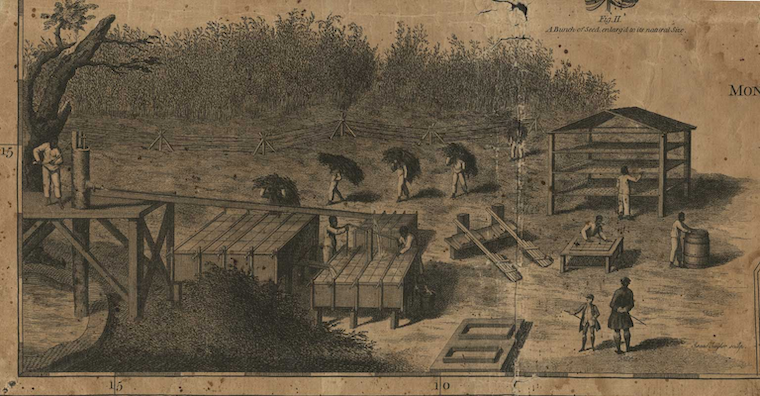
Indigo Harvest in South Carolina (1773) |
Charleston and TradeIn the 1600s and 1700s, Charleston, South Carolina, was an important port for trading rice, tobacco, and indigo. While most people easily understand rice and tobacco, indigo is less familiar to many, except as a dark blue color. What is Indigo?Indigo is a dark blue dye made from the "peas" of certain tropical plants. It was used to dye clothes blue and was very valuable to plantation owners in South Carolina. One major advantage of indigo was that it could grow on land that wasn’t good for rice or tobacco. Indigo as "Blue Gold"Indigo became South Carolina’s second most valuable crop, often called “blue gold.” It was a major cash crop and a key part of the colony’s economy. The Decline of IndigoAfter the Revolutionary War, indigo production in South Carolina declined because English merchants began buying indigo from India. South Carolina farmers shifted their focus to a more profitable crop—cotton. Discussion Questions
Glossary
Five Interesting Facts
Timeline of Key Events
Charleston and IndigoIn the 1600s and 1700s, Charleston, South Carolina, was a major trade port for rice, tobacco, and indigo. While rice and tobacco were well-known, indigo was a dark blue dye made from tropical plants. It was valuable because it grew on land that was not good for other crops. "Blue Gold" of South CarolinaIndigo became South Carolina’s second most important crop, earning the nickname “blue gold.” It played a big role in the colony’s economy. Decline of IndigoAfter the Revolutionary War, indigo production dropped because England bought indigo from India. Farmers in South Carolina then turned to a more profitable crop—cotton. |