Comanche Nation |
|
Origin of the NameThe name "Comanche" comes from the Ute word *kimantsi*, meaning "enemy" or "those who want to fight us." The Comanche called themselves *Nʉmʉnʉ*, which means “the people” in their own language.
Comanche Warriors RangeAt their peak in the 18th and 19th centuries, the Comanche controlled a vast territory known as *Comancheria*. This area included present-day northwest Texas, eastern New Mexico, southeastern Colorado, southwestern Kansas, and western Oklahoma. Their mastery of horseback riding made them dominant across the Southern Plains.DietThe Comanche were exceptional hunters, relying heavily on the American bison (buffalo), which provided meat, hides, and tools. They also hunted deer, elk, and other game. While hunting was central, they sometimes traded for or gathered corn, squash, berries, and wild roots, especially when settled near friendly agricultural tribes.Home TypeThe Comanche lived in tipis, portable cone-shaped tents made of buffalo hides stretched over wooden poles. These homes suited their nomadic lifestyle, as they could be quickly assembled and disassembled to follow the buffalo herds.CultureComanche culture was deeply centered around the horse, which transformed their way of life. Introduced in the late 1600s, horses gave the Comanche unmatched mobility for hunting and warfare. They were known as some of the finest horsemen in North America. Storytelling, music, and ceremonies were vital to their culture. The Sun Dance although borrowed and adapted from neighboring Plains tribes, was practiced to seek spiritual power and community strength. They also held vision quests and honored warriors through dances and songs. An interesting myth among the Comanche involves a trickster figure named Coyote, who often brought both trouble and lessons to the people. Another key tale involves the origin of fire, where animals must steal it from a greedy fire-keeper for the benefit of all.Warfare
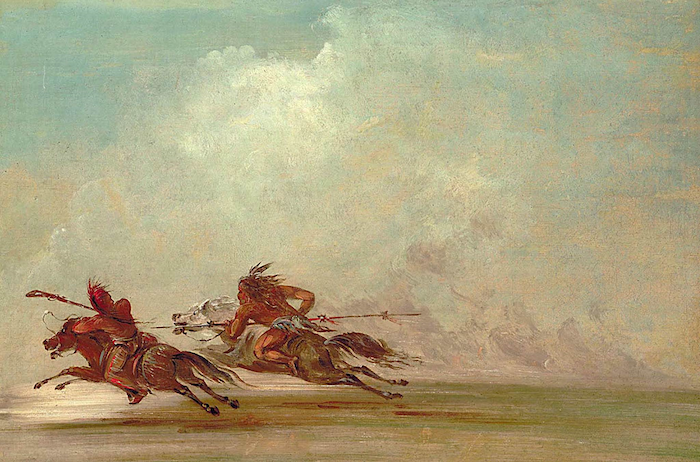
War on the Plains: Comanche (right) trying to lance an Osage warrior (George catlin, 1834) The Comanche were fierce warriors and skilled tacticians, known both for defending their lands and conducting raids. Their enemies included the Apache, Spanish colonists, Mexicans, and later, American settlers and soldiers. They developed swift, brutal hit-and-run tactics using their horses, often raiding settlements for horses, captives, and supplies. They sometimes formed alliances, such as with the Kiowa, and traded with groups like the Wichita and French. However, as American expansion intensified in the 1800s, the Comanche resisted fiercely. Decades of conflict followed, including the Red River War of 1874–75, which led to their forced relocation to reservations in Oklahoma.Discussion Questions
Glossary
Origin of the NameThe name "Comanche" comes from a Ute word that means "enemy." But the Comanche called themselves *Nʉmʉnʉ*, which means “the people.”Where They LivedThe Comanche lived in the southern Great Plains. This included parts of Texas, New Mexico, Oklahoma, Colorado, and Kansas. They moved around often to follow buffalo herds.What They AteThe Comanche mostly ate buffalo. They also hunted deer and elk. Sometimes they gathered plants or traded for corn and squash.HomesThey lived in tipis. These cone-shaped tents were made from buffalo hides and wooden poles. Tipis were easy to take down and carry.CultureHorses were very important to the Comanche. They helped with hunting, travel, and fighting. The Comanche were expert riders. They told stories and held ceremonies. One ceremony was the Sun Dance, which helped them feel strong and connected. They also had stories about Coyote, a trickster who taught lessons.Fighting and DefenseThe Comanche were strong warriors. They fought to protect their land and raided for horses and supplies. They fought enemies like the Apache and later, settlers and the U.S. Army. In the 1800s, many were forced to move to Oklahoma. |